


Carved Shell Cameo Brooch
A carved shell cameo brooch carries centuries of miniature sculpture, offering classical portraits and mythological scenes set within precious metal frames.
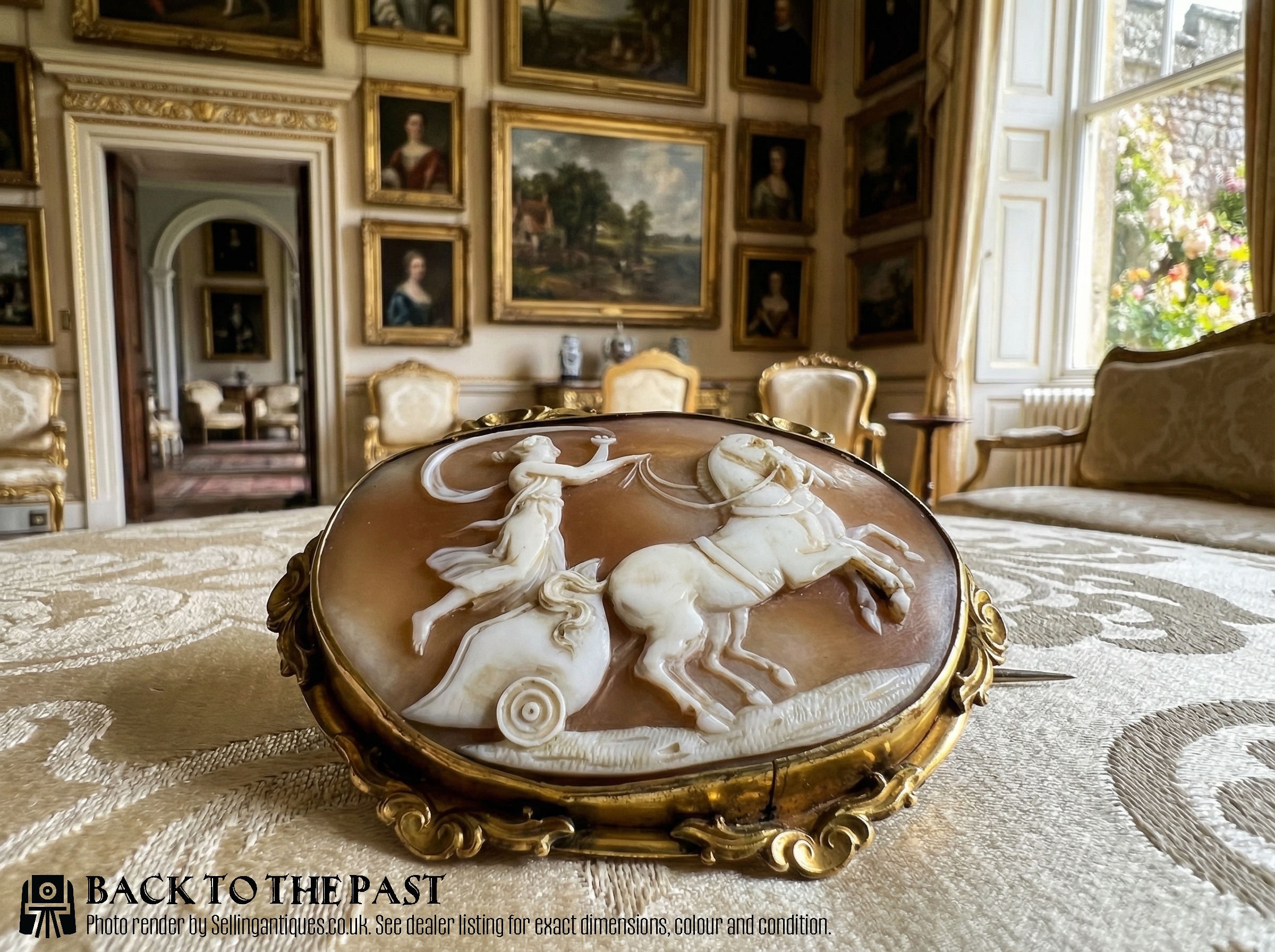
Carved Shell Cameo Brooch
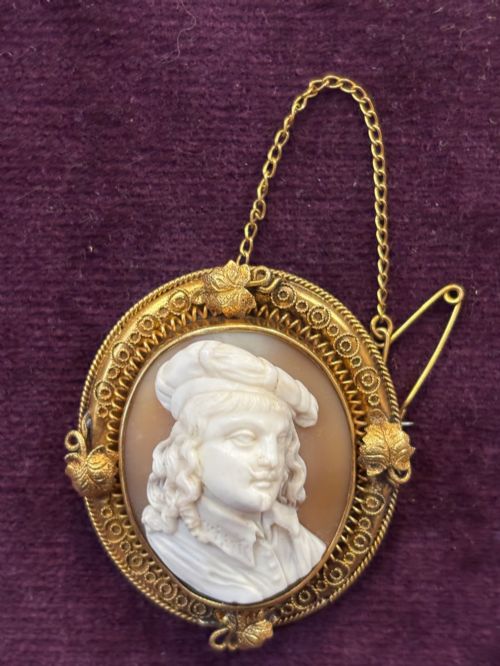
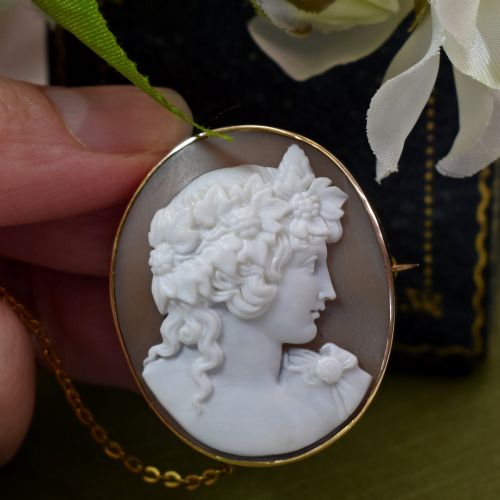
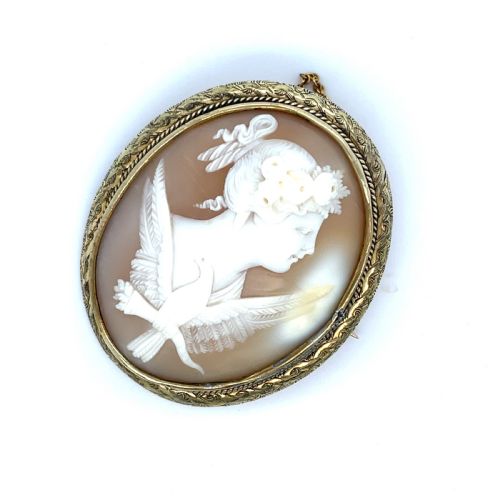
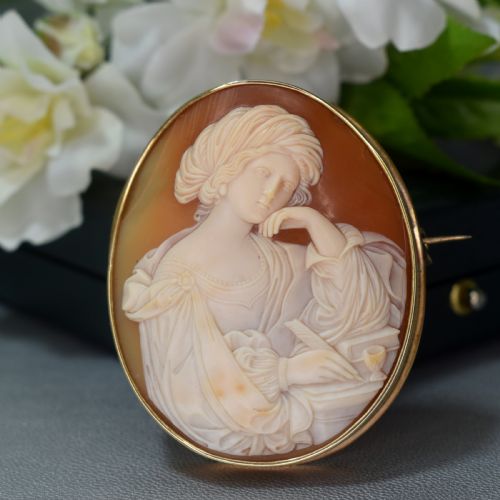
When you search for a carved shell cameo brooch, you encounter miniature reliefs carved directly into the natural layers of marine shells. The pieces on this page span the Georgian, Victorian, and Edwardian eras, reaching into the mid-twentieth century.
Most examples you meet are Victorian, often depicting classical deities, literary figures, or mythological characters like Venus, Flora, and Psyche. Formats range from standard wearable brooches and pendants to larger tabletop ornaments set in gold or silver frames.
How they were made
Carvers utilise natural helmet shells or conch shells, exploiting the contrast between the darker background layer and the lighter opaque upper strata to create relief. This subtraction technique requires steady hands and precise miniature tools to reveal the profile.
Makers mount these carved shell layers into secure metal settings, utilising gold ranging from nine to eighteen carats, alongside silver, pinchbeck, and fitted pearls. Frames often feature detailed filigree work, wire twists, or hinged pins suited for fastening.
Listings feature shell cameo brooches mounted in nine carat, fourteen carat, and eighteen carat gold, alongside silver and pinchbeck.
What varies in quality
The weight and material of the mount influence overall value, with solid gold frames and intricate wirework indicating superior workshop output. Signed pieces by established makers carry distinct sculptural merit compared to unsigned mass production.
R. Pernice
The Carved Shell Cameo Brooch Glossary
- Cameo
- A method of carving an object such as a engraved gem, item of jewellery, or vessel. In these listings, it refers specifically to shell reliefs.
- Pinchbeck
- An alloy of copper and zinc developed to imitate gold. It appears frequently in nineteenth-century frames and mounts.
- Filigree
- Ornamental work of fine wire formed into delicate tracery. This technique often decorates the gold and silver borders of Victorian frames.
- Grand Tour
- A traditional trip of Europe undertaken by upper-class European young men of sufficient means. Many Italian shell cameos were purchased during these travels.
- Undercutting
- Carving beneath the relief figure to create depth and shadow. Superior carvers use this technique to make hair and drapery appear three-dimensional.
Carved Shell Cameo Brooch: Frequently Asked Questions
How do I date a cameo brooch?
Examining the metal frame, clasp style, and hinge mechanism provides the most reliable dating clues. Victorian settings differ significantly from Georgian mounts or twentieth-century fittings.
The carving subject and style also offer context, as Neoclassical Revival motifs dominated the mid-nineteenth century while Edwardian pieces favoured lighter silver mountings.
What shells are used for cameos?
Carvers select specific marine shells with distinct colour layers, most commonly the helmet shell or the queen conch. The outer dark layer forms the background while the white inner layer becomes the relief figure.
Differences in natural shell thickness allow for varying depths of carving, influencing the three-dimensional quality of the finished portrait.
Are all cameos made of shell?
While shell is the dominant material in these listings, historical carvers also utilised hardstones, coral, and lava. Coral cameos appear in Victorian pieces alongside traditional shell varieties.
Each material requires different carving approaches, though shell remains the primary medium for classical portraiture and mythological scenes.
How should I wear a antique brooch?
Securing a heavy shell cameo requires sturdy fabric such as wool, tweed, or heavy silk to support the weight of the gold or silver frame. Many pieces feature a hidden loop allowing the brooch to convert into a pendant necklace.
Pairing the item with compatible period jewellery or wearing it on a lapel highlights the detail of the metal mount and the carved relief.
Who are the figures depicted on cameos?
Portraits frequently draw from classical mythology, depicting Roman and Greek deities such as Venus, Bacchus, Aurora, and Psyche. Historical profiles like Bonnie Prince Charlie or literary figures also appear.
Victorian carvers often copied classical sculptures or Renaissance paintings, reflecting the educational tastes of collectors during the nineteenth century.