


Yellow Gold Cameo Pin
A yellow gold cameo pin is a carved portrait or mythological scene set in precious metal, offering wearers a tangible link to classical antiquity.
Yellow Gold Cameo Pin
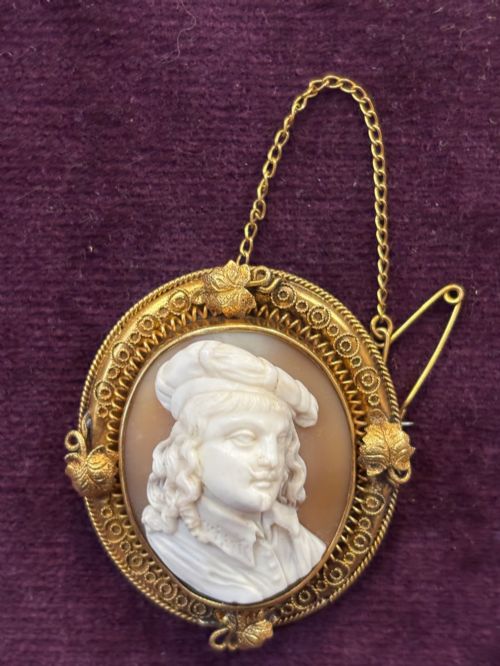
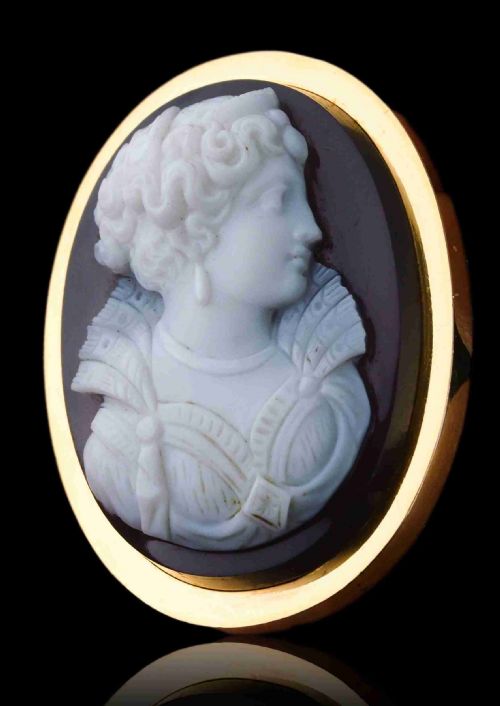
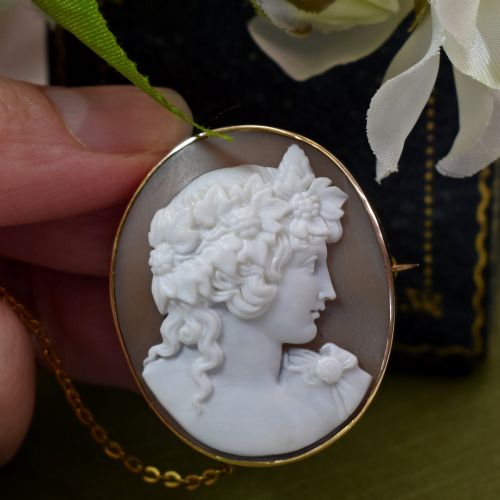
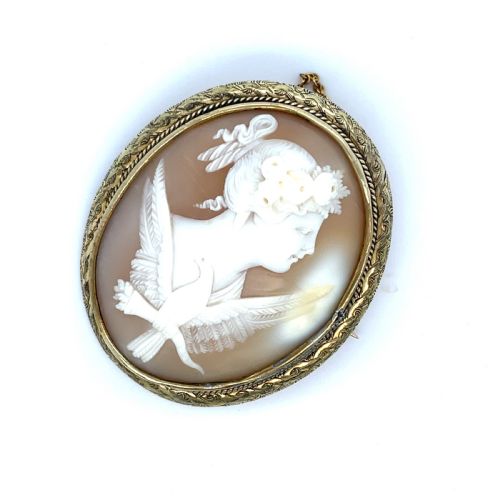
The most common examples on this page are Victorian brooches and pins featuring shells or hardstones such as agate, onyx, and rock crystal. Subjects range from classical deities like Flora and Aphrodite to mythological figures and portraits.
Originating from British, French, and Italian workshops, these jewels span from the early Victorian era through the eighteen-eighties. Neoclassical Revival influences dominate the aesthetic, reflecting a sustained nineteenth-century fascination with classical antiquity.
How they were made
Carvers shaped natural materials like shell, sardonyx, and agate by hand to exploit the contrasting colour layers of the medium. This subtractive technique required immense precision to raise the opaque figure against a darker background.
Makers mounted these carved reliefs into frames fashioned from gold, spanning twelve-carat, eighteen-carat, and higher purities. Some elaborate mounts incorporated additional elements like diamonds, emeralds, coral, and filigree wirework.
Victorian carvers occasionally transformed the natural blemishes of a shell into flowing locks of hair or wind-swept drapery.
What varies in quality
The depth and crispness of the carving dictate the artistic success of the piece, separating flat mechanical work from expressive sculptural relief. Master carvers exploited the natural strata of the shell or stone to create subtle tonal gradients across the face or drapery.
The substance of the gold frame and the integration of surrounding gemstones establish the overall luxury of the jewel. Solid gold mountings with detailed ornamentation or accompanying diamonds elevate the piece far beyond simple stamped metal frames.
R Pernice
The Yellow Gold Cameo Pin Glossary
- Cameo
- A method of carving an object such as a gemstone or shell where a relief image stands out distinctly from a background of a different colour. This technique dates back millennia and remains central to antique portraiture.
- Hardstone
- A collective term for semi-precious stones such as agate, onyx, and jasper used by lapidaries for carving. Unlike softer shells, these stones demand abrasive cutting agents and immense time to shape.
- Neoclassical Revival
- An artistic movement drawing inspiration from the classical art and culture of ancient Greece and Rome. This style heavily influenced Victorian jewellery designs and mythological subject matter.
- Filigree
- Delicate jewellery ornamentation made from fine gold or silver threads soldered together in open-air patterns. It appears frequently on nineteenth-century frames to add textural richness.
- Rock crystal
- Colourless, transparent quartz utilised in high-end Victorian mounting and glazing. It provides a durable, clear protective cover or striking structural element.
Yellow Gold Cameo Pin: Frequently Asked Questions
How do I wear a cameo pin?
These pieces function traditionally as brooches fastened to the lapels of jackets, collars, or the fronts of garments. Their substantial pin stems require sturdy fabrics to support the weight of the metal and stone.
Ensure the safety clasp or C-clasp is secure when fastening the jewel to prevent loss during wear.
How do I date a cameo pin?
Dating relies on stylistic markers such as the Neoclassical Revival aesthetic, the depth of the carving, and the construction of the gold mount. Victorian examples often display hallmarks or specific framing techniques characteristic of the eighteen-fifties through the eighteen-eighties.
Examining the pin mechanism and the back of the setting provides further chronological clues regarding the manufacturing period.
What materials are used in cameos?
Carvers utilised natural shells, particularly conch and cameo shell, alongside hardstones like agate, onyx, and sardonyx. These materials possess distinct colour layers that create contrast between the subject and the background.
Frames and decorative accents incorporate yellow gold, diamonds, emeralds, coral, and rock crystal.