



Antique Cameo Pendant Pin
These antique cameo pendant pin designs combine carved relief portraits with dual-purpose mountings, offering both a pendant suspension and a pin fitting.
Antique Cameo Pendant Pin
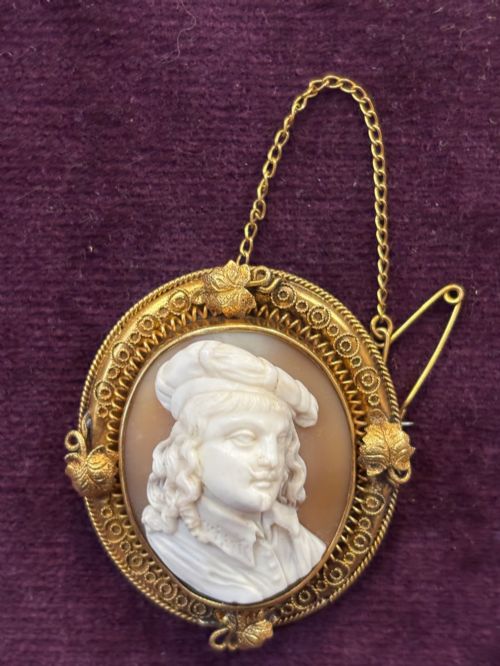
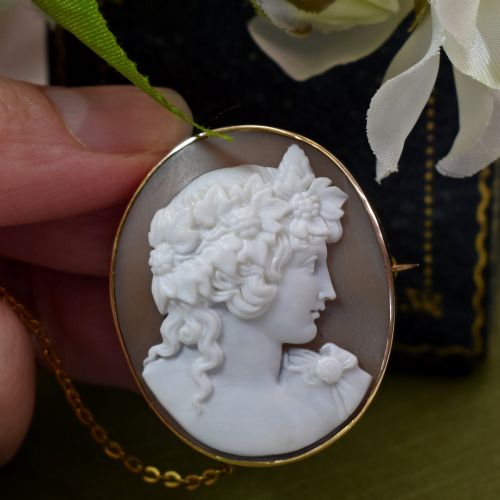
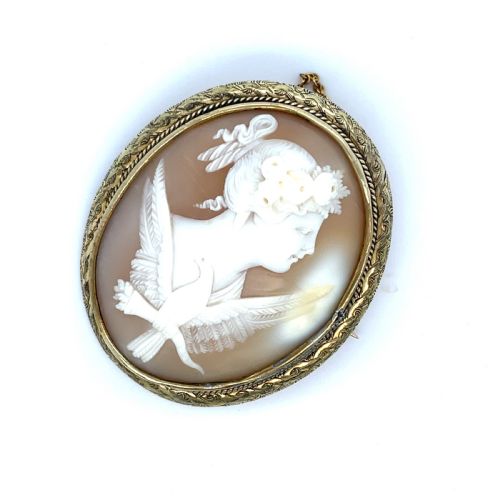
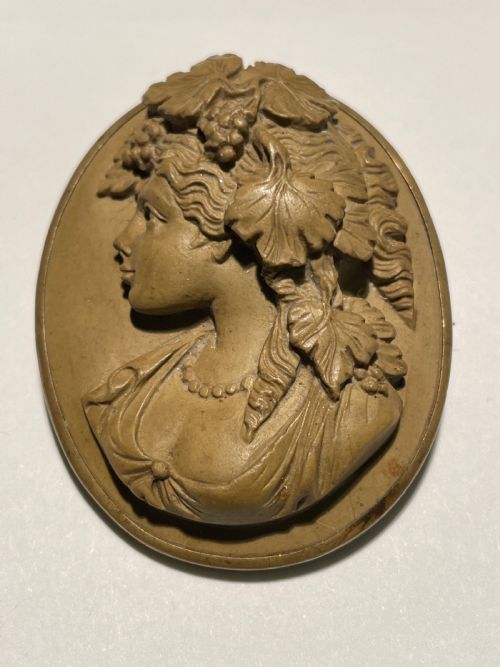
An antique cameo pendant pin presents miniature relief carvings mounted in precious metals, designed to function as both a brooch and a necklace pendant. The pieces found here span the Victorian era, the Edwardian period, and the mid-nineteenth century, capturing classical subjects and Grand Tour souvenirs.
The most common formats on this page utilise shell and hardstone for the carved strata, set within frames of nine-carat gold, eighteen-carat gold, silver, or pinchbeck. Makers utilised traditional motifs, including mythological figures such as Aphrodite, Psyche and Cupid, and Antinous Vertumnus, alongside historical portraits like Bonnie Prince Charlie.
Originating largely from Italian workshops or British and French jewellers of the nineteenth century, these versatile items reflect the era's fascination with classical antiquity. The dual mountings allowed wearers to pin the jewel to a bodice or suspend it from a chain, a practical feature of nineteenth-century jewellery design.
Materials and construction methods
Carvers shaped shell, agate, lava, and hardstone by hand, exploiting the natural colour layers to create contrast between the raised figure and the darker background. These relief carvings were then secured into metal mounts fabricated from gold, silver, or pinchbeck.
Mounts often incorporate integrated hinged pins, C-clasps, and fold-down loops or fixed rings for suspension as a pendant. Jewellers used bezel settings and wirework frames to secure the delicate carved plaques without damaging the fragile material.
Distinguishing finer examples
The depth of carving and the crispness of anatomical detail separate standard production from superior work. Finer carvers defined hair strands, facial expressions, and drapery folds with precision, whereas lesser pieces show softer, shallower relief with blurred contours.
The choice of material and the weight of the metal mount also indicate quality. Solid gold or substantial silver and pinchbeck frames with well-integrated dual pendant-pin mechanisms reflect higher manufacturing costs than lighter, simpler mountings.
The Antique Cameo Pendant Pin Glossary
- Cameo
- A method of carving an object such as a engraved gem, item of jewellery, or vessel. In these pieces, it refers specifically to a relief carving where the raised subject contrasts in colour with the background layer.
- Pinchbeck
- An alloy of copper and zinc invented in the eighteenth century to imitate gold. It provides a warm golden tone without the precious metal cost.
- Grand Tour
- A traditional trip of Europe undertaken by upper-class European young men of sufficient means. It resulted in the acquisition of souvenirs such as Italian lava and shell cameos.
- Hardstone
- Stones of high hardness used for carving, such as agate. Unlike shell, hardstone cameos require abrasive cutting techniques.
- Bezel setting
- A method of jewellery construction where a metal strip is wrapped around the perimeter of the stone or shell to hold it in place. It forms a secure border around the carved plaque.
Antique Cameo Pendant Pin: Frequently Asked Questions
How do I wear an antique cameo pendant pin?
These pieces feature both a pin mechanism on the reverse and a loop or bail for a chain. You can fasten the item to a collar or lapel as a traditional brooch, or thread a ribbon through the loop to wear it around the neck.
The dual functionality was popular in the nineteenth century, allowing a single versatile ornament to serve multiple dress requirements. Ensure the pin catch is secure before fastening it to heavier fabrics.
What materials are carved cameos made from?
The pieces listed here utilise natural shell, agate, other hardstones, and volcanic lava. Shell cameos typically display white figures against a peach or brown background, while hardstone and lava versions offer different mineral tones and textures.
Carvers selected specific materials based on the desired contrast and the intended detail of the classical or portrait subject.
How can I tell the period of a cameo?
Dating relies on the style of the metal mount, the clasp type, and the carving subject. Victorian examples often feature deep gold frames and mythological themes, while Edwardian pieces may use lighter silver mounts with refined floral or geometric wirework.
Assil hallmarks, where present on the metal frame, provide a reliable date for the creation of the mounting.
What are Grand Tour cameos?
Grand Tour cameos are pieces acquired by travellers visiting Italy during the eighteenth and nineteenth centuries. They often depict classical ruins, mythological figures, or copies of famous sculpture.
These souvenirs were typically mounted locally in Italy, sometimes utilising materials like volcanic lava sourced directly from the region.