


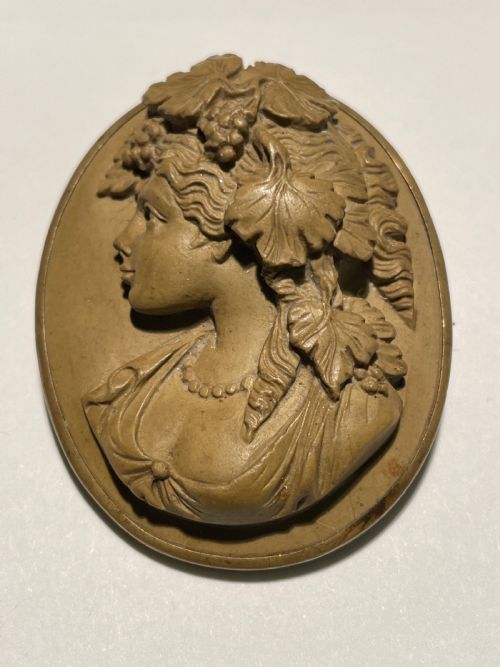

Antique Classical Portrait Pin
An antique classical portrait pin brings history to the lapel through carved shell, hardstone, and precious metal.
Antique Classical Portrait Pin
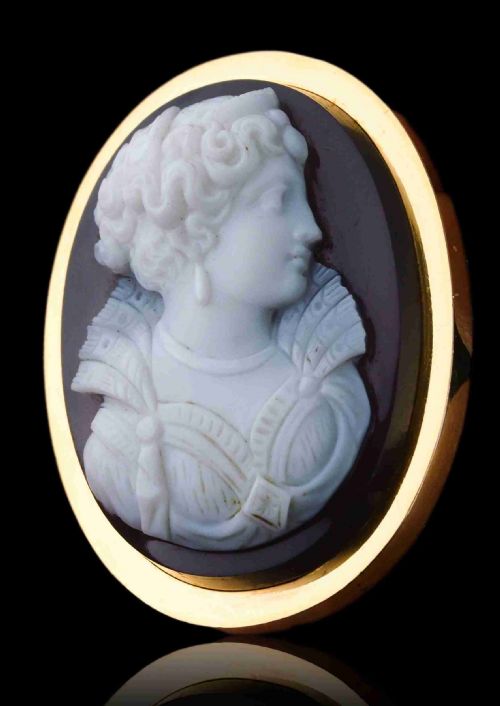
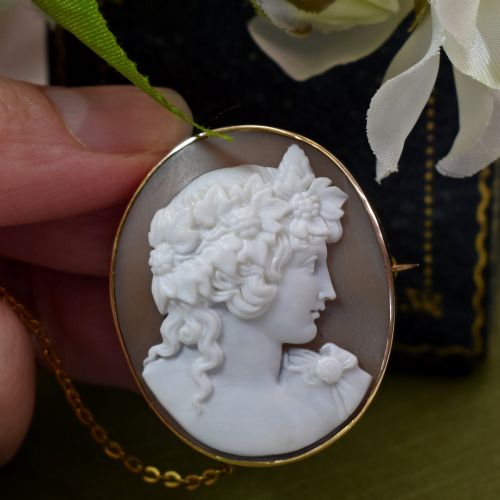
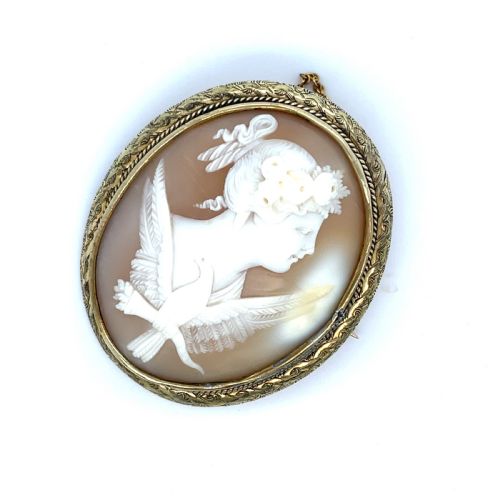
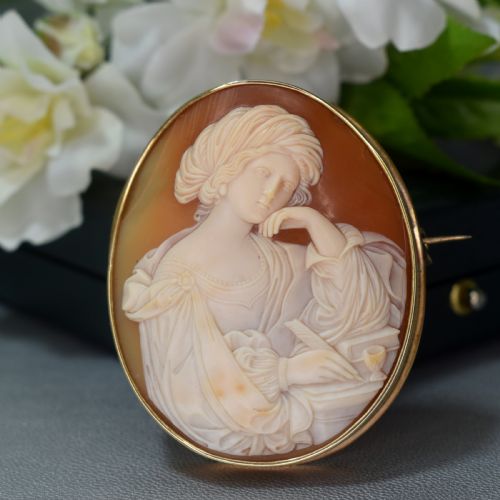
An antique classical portrait pin is a wearable piece of miniature sculpture that translates classical mythology and antiquity into personal adornment. When searching for an antique classical portrait pin, buyers encounter Victorian shell and hardstone cameos depicting mythological figures and ancient sibyls.
The pieces listed here span the Victorian era, the Edwardian period, and the mid-nineteenth century, frequently linked to the Grand Tour of Italy. Most examples take the form of brooches carved with female deities, classical heroes, and literary figures set within gold or silver frames.
How They Were Made
Carvers shaped these portraits by hand from layered materials such as shell, hardstone, agate, and volcanic lava to exploit natural colour contrasts between the raised subject and the darker background. Artisans utilised fine cutting tools to achieve the delicate relief work seen in profiles of goddesses and sibyls.
Mountings were cast and fabricated in yellow metals including nine carat gold, eighteen carat gold, fifteen carat gold, silver, and pinchbeck. The stones and shells were then secured in bezels or claw settings, occasionally accompanied by integrated folding bails to allow conversion between a brooch and a pendant.
Listings feature items from the Victorian and Edwardian eras, spanning from eighteen fifty to nineteen hundred and eight.
What Varies in Quality
Depth of relief and sharpness of carving distinguish the finest portrait pins from standard workshop output. Superior carving renders facial expressions and drapery with anatomical precision, whereas lesser pieces show softer contours and simpler hair styling.
The quality of the surrounding metalwork also governs the overall standard of the jewel. Solid gold frames with heavy gauge construction and detailed wirework elevate the piece above plain silver or pinchbeck settings.
R. Pernice
The Antique Classical Portrait Pin Glossary
- Cameo
- A method of carving an object such as a gemstone, lava, or shell where a design is raised in relief above a contrasting background. This technique relies on the natural stratification of the material to separate the figure from the field.
- Hardstone
- A semi-precious stone of considerable hardness, such as agate, utilised by lapidaries for detailed glyptic art. It offers greater durability than shell.
- Pinchbeck
- An alloy of copper and zinc invented in the eighteenth century to imitate gold. It provides a warm metallic appearance without the expense of precious metal.
- Grand Tour
- A cultural journey of Europe undertaken by wealthy young men and women in the eighteenth and nineteenth centuries. Travellers frequently acquired carved lava and shell portraits as souvenirs in Italy.
- Sibyl
- An oracle or prophetess of the classical world whose image was a popular subject for nineteenth century carvers. These figures were often copied from Renaissance paintings.
Antique Classical Portrait Pin: Frequently Asked Questions
What materials are portrait pins made from?
These pieces utilise natural materials such as helmet shell, banded agate, hardstone, and volcanic lava for the carved portrait element. The frames are constructed from various grades of gold, silver, or pinchbeck.
Shell and lava provide softer carving mediums, whilst agate and hardstone demand greater skill from the lapidary due to their density.
How do I date a classical portrait pin?
Dating relies on the style of the carving, the mount construction, and the materials used. Victorian examples often feature heavy gold frames and classical revival motifs.
Later Edwardian pieces tend to employ lighter silver or gold settings with distinct bezel designs that reflect twentieth-century manufacturing shifts.
Were these pins worn as pendants too?
Many examples include a hinged loop or bale tucked behind the pin stem to allow suspension from a chain. This dual functionality was common during the nineteenth century.
Not all pieces feature this addition, so inspecting the reverse reveals whether the jewel was intended solely for the lapel.
Who do the portraits usually depict?
The subjects are drawn primarily from Greek and Roman mythology, classical history, and Renaissance art. Common figures include goddesses like Flora and Aphrodite, as well as sibyls and classical heroes.
Carvers frequently based these miniature profiles on famous sculptures or paintings encountered during European travels.
How should I care for an antique shell cameo?
Shell is an organic material that benefits from gentle handling and protection from harsh chemicals, perfumes, and prolonged direct sunlight. Cleaning requires only a soft, dry cloth to remove dust.
Store the jewel separately from harder gemstones to prevent surface scratching on the delicate relief.