


Victorian Shell Cameo Pin
A victorian shell cameo pin is a hand-carved portrait or classical scene set in precious metal, offering wearers a tangible piece of nineteenth-century miniature sculpture.
Victorian Shell Cameo Pin
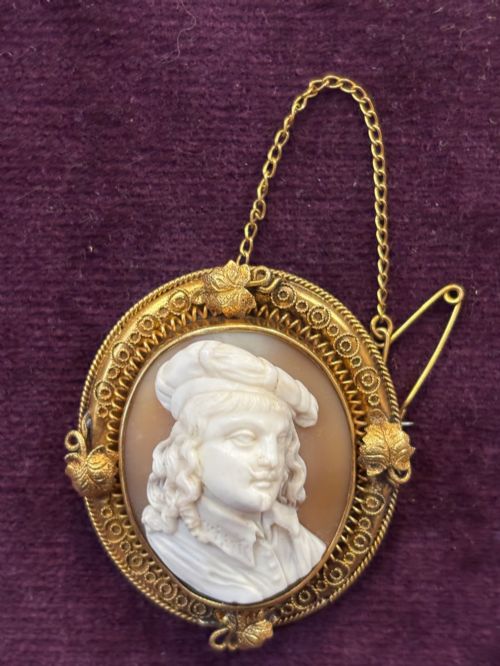
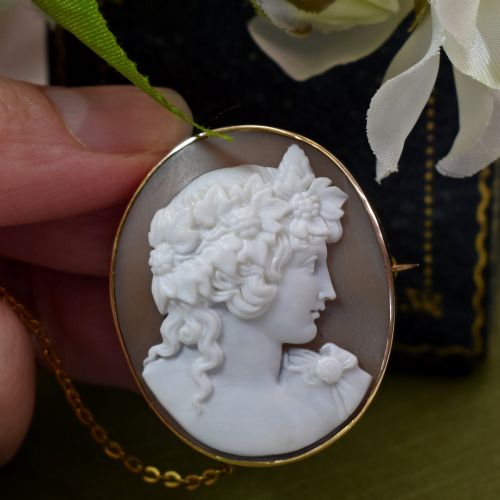
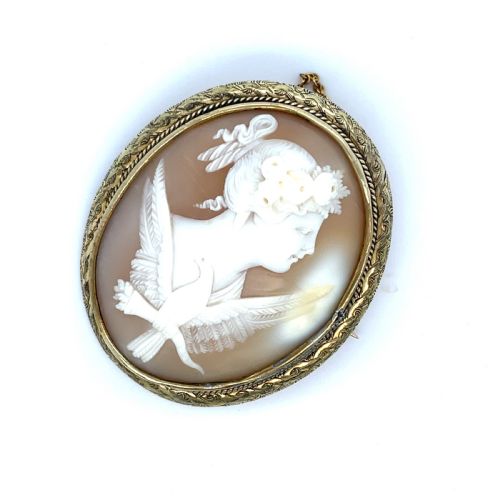
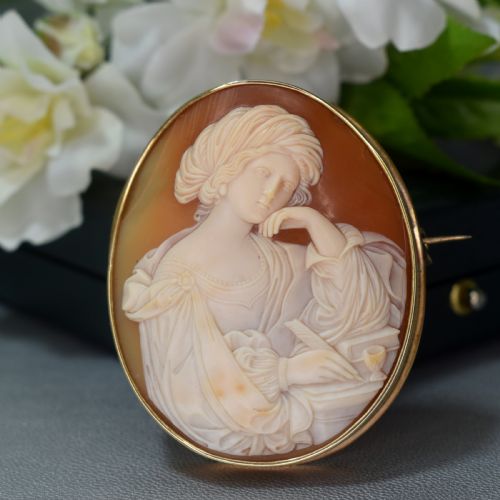
A victorian shell cameo pin combines carved portraiture with wearable jewellery, typically taking the form of a brooch pinned to garments. These pieces span the nineteenth century, including specific dates such as 1850 and 1860, alongside broader Victorian periods.
The subjects draw heavily on classical antiquity and mythology, depicting figures such as Aphrodite, Flora, Psyche and Cupid, and Antinous Vertumnus. Buyers will also encounter Italian Grand Tour pieces and subject matter inspired by historical figures like Bonnie Prince Charlie and the Persian Sibyl.
Most examples function primarily as brooches, though the selection includes matching sets comprising earrings and brooches. The physical forms range from standard pin configurations to larger statement pieces mounted in ornate metalwork.
How they were made
Carvers worked directly into natural shell, exploiting the contrasting colour layers of the material to raise the carved subject against a darker background. This technique required immense precision to maintain consistent depth and detail across miniature portraits.
Frames were constructed from various grades of gold, including 9ct, 12ct, 15ct, 18ct, and 20ct yellow gold, alongside silver and pinchbeck. Artisans frequently embellished these mountings with intricate filigree work and elaborate bezels to complement the carved shell within.
Listings demonstrate mounting materials spanning silver, pinchbeck, and gold alloys from 9ct up to 20ct.
What varies in quality
The refinement of the carving dictates the distinction between standard and superior pieces, particularly in the rendering of facial expressions, hair texture, and drapery. Master carvers achieved subtle three-dimensional depth and anatomical accuracy that lesser artisans missed.
The Victorian Shell Cameo Pin Glossary
- Cameo
- A method of carving an object such as a gemstone or shell where a relief image is raised above a contrasting background. This technique relies on natural colour stratifications in the material.
- Grand Tour
- A cultural journey of Europe undertaken by wealthy young men in the 18th and 19th centuries. Travellers frequently purchased carved shell cameos in Italy as souvenirs of their travels.
- Pinchbeck
- An alloy of copper and zinc invented in the 18th century to imitate gold. It provides the warm appearance of gold without the precious metal content.
- Filigree
- Ornamental work consisting of fine wire twisted into open-work patterns. This delicate metal technique often appears on the frames of Victorian jewellery.
Victorian Shell Cameo Pin: Frequently Asked Questions
How do I wear a cameo brooch today?
These pieces pin securely onto heavy fabrics like wool coats, knitted cardigans, or structured jacket lapels. The weight of the gold frame requires a sturdy weave to hold the pin straight without sagging.
They also sit well fastened at the centre neckline of a collared shirt or securing a silk scarf in place. Pairing the brooch with simple attire lets the carved detail remain the focal point.
What subjects appear on these pins?
Carvings frequently depict figures from Greek and Roman mythology, including goddesses like Flora and Aphrodite, or classical allegories such as Psyche and Cupid. Portraits of historical figures, literary characters, and idealized profiles also occur regularly.
Italian carvers drew heavily on classical antiquity, producing miniature interpretations of famous sculptures and Renaissance paintings. Identifying the subject often reveals the cultural influences popular during specific decades of the nineteenth century.
How do I care for shell jewellery?
Shell is a natural organic material that benefits from gentle handling and storage away from hard items. Avoid submerging antique pieces in water or exposing them to harsh chemical cleaning agents that can damage the surface.
Cleaning is best done with a soft, dry cloth to remove dust from the carved recesses. Keep the brooch stored in a padded box to protect both the delicate shell relief and the metal pin mechanism.
How can I tell the period?
Dating relies on examining the style of the carving, the construction of the pin finding on the reverse, and the composition of the metal frame. Early pieces often feature deep, robust carving styles and heavier gold mountings.
Markings, hinge types, and C-clasps provide further clues to whether a piece belongs to the early, mid, or late Victorian eras. Comparing the subject matter to known artistic trends of the nineteenth century helps narrow down the decade of creation.