


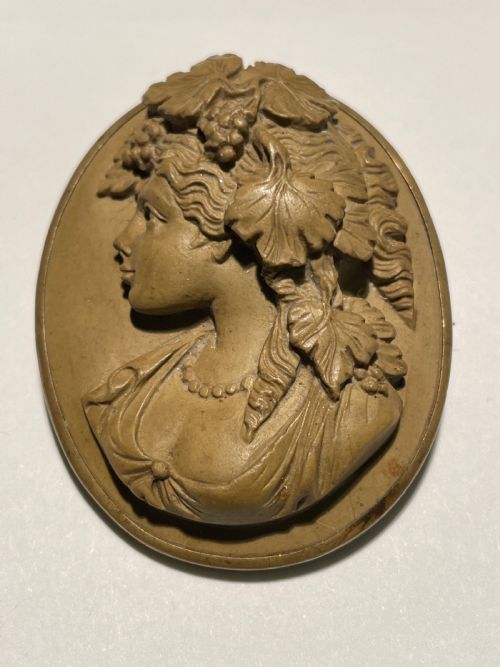

Classical Portrait Cameo Pin
These classical portrait cameo pin examples are carved hardstone, shell and lava portraits set in gold, silver and pinchbeck mounts, offering wearable miniature sculpture.
Classical Portrait Cameo Pin
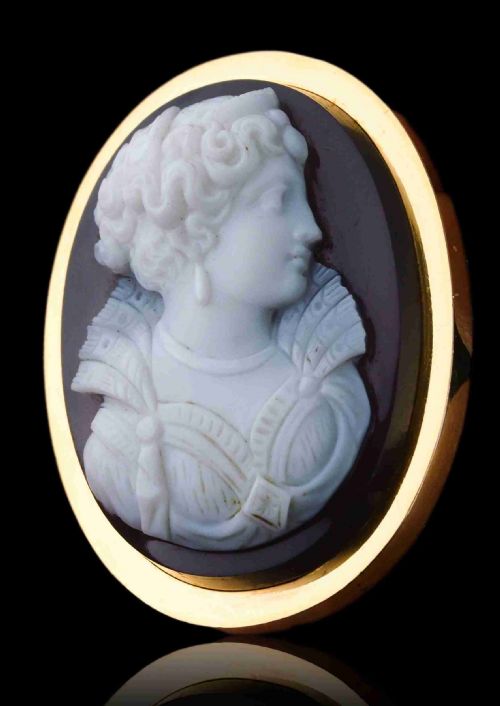
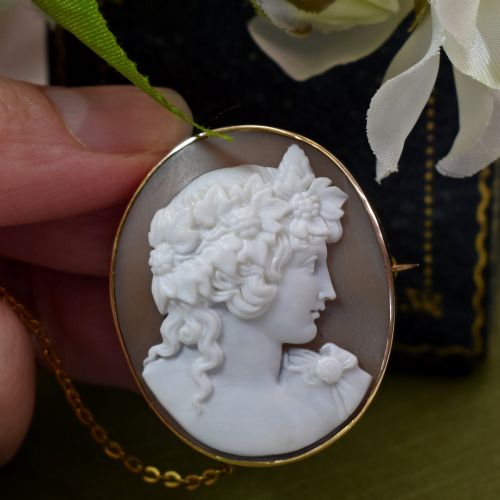
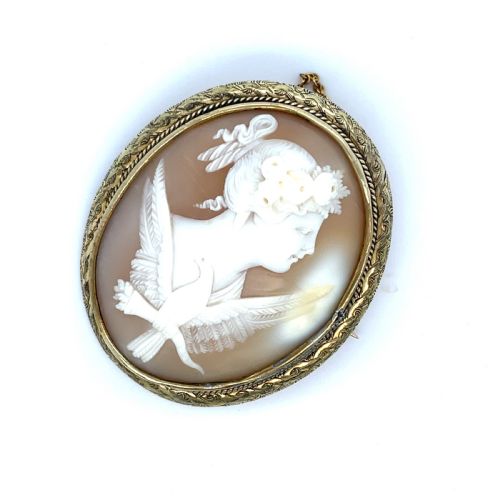
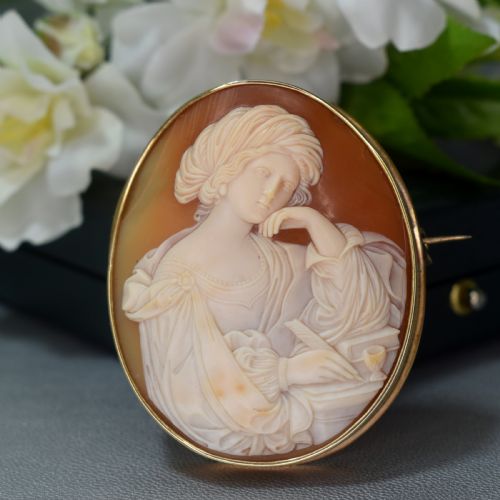
A classical portrait cameo pin presents carved profiles of mythological figures, classical deities and sibyls in shell, agate, hardstone and lava. You encounter these pieces primarily as Victorian brooches with gold or silver frames.
The selections span the Victorian and Edwardian periods, frequently reflecting the Neoclassical Revival and Grand Tour taste. French and Italian craftsmanship dominate the available forms.
Subjects range from the Goddess Flora and Aphrodite to specific literary and classical figures such as Antinous Vertumnus and the Persian Sibyl. These miniature carvings function simultaneously as personal adornment and historical portraiture.
Materials and Carving Techniques
Carvers utilise natural layered materials such as shell, agate and hardstone to achieve contrast between the raised portrait and the darker background. Lava also appears as a sculptural medium, carved into three-dimensional classical profiles.
Mounts are fabricated in 9ct gold, 18ct gold, silver and pinchbeck to secure the carved panels. Frames frequently feature solid gold construction suited to the scale of the cameo.
Listings feature Victorian and Edwardian periods, incorporating shell, agate, hardstone, lava, gold, silver and pinchbeck.
Evaluating Quality and Execution
The weight and integrity of the gold or silver frame contribute significantly to the piece. Substantial metalwork and signed frames elevate the status of the overall jewel.
R. Pernice
The Classical Portrait Cameo Pin Glossary
- Cameo
- A method of carving an object such as a engraved gem, item of jewellery or vessel. The design is raised above the background.
- Hardstone
- A term for semi-precious stones used in carving, such as agate. These materials offer distinct contrasting layers.
- Grand Tour
- A cultural journey undertaken by wealthy young Europeans through Italy and France. Travellers acquired local crafts including shell and lava cameos.
- Pinchbeck
- An alloy of copper and zinc invented in the eighteenth century to imitate gold. It provides a warm metallic appearance in period jewellery.
- Neoclassical Revival
- A style drawing inspiration from the classical art and culture of ancient Greece and Rome. This aesthetic heavily influences Victorian cameo subjects.
Classical Portrait Cameo Pin: Frequently Asked Questions
What is a classical portrait cameo pin?
A classical portrait cameo pin is a carved brooch depicting mythological or classical figures in shell, agate or lava. These pieces were worn to display an appreciation for classical antiquity.
They combine miniature sculpture with functional jewellery mounted in gold, silver or pinchbeck.
How do I date a cameo pin?
Dating relies on the style of the mount, the materials used and the subject matter. Victorian and Edwardian examples often display characteristic metalwork and clasp types.
Period markers include hallmarks on silver and gold frames, alongside the specific Neoclassical Revival aesthetic of the mid to late nineteenth century.
What materials are used for cameos?
Carvers utilise natural shell with distinct colour layers, alongside hardstones like agate. Lava and other compact minerals also serve as carving mediums for three-dimensional portraits.
Frames are constructed from 9ct gold, 18ct gold, silver and pinchbeck.
How were these brooches worn?
Victorian wearers pinned these pieces to collars, cravats and the fronts of bodices. They served as prominent decorative fasteners for garments.
The substantial scale of many examples makes them focal points of historical dress.