



Carved Portrait Cameo Pendant
A carved portrait cameo pendant brings miniature classical relief carving to the neckline, combining layered shell or stone with precious metal mountings.
Carved Portrait Cameo Pendant
The most common versions met on this page belong to the Victorian era, utilising shell as the primary medium for classical and historical profiles. Alongside these are Edwardian interpretations and mid twentieth century iterations, frequently mounted in various purities of gold or silver.
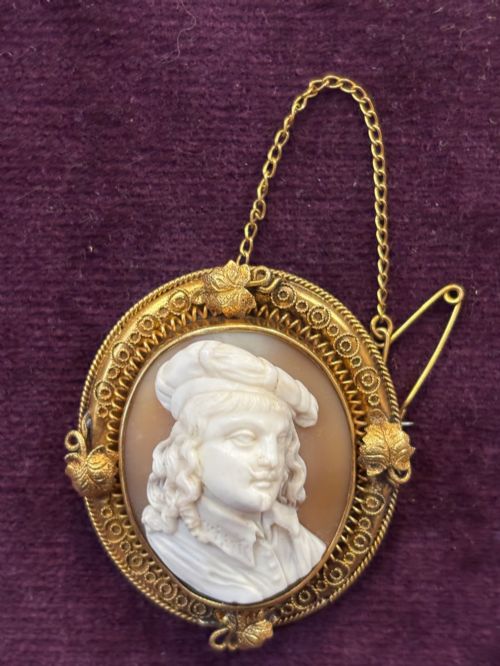
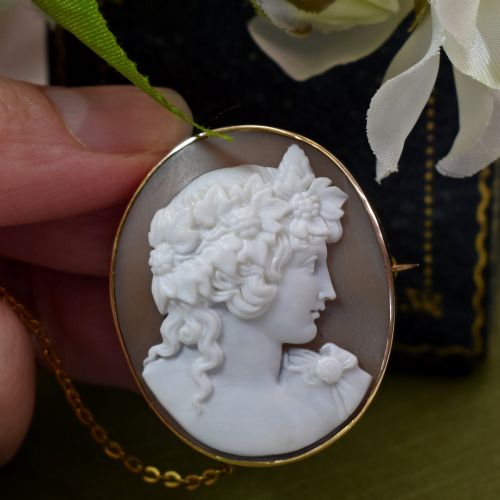
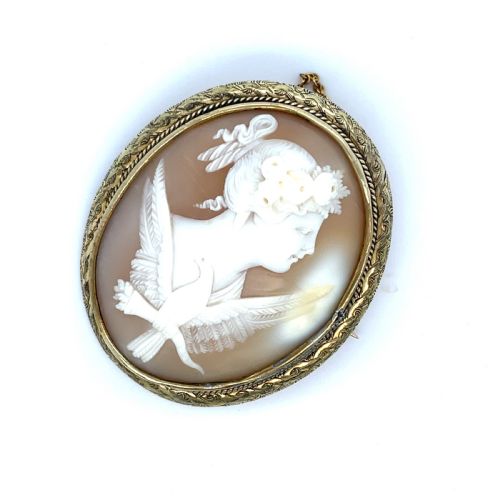
Makers frequently turned to classical subjects, depicting figures such as Aphrodite, Antinous Vertumnus, and Bonnie Prince Charlie within detailed frames. The forms range from simple teardrop drops to elaborate settings augmented by pearls.
Materials and construction methods
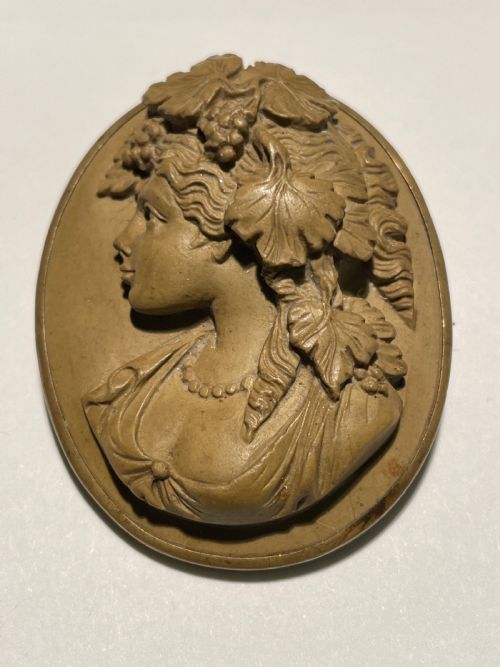
Carvers utilised natural materials possessing distinct colour strata, predominantly selecting conch shell or standard shell, alongside agate and lava. The artist cut away the lighter outer layer to leave the opaque white portrait standing in sharp relief against a darker background.
Frames and mounts required precise metalwork in silver, pinchbeck, and gold ranging from 9ct to 20ct, often shaped by hand to follow the contours of the carved oval. Jewellers integrated pearls or detailed wirework borders to finish the outer edge.
Bonnie Prince Charlie occasionally pops up in shell form, reminding us that Jacobite loyalty made surprisingly delicate neckwear.
Distinguishing quality in carved portraits
Material selection also dictates the standing of a piece, with uniform shell layers and flawless agate commanding greater appreciation than material containing natural flaws or uneven thickness. The weight and intricacy of the gold or silver frame complete the assessment.
The Carved Portrait Cameo Pendant Glossary
- Cameo
- A method of carving an object such as a gemstone or shell so that a raised relief image appears against a contrasting background. This technique relies on the natural stratification of the material.
- Pinchbeck
- An alloy of copper and zinc invented in the eighteenth century to imitate gold. It provides a warm yellow tone commonly found in antique jewellery mounts.
- Grand Tour
- A cultural journey undertaken by wealthy young Europeans visiting historical sites on the continent. Souvenirs from these travels frequently included lava and shell cameos purchased in Italy.
- Relief
- Sculptural technique where the sculpted elements remain attached to a solid background of the same material. High relief projects boldly from the plane, while low relief stays flatter.
Carved Portrait Cameo Pendant: Frequently Asked Questions
How do I wear a convertible cameo?
Many period examples feature both a folding bail for suspension and a pin mechanism on the reverse. This allows the piece to function interchangeably as a pendant on a chain or a brooch pinned to clothing.
When hanging the piece as a pendant, ensure the safety catch on the pin is secured flat against the back to prevent snagging on fabrics.
What materials are cameos carved from?
The majority of pieces utilise helmet shell or conch shell, taking advantage of the natural colour change between layers. Hardstones such as agate and volcanic lava also appear in historical examples.
Shell yields a warm golden or brownish backdrop for white figures, whereas agate offers sharper contrast through dyed or natural quartz strata.
How do I date a Victorian cameo?
Dating relies on examining the style of the carving, the mount construction, and any accompanying hallmarks or metal standards. Early Victorian pieces often feature heavier gold frames and deep, romantic profiles, while later eras introduced lighter settings.
Pieces originating from Italy during the Grand Tour period often lack British hallmarks but display distinct regional framing techniques typical of mid-nineteenth-century workshops.
How should I clean antique shell cameos?
Shell is a delicate organic material that requires gentle maintenance without harsh chemical dips or ultrasonic cleaning. A soft dry cloth removes dust safely, and stubborn grime responds to a slightly damp cloth with mild soap followed by immediate drying.
Avoid submerging shell cameos in water for extended periods, as moisture can penetrate hairline fractures and weaken the adhesive holding the shell within its mount.