


Antique Blue Meat Dish
An antique blue meat dish delivers grand scale and deep cobalt transfer scenes to the table, uniting practical serving weight with picturesque landscape storytelling.
Antique Blue Meat Dish
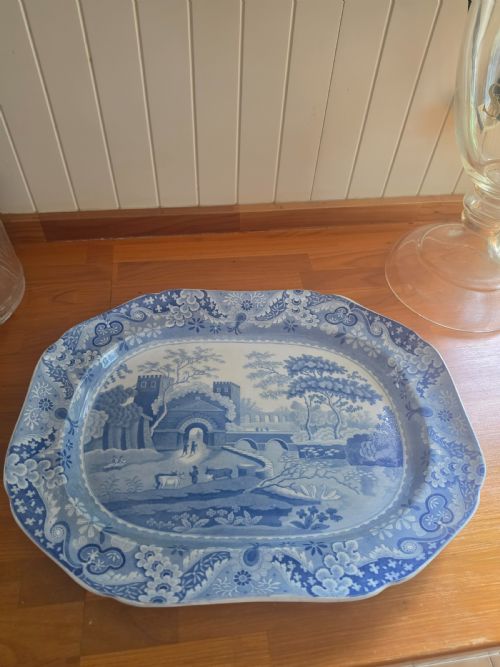
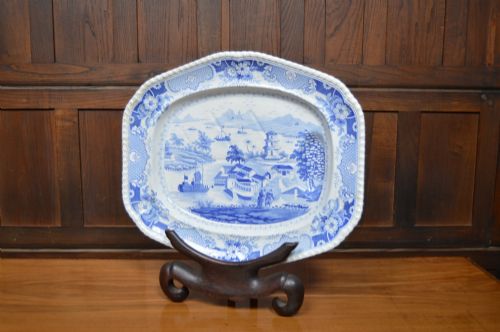
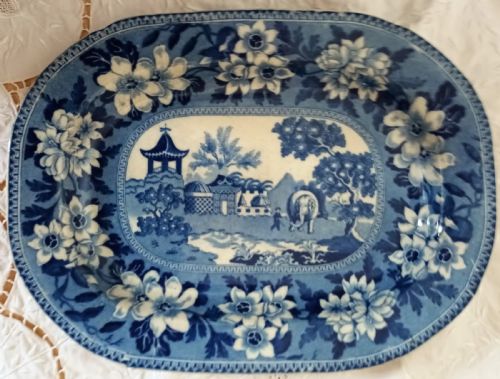
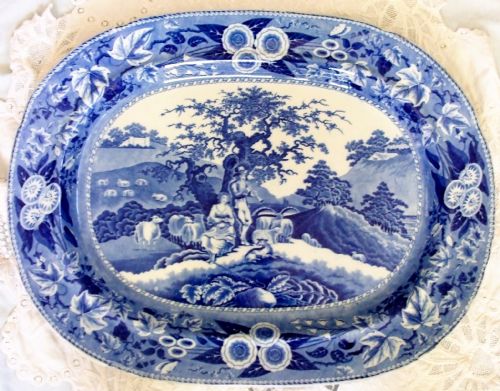
An antique blue meat dish functions as a substantial ceramic platter designed for presenting large joints and poultry at the dining table. These serving pieces emerge primarily across the Georgian and Victorian eras, spanning diverse origins from Staffordshire potteries to Chinese export kilns.
How they were made
Potters shaped these large platters from earthenware, ironstone, pearlware, and porcelain, applying cobalt pigment through hand-painted or copperplate transfer printing techniques. A protective clear glaze sealed the design before high-temperature firing yielded a durable, glossy surface suitable for heavy culinary use.
Makers utilised dense ceramic bodies like ironstone to support the substantial weight of large joints, while incorporating complex drainage wells and recessed gutters into the moulded clay.
Listings feature earthenware, ironstone, and porcelain spanning the Georgian and Victorian periods, centred on nineteenth-century Staffordshire production.
What varies in quality
Quality rests in the crispness of the cobalt transfer print and the clarity of the underlying ceramic body, where exceptional examples maintain sharp pictorial detail without blurring or pooling of pigment. The sophistication of the pattern layout, whether depicting classical ruins or intricate topographical views, distinguishes standard production from finer manufactory output.
Structural heft and the inclusion of original draining inserts or well-and-tree reservoirs elevate the utility and desirability of a piece. Well-balanced potting and clean, unwarped forms resulting from successful kiln firings mark the upper tier of surviving platters.
Spode·John Rogers And Son·Copeland And Garrett·Thomas Lakin·Don Pottery·Minton·Mason·Elkin Knight And Bridgwood
The Antique Blue Meat Dish Glossary
- Transferware
- A pottery decoration technique where an engraved copperplate transfers a design onto tissue paper, which is then pressed onto the unglazed ceramic body. This method allowed intricate blue scenes to be reproduced rapidly across large production runs.
- Ironstone
- A dense, durable ceramic paste patented in the early nineteenth century to imitate Chinese porcelain while offering superior strength. It forms a heavy, resilient body ideal for large serving platters subjected to carving knives.
- Pearlware
- A refined earthenware featuring a thin glaze with a faint bluish tint that pooled in crevices, designed to emulate Chinese export porcelain. It bridges creamware and later white ironstone in nineteenth-century production.
- Well and tree
- A platter surface featuring an arrangement of recessed channels and a central well designed to catch and drain meat juices away from the joint. This system kept large roasts elevated during carving at the table.
- Ashet
- A traditional Scottish term for a large serving platter or meat dish, frequently encountered in nineteenth-century inventories. The word derives from the French assiette.
Antique Blue Meat Dish: Frequently Asked Questions
How were antique blue meat dishes used?
These platters served as the central vessels for presenting roasted meats, game, and poultry at large dining tables during the Georgian and Victorian periods. Carvers sliced joints directly upon the ceramic surface, relying on integrated wells and drainage channels to manage juices.
Beyond formal dining, their generous proportions made them suitable for displaying substantial quantities of food in country house kitchens. They moved from kitchen to dining room as functional tableware rather than purely decorative items.
How do I care for an antique meat dish?
Wash these ceramic pieces gently by hand using mild detergent and warm water, avoiding automated dishwashers that can craze the historical glaze. Soft cloths prevent scratching the centuries-old surfaces and protect delicate transfer-printed borders.
Display the platters securely using appropriate wall hangers or sturdy plate stands that distribute their considerable weight evenly. Keep them away from rapid temperature shifts to preserve the integrity of the earthenware or ironstone body.
How do I distinguish Georgian from Victorian pieces?
Georgian platters often exhibit pearlware bodies with characteristic bluish glaze pooling and hand-engraved transfer patterns depicting classical ruins or chinoiserie motifs. The ceramic bodies tend to be slightly lighter and more resonant.
Victorian examples frequently utilise heavier ironstone bodies with crisper, highly mechanised transfer printing and varied topographical or naturalistic series. Maker marks stamped into the reverse become more standardised and legible during the later nineteenth century.