



Antique Blue Jasperware
Antique blue jasperware brings distinct white classical reliefs against a rich blue ceramic body into domestic spaces.
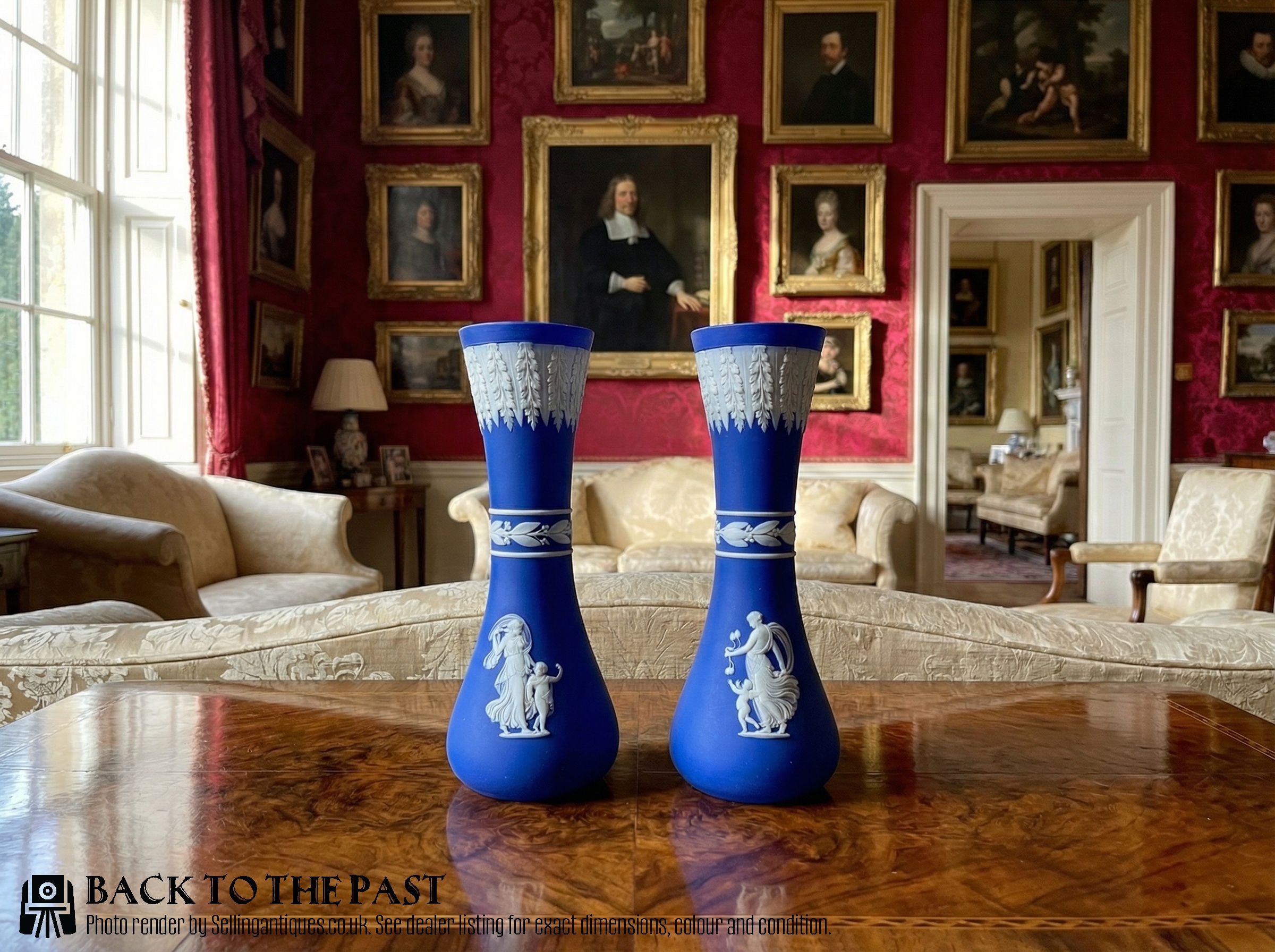
Antique Blue Jasperware
When you search for antique blue jasperware, you encounter a specialised form of fine stoneware produced primarily in Britain across the nineteenth and twentieth centuries. The material combines a matte, unglazed ceramic body with delicate white bas-relief figures, heavily influenced by neoclassical design principles.
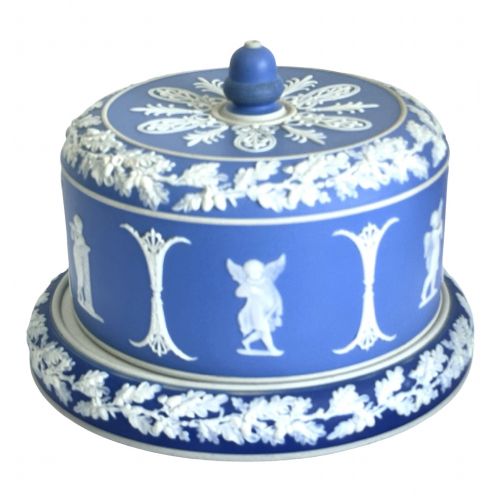
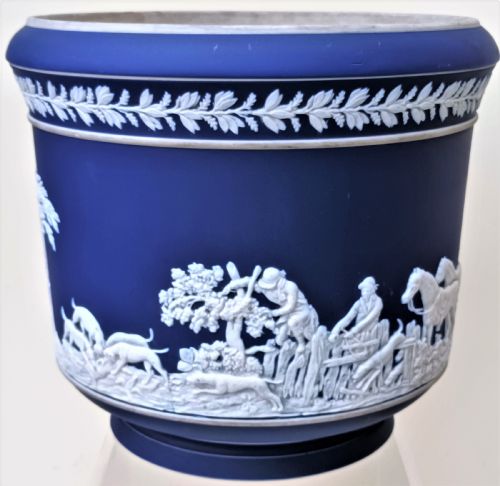
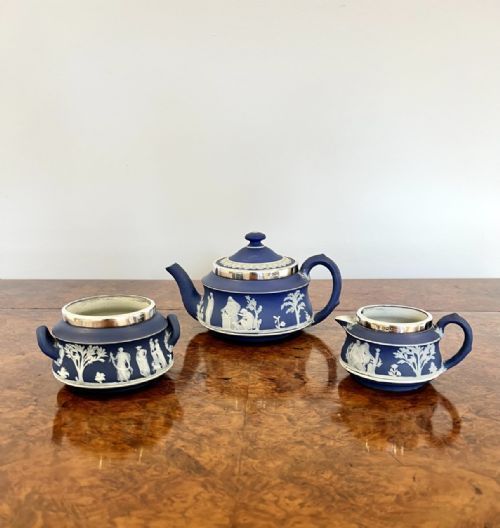
The most common examples on this page take the form of utilitarian and decorative table items such as biscuit barrels, cheese dishes, teapots, and jardinieres. Smaller decorative accessories like trinket boxes, brooches, and framed cameos also appear frequently among nineteenth-century pieces.
Most items originate from the Victorian period, with production dates stretching from the eighteen-seventies through to the nineteen-twenties and beyond. Makers such as Wedgwood dominate the selection, alongside comparable output from William Adams and Sons and Copeland Spode.
How they were made
Makers utilised a vitrified stoneware body formulated to take colour evenly through the clay mass, known as solid jasper, or applied a coloured slip over a white base, known as jasper dip. This unglazed ceramic surface requires precise firing temperatures to achieve its characteristic matte texture.
The characteristic white ornaments were moulded separately in low relief, often using carved intaglios, and then applied meticulously by hand to the blue ceramic body before firing. Metal mounts in silver plate, brass, or solid silver frequently complete functional items like biscuit barrels and teapots.
Antique Blue Jasperware Retail Price Guide 2026
Typical asking prices for blue jasperware among the pieces listed under this phrase on Sellingantiques today, from the lower quarter to the upper quarter. They describe what is for sale here now, not the wider market.
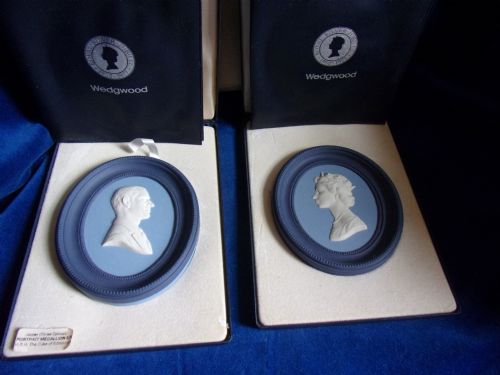
Listings feature nineteen-thirties silver-collared teapots, Victorian cheese domes, and twentieth-century portrait medallions in blue ceramic.
What varies in quality
The inclusion of hallmarked silver mounts or silver-plated collars adds significant distinction to domestic forms like biscuit barrels and cheese domes. Additionally, the depth and uniformity of the blue body itself contribute to the visual weight and overall presence of the object.
Wedgwood·William Adams and Sons·Copeland Spode·Staffordshire
The Antique Blue Jasperware Glossary
- Jasperware
- A fine, unglazed ceramic stoneware developed in the eighteenth century, characterised by a matte finish and contrasting white reliefs.
- Bas-relief
- A sculptural technique where the figures project only slightly from the flat background, forming the white ornamentation on these pieces.
- Jasper dip
- A production method where a white ceramic body receives a thin surface coating of coloured slip, creating the blue exterior.
- Campana urn
- A bell-shaped vessel with a flared rim and pedestal foot, often utilised in neoclassical decorative forms.
- Bisque
- Unglazed fired ceramic ware that provides the porous, matte foundation typical of this material.
Antique Blue Jasperware: Frequently Asked Questions
What is antique blue jasperware made from?
These pieces consist of a fine, unglazed ceramic stoneware body developed to hold a uniform colour throughout the clay or across a surface slip.
Contrasting white ornamentation is moulded separately and applied by hand in low relief before the final firing process.
How do I date antique blue jasperware?
Dating relies on impressed factory marks, registration letters, and stylistic shifts spanning the nineteenth and twentieth centuries.
Accessory elements like silver mounts and metal collars also help establish a reliable timeframe for domestic forms.
How were biscuit barrels and cheese dishes used?
Victorian households utilised these lidded vessels on dining tables for serving biscuits, dry goods, and cheese during formal meals.
The ceramic bodies helped regulate humidity while protecting the contents within domestic entertaining spaces.
Are all blue jasperware pieces made by Wedgwood?
While Wedgwood pioneered and dominated this ceramic medium, other prominent potteries produced comparable items.
Maker marks stamped into the underside of the ceramic body confirm specific origins, including works by William Adams and Sons.
How should I clean antique jasperware?
The unglazed matte surface requires gentle cleaning with a soft brush to remove dust from the intricate white reliefs.
Avoid harsh chemical immersion, particularly on pieces featuring delicate silver-plated mounts or brass collars.