



Stoneware Urn Pair
Stoneware urn pair selections bring together matched vessels of durable ceramic body, offering symmetrical display for interiors and gardens from the Victorian era onward.
Stoneware Urn Pair
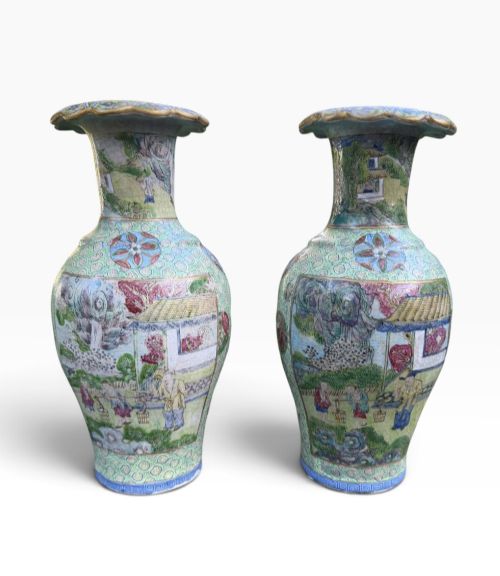
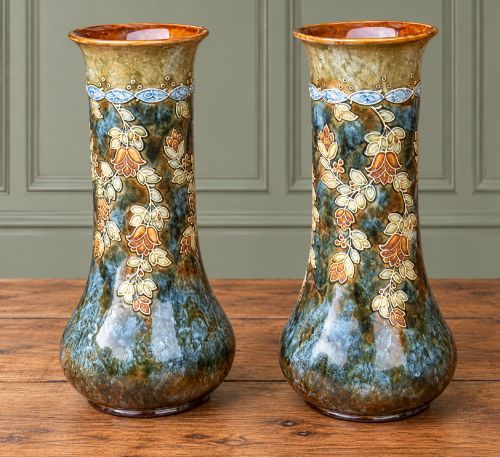
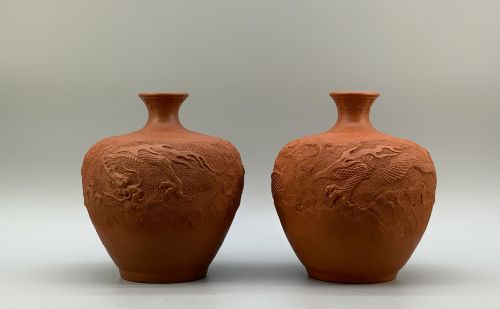
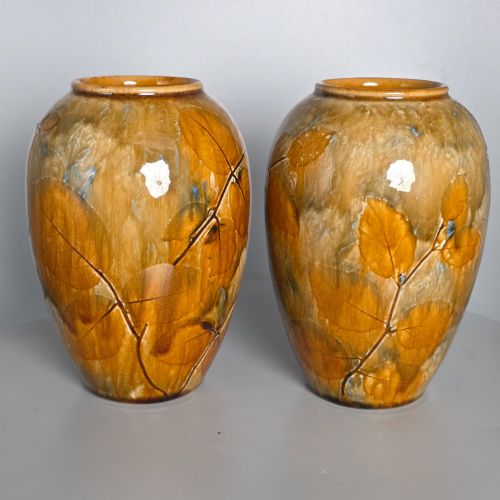
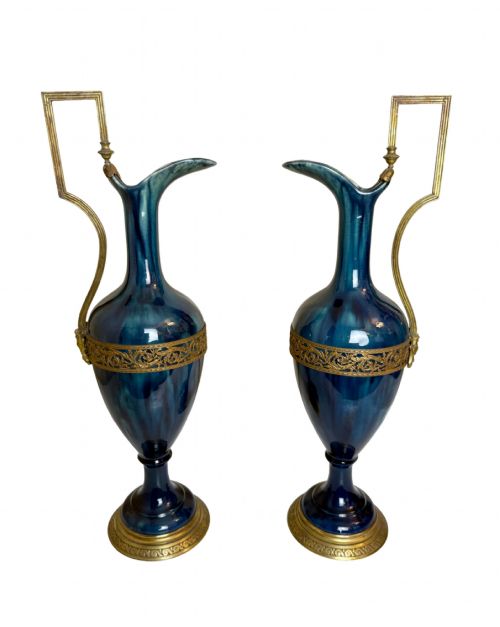
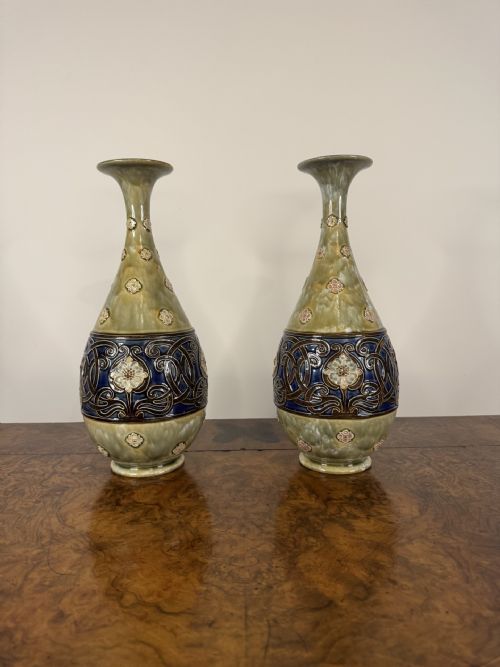
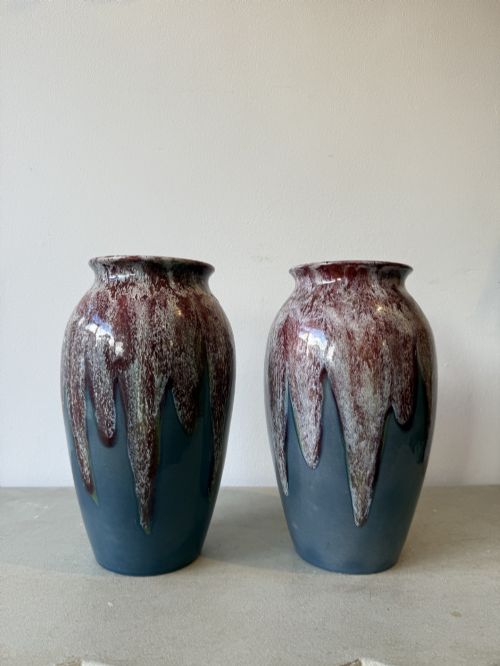
A stoneware urn pair consists of two matching heavy ceramic vessels designed for display, appearing most frequently in forms produced by British potteries during the Victorian and Edwardian periods. Buyers searching for a stoneware urn pair will find matching baluster vases, garden urns on pedestals, and bulbous vessels decorated with applied reliefs or coloured glazes.
The selections span late nineteenth-century factory production through to early twentieth-century art pottery workshops, incorporating styles such as Art Nouveau, Arts and Crafts, and Neoclassical revivalism. These matched sets served primarily as decorative garnitures for mantelpieces or architectural ornaments for garden terraces.
Materials and construction
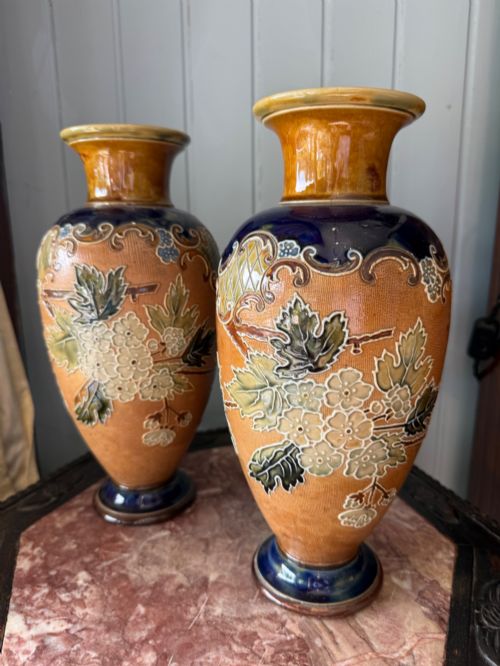
Makers shaped these vessels using dense stoneware and ceramic bodies, frequently finished with salt glaze, enamel detailing, or textured slip work. Techniques such as Slater's patent application created intricate surface patterns beneath smooth or matt glazes.
Production combined industrial moulding with hand-finished decorative elements, including applied white bas-reliefs on jasperware and hand-painted floral motifs on salt-glazed surfaces. Kiln firing at high temperatures fused the vitreous body with the exterior finish to ensure durability.
Stoneware Urn Pair Retail Price Guide 2026
Typical asking prices for stoneware urn pair among the pieces listed under this phrase on Sellingantiques today, from the lower quarter to the upper quarter. They describe what is for sale here now, not the wider market.
Some nineteenth-century potters pressed actual lace tablecloths into damp clay to create intricate background textures before firing.
Evaluating the range
The distinction between standard production pieces and superior examples lies in the crispness of applied ornament and the execution of hand-painted or incised decoration by named artists. Vessels bearing factory marks alongside individual decorator ciphers demonstrate higher workshop input than unmarked commercial output.
Balance across the pair dictates overall success, where matching height, uniform glaze saturation, and symmetry in relief mouldings separate assembled companions from factory-matched twins.
Royal Doulton Lambeth·Mettlach Pottery·Coalbrookdale
The Stoneware Urn Pair Glossary
- Stoneware
- A heavy, vitrified ceramic pottery fired at high temperatures until impervious to liquid. It provides a durable ground for salt glazes and intricate surface decoration.
- Jasperware
- A fine-grained, unglazed stoneware developed with coloured silicate bodies and contrasting white applied bas-reliefs. It remains famous for neoclassical figures and classical motifs.
- Baluster
- An architectural form featuring a rounded lower body tapering into a narrow neck. This shape appears frequently in balanced vase pairs.
- Slater's Patent
- A decorative technique utilising lace or fabrics pressed into damp clay to create textured surfaces. Potteries filled these impressions with coloured enamels and gilding.
- Campana
- A bell-shaped urn form derived from classical antiquity, featuring a flared rim and pedestal foot. These vessels often sit upon matching square plinths.
Stoneware Urn Pair: Frequently Asked Questions
How do I date a stoneware urn pair?
Dating relies upon factory stamps, impressed registration marks, and stylistic indicators such as Art Nouveau flowing lines or Victorian classical revival motifs. Examining the base markings usually reveals specific period ciphers.
Material finishes also guide the timeline, as salt glazing and specialised slip techniques correspond to distinct manufacturing decades between the late nineteenth and early twentieth centuries.
Can these urns stay outside?
Salt-glazed garden urns and heavy stoneware pieces tolerate outdoor placement due to their vitrified, frost-resistant bodies. Enamelled or delicate art pottery versions require indoor display to protect surface decoration.
Checking the material description ensures the pair matches the intended environmental conditions.
What is the difference between an urn and a vase?
Urns typically feature a footed base, a distinct pedestal or stem, and a formal vessel body designed for monumental display. Vases encompass a broader range of utilitarian and decorative open-top cylinders and gourds.
Many matched pairs bridge these categories through baluster and campana silhouettes.
How should I clean glazed stoneware?
Maintenance requires only a soft, dry cloth to remove dust from textured surfaces and relief work. Avoid abrasive cleaners that might damage enamel highlights or salt glazes.
Gentle wiping preserves the original finish and any delicate applied decoration.