


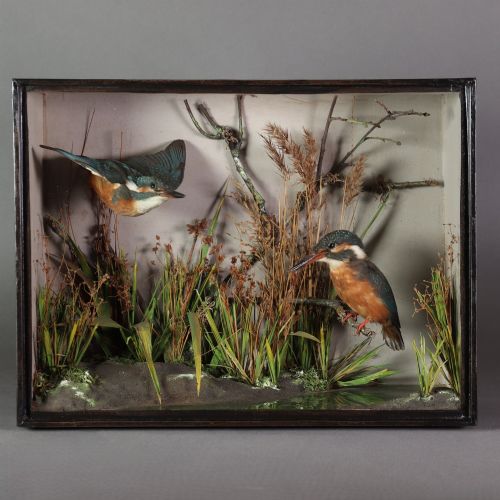


Antique Bird Taxidermy Case
An antique bird taxidermy case brings natural history indoors, preserving birds within glass and wood.

Antique Bird Taxidermy Case
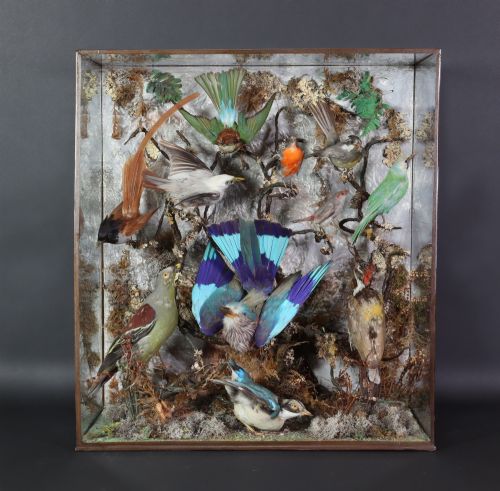
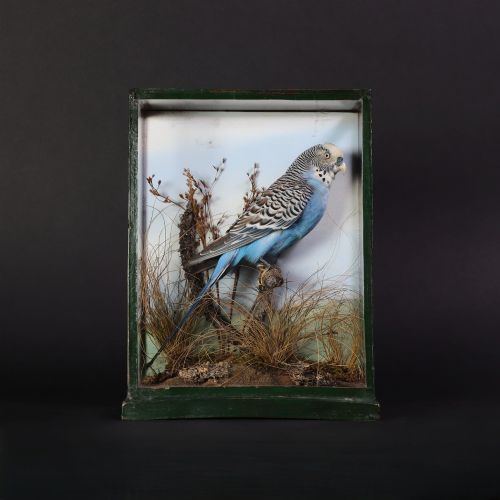
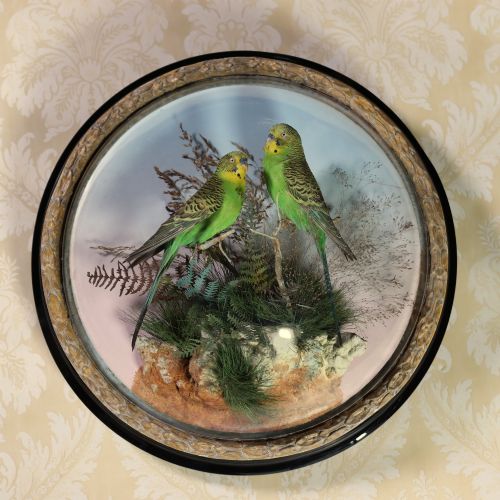
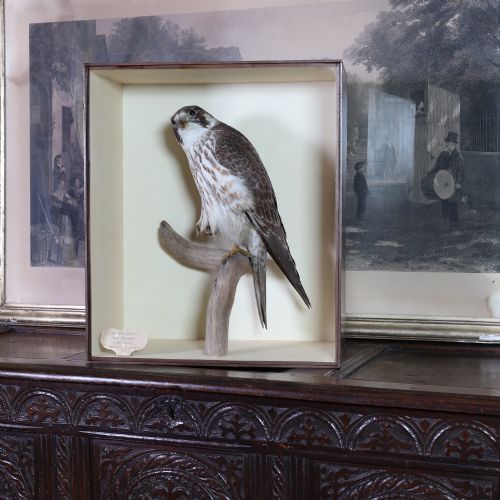
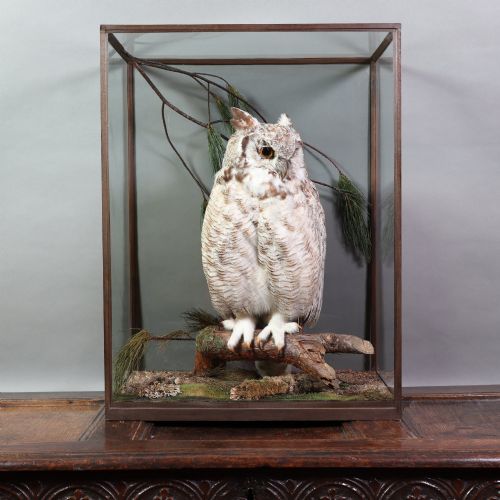
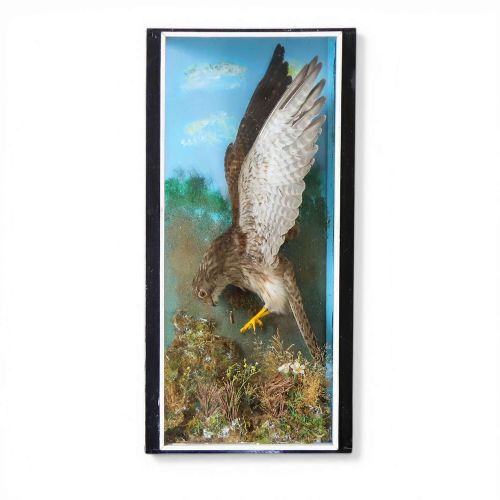
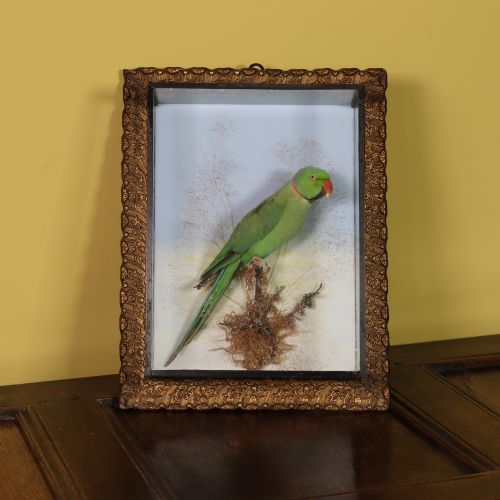
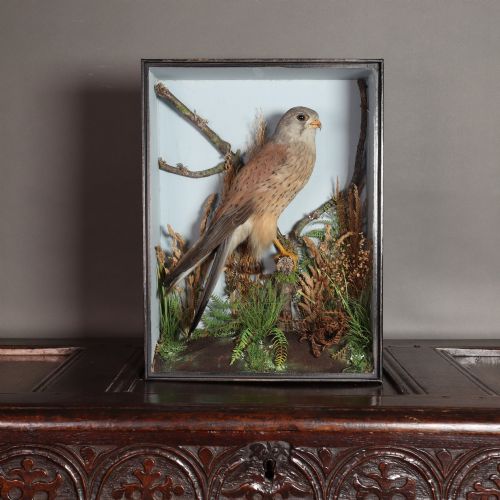
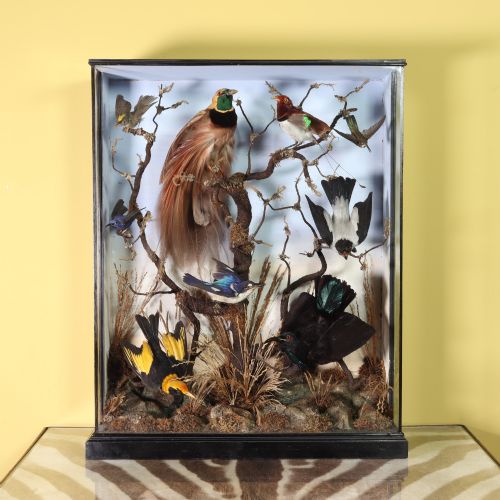
An antique bird taxidermy case houses preserved specimens within wood and glass enclosures, capturing natural history scenes from the nineteenth and early twentieth centuries. These pieces encompass single birds such as owls, kestrels and parrots, alongside complex dioramas containing multiple species arranged in simulated environments.
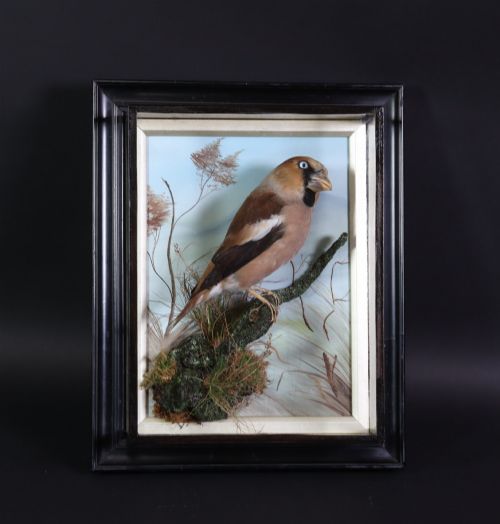
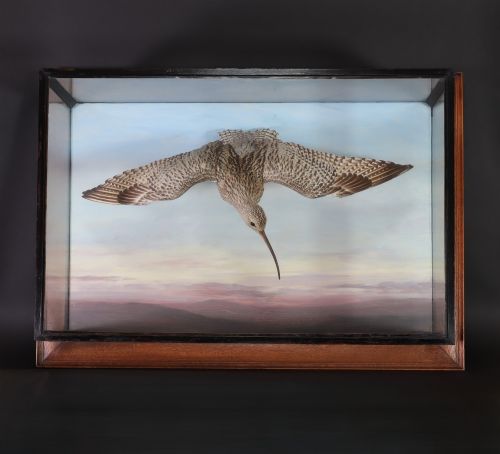
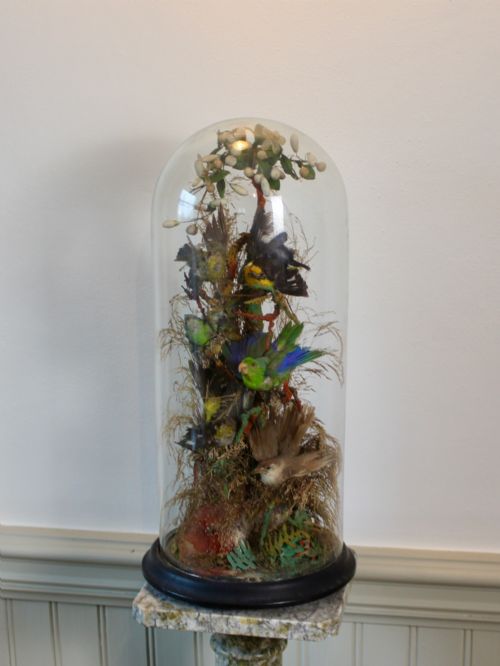
The specimens you meet most frequently on this page originate from the Victorian and Edwardian periods. They take the form of wall-hanging picture frames, upright wooden display cabinets and flat-sided glass domes designed to protect delicate feathers from dust and damage.
Makers ranged from local practitioners to prominent urban firms, constructing habitats that incorporated paper backgrounds, moss and painted scenery. Each display reflects nineteenth-century natural history enthusiasm, translating field observations into permanent domestic interior ornaments.
Materials and Construction Techniques
Taxidermists utilised wood for structural frames, employing ebonised finishes and oak to contain the preserved specimens. Glass formed protective fronts and domes, allowing clear visibility of the interior arrangements while sealing the birds away from environmental moisture.
Internal settings relied upon natural materials including paper, moss and artificial snow scenes to recreate woodland or winter habitats. Preserved specimens were carefully mounted and posed within these constructed dioramas by skilled practitioners using traditional wiring and stuffing methods.
Antique Bird Taxidermy Case Retail Price Guide 2026
Typical asking prices for bird taxidermy case among the pieces listed under this phrase on Sellingantiques today, from the lower quarter to the upper quarter. They describe what is for sale here now, not the wider market.
Listings feature Victorian, Edwardian and early twentieth-century periods, utilising wood, glass, feathers, moss and ebonised frames.
Factors That Distinguish Examples
Quality rests significantly upon the skill of the taxidermist, distinguishing ordinary workshop outputs from the work of recorded makers such as Rowland Ward Ltd or T.E. Gunn. Anatomical accuracy, lifelike positioning and the preservation condition of the delicate feathers separate standard specimens from master compositions.
The complexity and execution of the internal habitat further separate examples. Elaborate multi-bird compositions with painted backgrounds and detailed natural foliage demonstrate greater artistry than simple single-specimen mounts housed in plain wood boxes.
J Griffiths of Burford·Rowland Ward Ltd·T. E. Gunn·William Bazeley & Sons·James Gardner·W.F. Homer London
The Antique Bird Taxidermy Case Glossary
- Ebonised wood
- Timber treated to resemble ebony, frequently utilised for nineteenth-century display cases and frames. This dark finish provided a neutral boundary that kept attention focused on the colourful bird specimens inside.
- Diorama
- A three-dimensional scene containing taxidermy specimens arranged within a constructed natural habitat. These settings incorporated elements like moss and painted backgrounds to simulate outdoor environments.
- Taxidermy specimen
- An animal body preserved and mounted for exhibition purposes. In these cases, birds were prepared using traditional historical methods to retain realistic postures.
- Flat-sided dome
- A glass enclosure with flattened sides used to protect delicate mounted birds. This housing style allowed clear viewing angles while maintaining a compact footprint on a shelf or table.
Antique Bird Taxidermy Case: Frequently Asked Questions
What periods do these cases come from?
The pieces span the Victorian and Edwardian eras, stretching from the nineteenth century into the early twentieth century. Most examples date between the eighteen-seventies and nineteen-twenties.
Craftsmen during this period built enclosures ranging from simple wood boxes to glass domes. Each piece reflects the natural history interests of its specific decade of production.
Where were these cases displayed originally?
Victorian and Edwardian households placed natural history displays in studies, libraries and drawing rooms. They served as decorative ornaments and educational conversation pieces for collectors.
Cabinet displays brought outdoor subjects into domestic interiors. They allowed Victorian observers to examine exotic and native birds closely without disturbing wildlife.
How do I identify a maker?
Makers often attached trade labels to the backboards, interior bases or underneath wooden framing elements. These paper labels record the name of the taxidermist or firm and their business location.
Prominent studios sometimes incorporated signature mounting styles or specific painted backgrounds. Examining the construction underneath often reveals clues regarding the workshop of origin.