

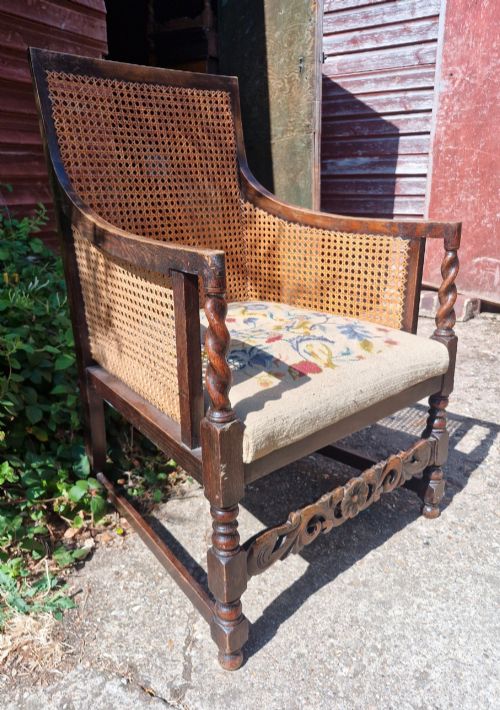
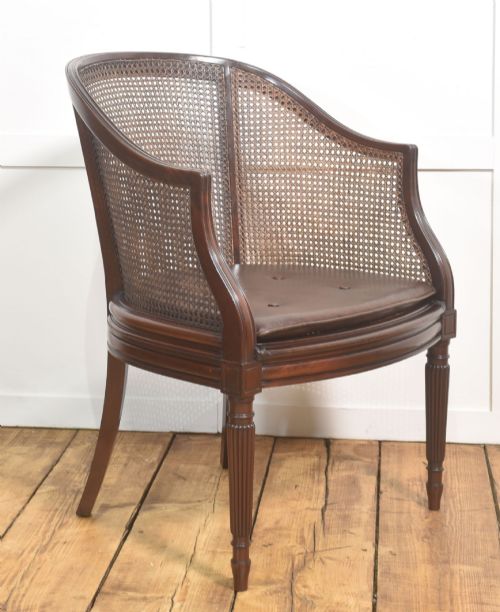
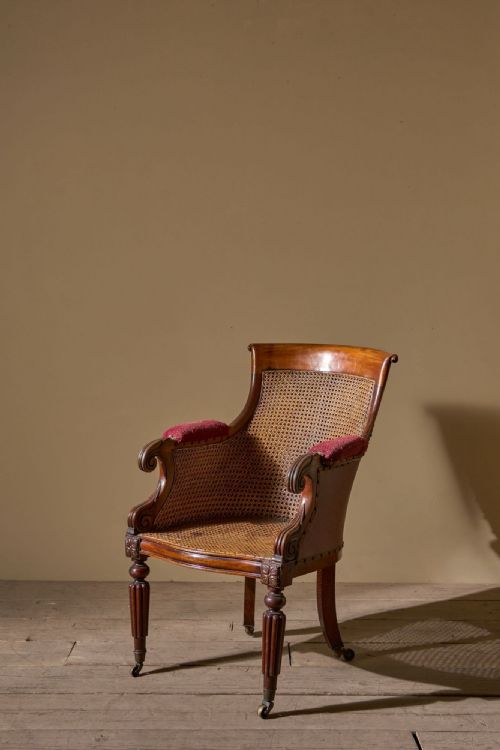
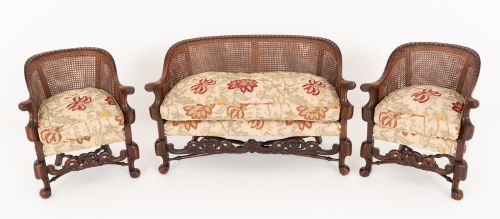


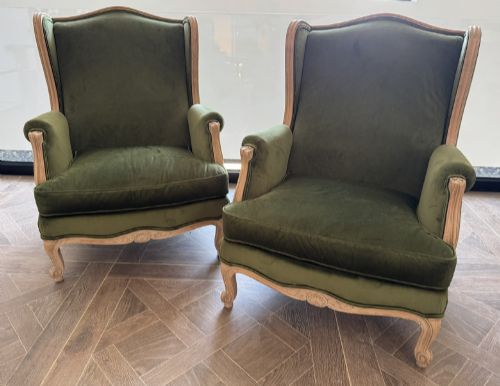
Antique Bergere Armchair
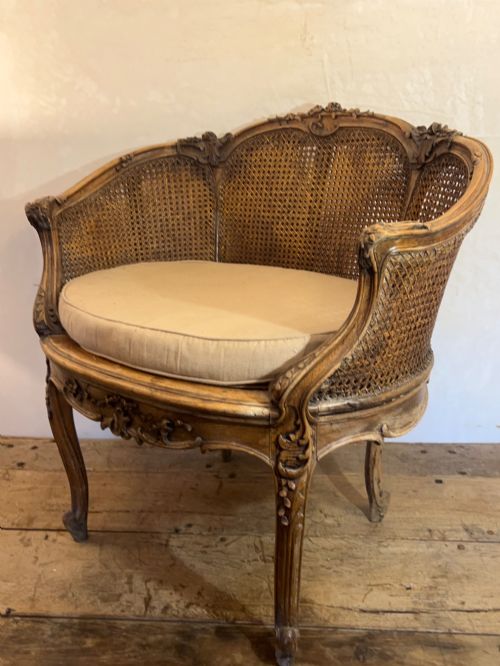
When you search for an antique bergere armchair, you are looking at deep, enclosed seats designed for comfort, framed in timber and woven with cane.
Antique Bergere Armchair
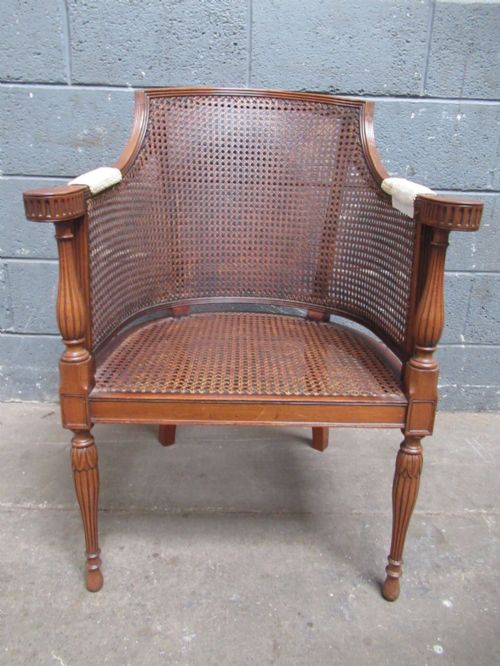
An antique bergere armchair combines a solid wooden frame with tight cane panels forming the back and sides, creating a distinctive enclosed silhouette. When exploring this page, you will encounter diverse iterations spanning the nineteenth century through to the 1930s, reflecting both English country house sensibilities and French salon traditions.
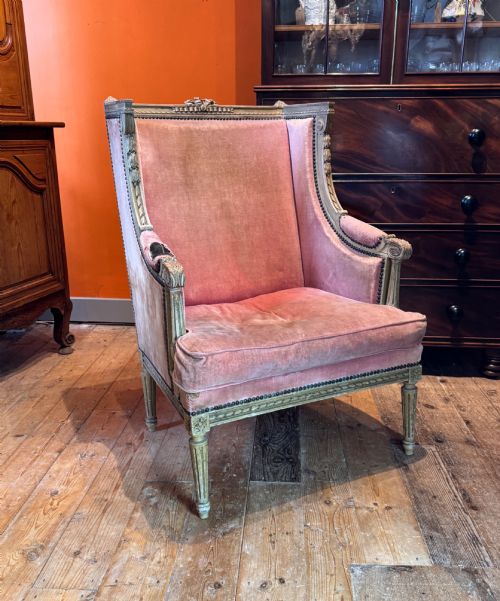
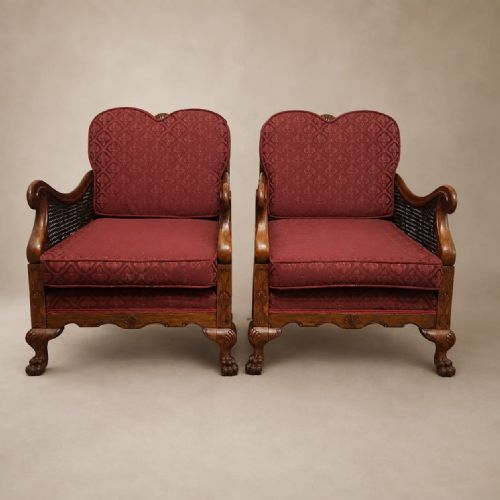
The forms vary from tub-shaped library chairs in rich mahogany to painted French frames echoing Louis XV and Louis XVI styles. Alongside single armchairs, the selection frequently includes pairs, suites, and occasional variations such as low nursery or bedroom chairs.
Makers utilised various timbers including walnut, oak, beech, and satin birch, often pairing the woven cane with loose feather-filled cushions upholstered in leather, fabric, or silk. Whether referencing Regency elegance or Edwardian practicality, each piece preserves traditional seating proportions designed for deep lounging.
Materials and construction methods
Cabinetmakers constructed the supportive skeletons of these chairs using hardwoods such as mahogany, walnut, oak, and beech, alongside exotic satin birch. Frames were carved or turned into specific revival styles, incorporating curved armrests and shaped legs.
The defining characteristic involves hand-woven cane, split and threaded through drilled holes along the inner frame to create resilient, taut panels along the back and arms. Upholstered elements rely on traditional stuffing techniques, often finished with feather-filled squab cushions covered in leather, velvet, or woven fabric.
Antique Bergere Armchair Retail Price Guide 2026
Typical asking prices for bergere armchair among the pieces listed under this phrase on Sellingantiques today, from the lower quarter to the upper quarter. They describe what is for sale here now, not the wider market.
Listings demonstrate frameworks constructed from mahogany, walnut, oak, beech, and satin birch, spanning the Regency, Victorian, and Edwardian eras.
Distinctions in construction and finish
The finesse of the woodwork distinguishes finer examples, visible in crisp, hand-carved details along the giltwood or mahogany frames rather than softened machine mouldings. The integrity and tightness of the cane-work also indicate standard, as evenly spaced hand-weaving endures better than uniform modern machine cane.
Original surfaces elevate a piece significantly, whether retaining early paint, rich patinated mahogany, or period leather upholstery. Chairs maintaining their original structural joinery without heavy timber replacement represent the upper tier of survivals.
Henri Jacob·James Shoolbred
The Antique Bergere Armchair Glossary
- Bergere
- An enclosed upholstered armchair featuring wooden framing and cane panels along the back and sides. This French seating form emerged in the eighteenth century and inspired numerous nineteenth and twentieth-century revivals.
- Cane
- Strips of rattan woven tightly to form breathable, supportive panels on chair backs and sides. Split cane requires precise tension during installation to prevent sagging over time.
- Giltwood
- Timber treated with a thin layer of gold leaf or gilt finish, commonly found on decorative French salon chairs. This treatment highlights intricate carved details along the frame.
- Squab cushion
- A removable loose cushion placed over the seat base for added comfort. These are frequently down or feather-filled in higher-quality library and easy chairs.
- Tub chair
- An armchair featuring a rounded, semi-circular backrest that curves continuously into the arms. This compact form provides a deep, enclosing seat.
Antique Bergere Armchair: Frequently Asked Questions
What is a bergere armchair?
A bergere armchair is an enclosed upholstered seat featuring exposed wooden framing and woven cane panels along the back and sides. Originating in France, these deep chairs were designed for indoor comfort and relaxation.
They typically include a loose seat cushion and appear in various historic revival styles ranging from Louis XV curves to sturdy Edwardian mahogany frames.
How do I care for cane panels?
Cane panels require gentle maintenance to prevent the natural rattan material from drying out and snapping. Keeping the chairs away from direct heat sources and occasionally wiping the cane with a damp cloth helps maintain its flexibility.
Avoid pressing heavy sharp objects against the woven surface, as split cane relies on even weight distribution across the panel to remain taut.
How do I date an antique armchair?
Dating involves examining the timber species, joinery methods, and the style of the carving on the wooden frame. Regency and Victorian examples often feature heavy mahogany or walnut, while Edwardian pieces frequently utilise lighter oak or satin birch.
Tool marks left by hand-cutting, the oxidation of the wood beneath the finish, and the construction style of the cane-drilling provide further clues to the decade of manufacture.
Are these chairs comfortable for daily use?
These chairs offer deep, supportive seating designed for lounging, particularly models fitted with feather-filled squab cushions. Their ergonomic proportions make them suitable for reading in a library or relaxing in a living space.
Many period examples have been re-upholstered or re-caned while retaining their antique frames, ensuring they remain practical for modern seating needs.