


Cane Bergere Chair
When you search for a cane bergere chair, you enter a tradition of deep upholstered comfort framed in turned or carved timber.
Cane Bergere Chair
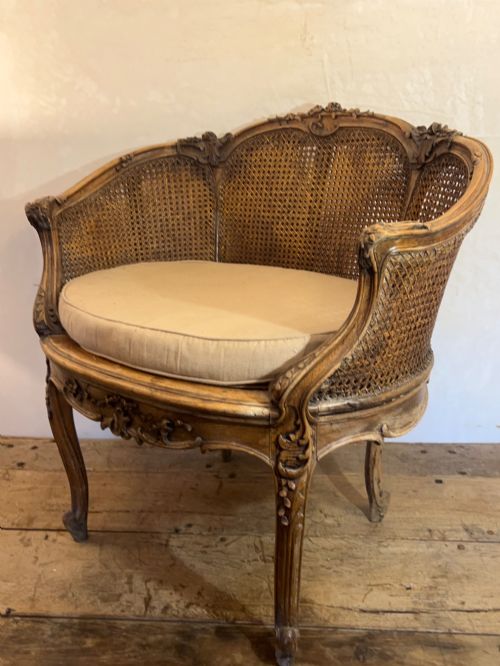
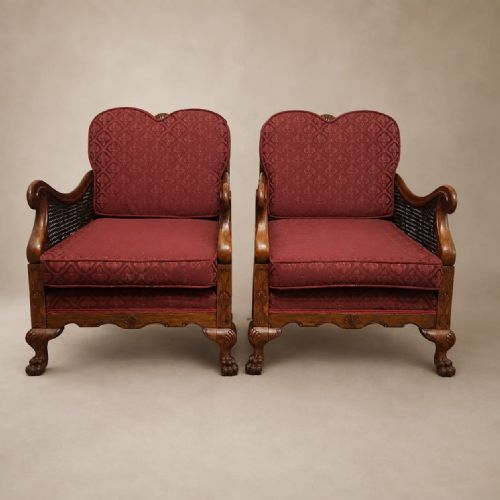
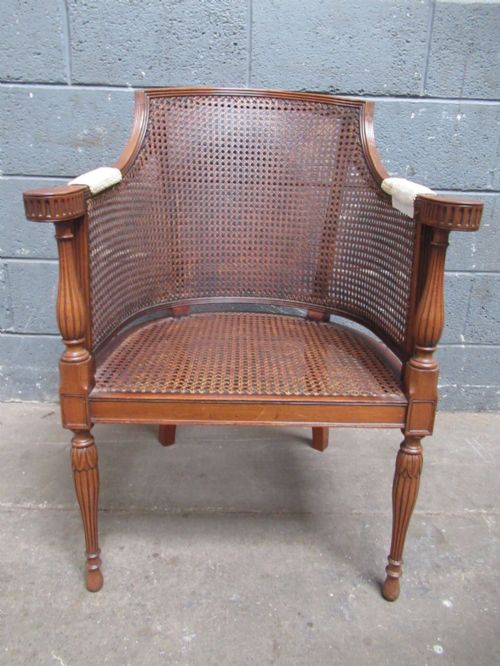
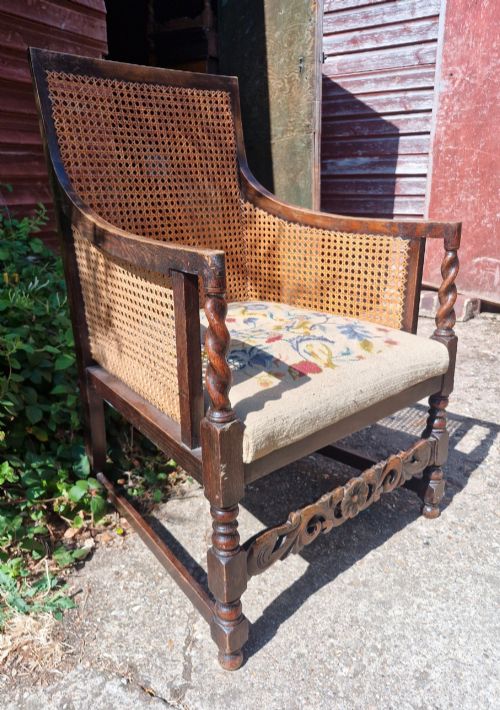
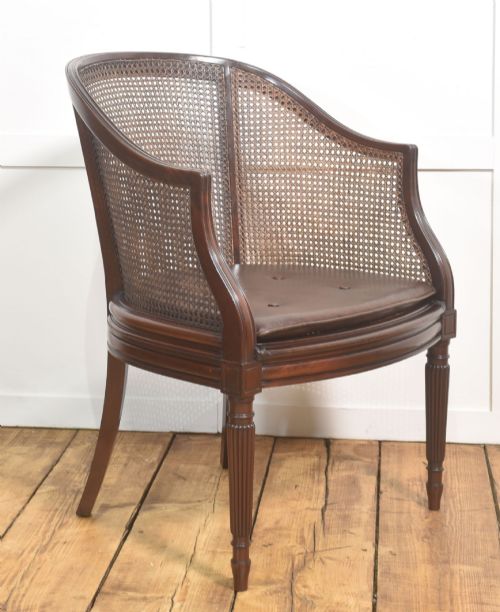
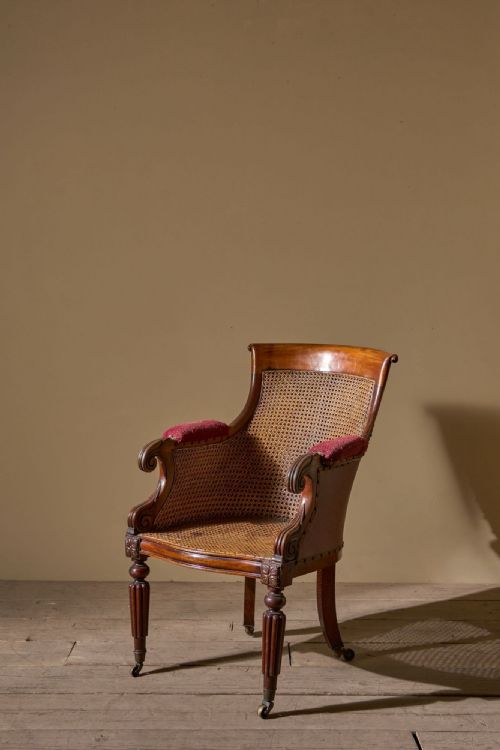
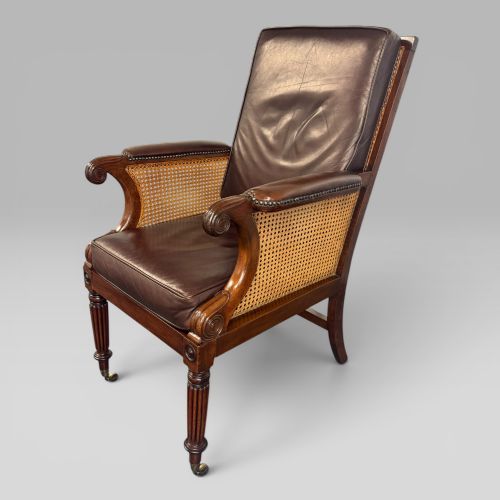
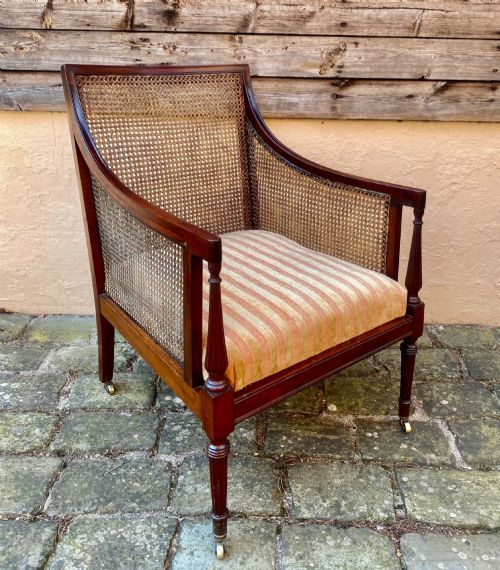
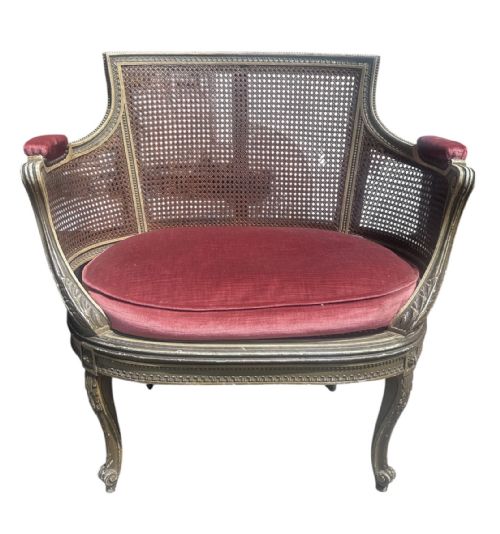
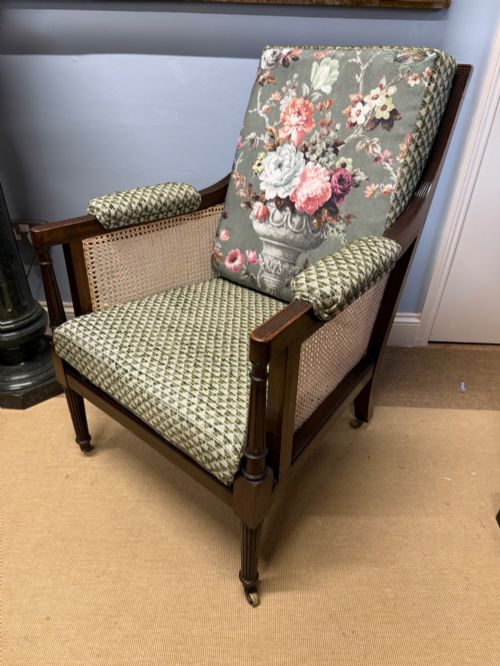
A cane bergere chair is a deep, enclosed armchair with woven caning to the back and sides, often accompanied by loose squab cushions for seat and back. The form emerged in France during the eighteenth century and remains a staple of library and drawing room seating.
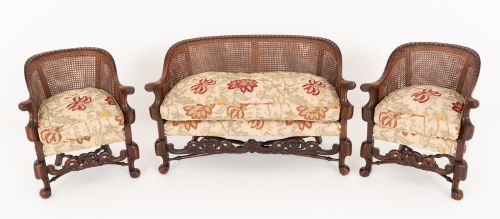
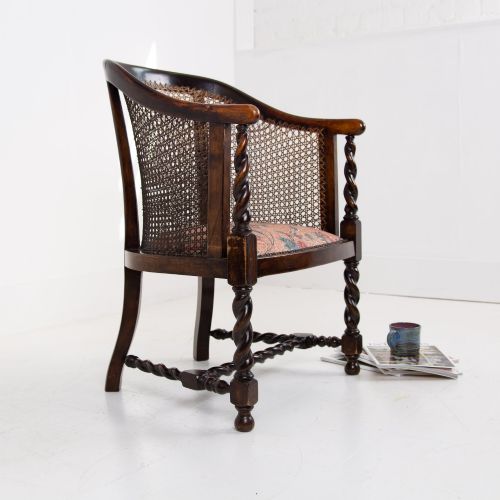
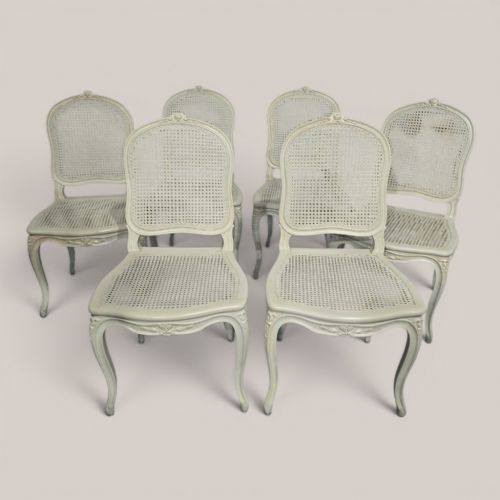
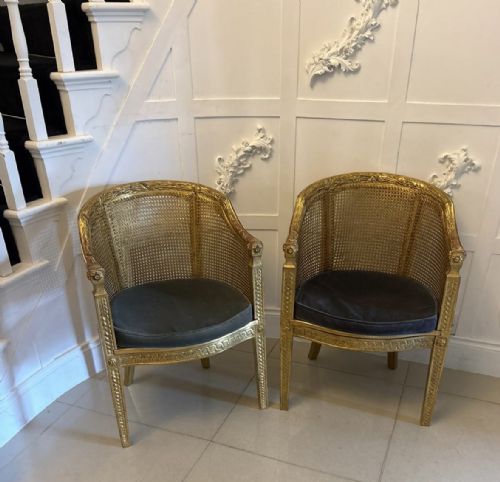
The versions most frequently met on this page span the Regency period through the Edwardian era and into the 1920s, constructed in mahogany, walnut, oak or rosewood. Alongside standard library armchairs, the selection includes tub shapes, low lounge seats, dining sets and child-sized variants.
Makers drew upon French revival styles, Louis XV motifs and Jacobean influences, adapting the enclosed woven panels for domestic comfort. Whether executed in solid mahogany or ebonised timber, these pieces combine structural woodwork with flexible cane support.
Materials and Construction
Makers selected dense hardwoods such as mahogany, walnut, rosewood and oak to construct the supportive frames, often utilising steam-bending for curved tub backs or delicate turnings for legs. Giltwood, ebonised finishes and faux rosewood graining also appear across the periods.
The characteristic caning involves hand-weaving rattan cane through drilled holes along the frame channels, creating a flexible and breathable mesh for back and side panels. Split cane and double caning techniques provide additional durability and decorative depth.
Upholstery completed the design through leather, velvet, fabric or brass-studded cushions placed over the cane base. Original upholstery materials indicate the period of manufacture, while modern replacements maintain the traditional depth required for lounging.
Several miniature child-sized bergere chairs and high chairs survive, proving that Victorians believed toddlers deserved proper library seating.
Judging Quality and Craftsmanship
Quality rests upon the crispness of timber carving, the choice of dense grain timbers like solid mahogany or rosewood, and the tightness of the frame joinery. Finer examples display meticulous attention to proportion, particularly in the sweep of the armrests and the curve of the tub back.
The execution of the cane work dictates much of the distinction between standard and superior pieces. Hand-woven rattan with uniform spacing and intact tension represents higher craftsmanship than machine-pressed alternatives or loose strands.
Provenance and historical adherence to specific design styles, such as Regency library models or documented cabinet-maker outputs, elevate certain chairs above ordinary domestic seating. The integration of auxiliary materials like brass fittings and leather upholstery further distinguishes individual items.
James Shoolbred·Gillows
The Cane Bergere Chair Glossary
- Bergere
- An enclosed upholstered armchair with wooden frame members and woven cane panels. The style originated in France and prioritises deep seating comfort.
- Caning
- A woven mesh made from the peeled bark of rattan palm. It provides a resilient and breathable surface for chair backs and sides.
- Tub Chair
- An armchair with a continuous curved back and armrest rail forming a circular enclosure. This shape wraps around the sitter for added warmth and support.
- Squab Cushion
- A loose, removable padded cushion placed on the seat or back of a chair. These are typically filled with traditional stuffings and covered in leather or fabric.
- Ebonised
- Timber treated with a dark finish to imitate ebony wood. This technique was favoured during the Regency period for dramatic contrast.
Cane Bergere Chair: Frequently Asked Questions
What is a bergere chair?
A bergere chair is a French-style enclosed armchair characterised by wooden framing and woven cane side and back panels. They are designed for relaxed sitting, often featuring upholstered cushions.
Historically used in libraries and drawing rooms, these chairs combine rigid timber support with flexible woven cane surfaces.
How do I date a cane chair?
Dating relies on timber choice, carving styles, and construction methods. Regency pieces often use rosewood or ebonised finishes, while Edwardian examples show lighter mahogany frames and revival motifs.
Examining the weave of the cane and the type of screws or joinery underneath also helps narrow the manufacturing period.
Where were these chairs used?
These chairs served primarily in country house libraries, formal drawing rooms, and private studies. Their deep proportions made them suited for reading and prolonged lounging.
Smaller tub and salon variants were also placed in bedrooms or writing rooms as occasional seating.
Are the cushions original?
Many chairs feature reupholstered cushions in leather, velvet, or fabric to ensure modern comfort. Surviving original cushions are noted when present, but period-appropriate replacement is common.
The underlying frame and cane panels remain the primary historical components of the piece.