
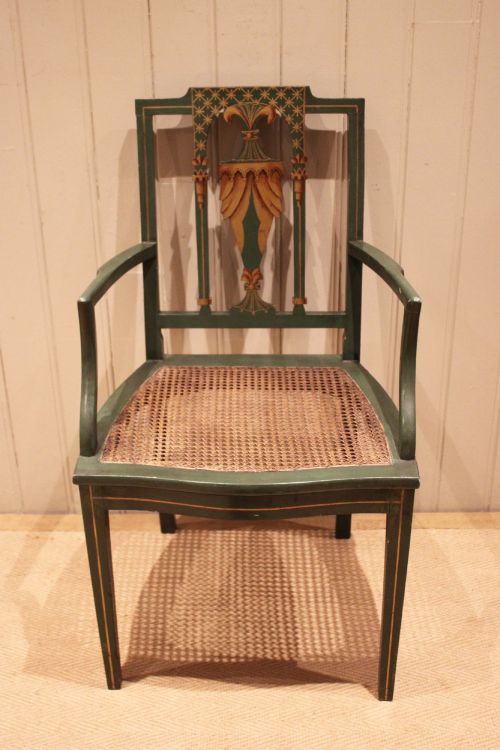
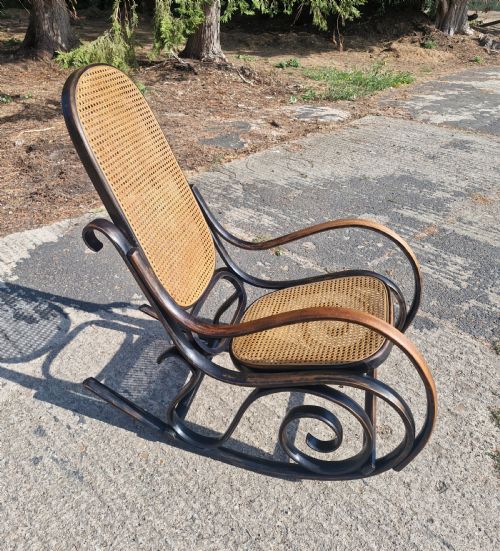
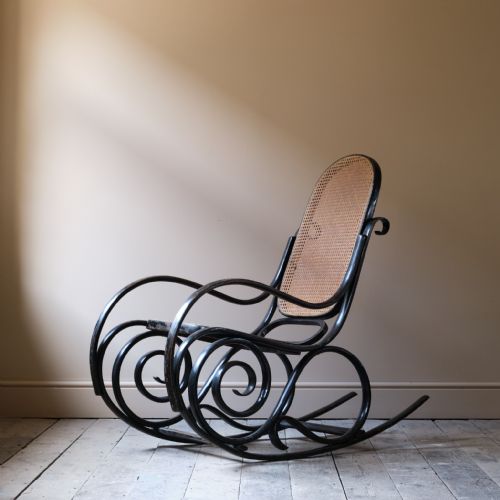
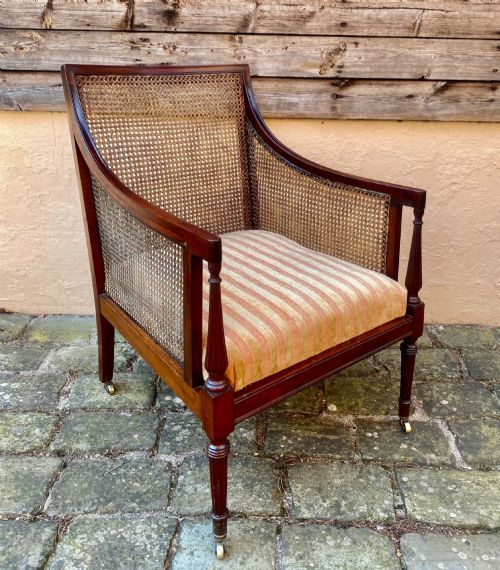
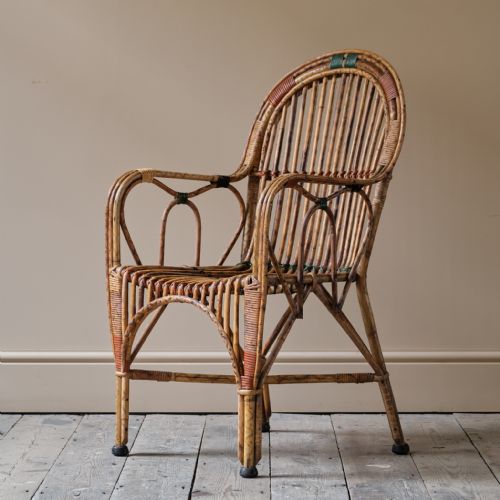
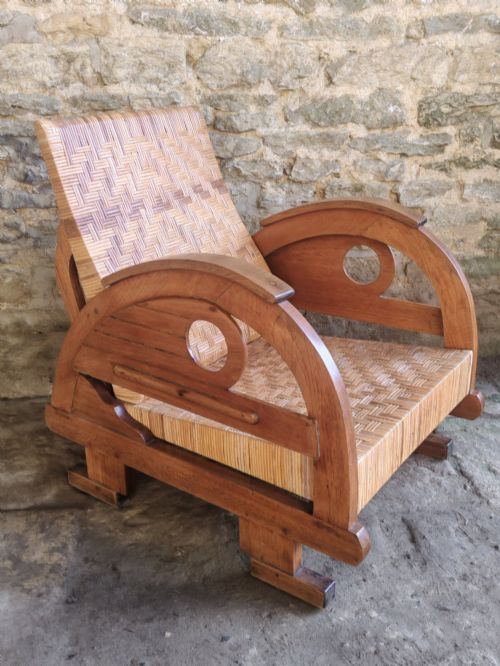
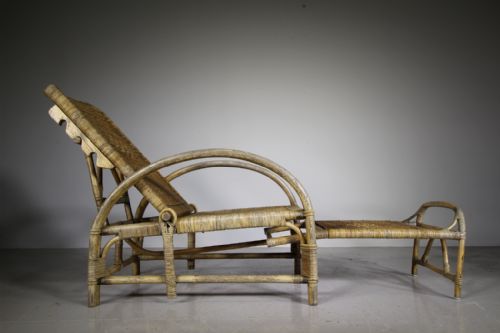
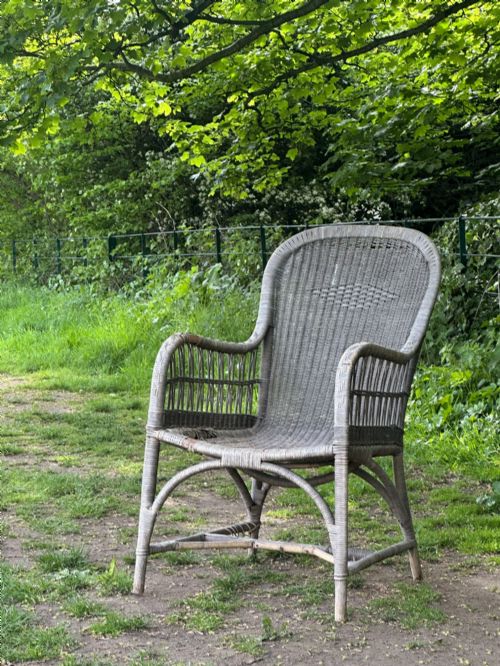


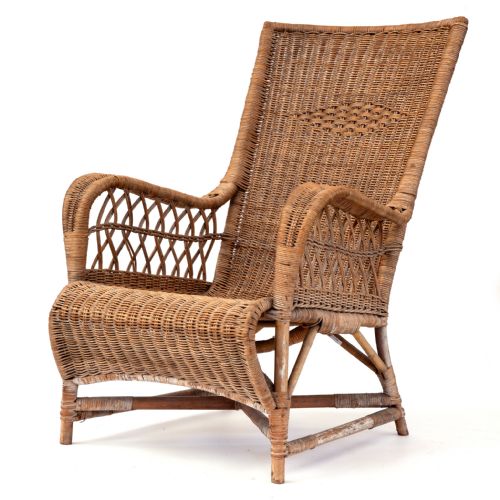
Woven Rattan Armchair
A woven rattan armchair brings lightness and texture into a room, pairing organic plant fibres with sturdy timber frames.
Woven Rattan Armchair
A woven rattan armchair combines flexible plant stems with supportive structures, creating seating that balances visual lightness with everyday durability. When searching for a woven rattan armchair, buyers encounter pieces originating from diverse periods including the Regency era, Victorian times, and the mid-twentieth century.
The selection ranges from classic bergere chairs and reclining garden seats to rocking chairs and larger lounge designs. Materials span across cane, bamboo, willow, mahogany, teak, and painted wood, reflecting various global manufacturing traditions.
Makers such as Dryad of Leicester and Angraves of Leicester appear alongside Anglo-Indian and Chinese export pieces. These armchairs function well in conservatories, living rooms, and garden spaces alike.
How they were made
These armchairs rely on natural materials such as rattan, cane, bamboo, and willow, often combined with mahogany, teak, or general wood frames. Craftsmen bent and shaped timber through steam processes, particularly evident in bentwood rocking chairs and curved structural supports.
Weaving techniques involved interlocking flexible plant fibres around rigid frames by hand, creating breathable seats and backs. Some examples incorporate painted finishes or applied fabric upholstery to enhance comfort and appearance.
Materials documented across the available inventory include cane, rattan, bamboo, willow, mahogany, teak, and fabric.
What varies in quality
Quality depends upon the tightness and regularity of the handweaving across the seat and back panels. Tightly bound rattan and uniform cane work indicate superior craftsmanship, whereas loose strands suggest lesser durability.
The integrity of the underlying wooden framework, whether mahogany, teak, or bentwood, dictates the overall stability of the chair. Maker attribution, such as signed pieces from established workshops, also influences distinction.
Angraves of Leicester·Dryad of Leicester·Dryad & Co
The Woven Rattan Armchair Glossary
- Bergere chair
- A type of upholstered armchair with an enclosed wooden frame where the back and sides are typically made of cane or wicker. This style originated in France during the eighteenth century and remained popular through the Edwardian period.
- Cane
- Strips of material derived from the outer bark of the rattan palm, used for weaving chair seats and backs. It provides a flexible yet resilient surface.
- Bentwood
- Wood that has been heated, usually with steam, and bent into curved shapes. This technique allows for fluid lines in chair arms and rocking runners.
- Peacock chair
- A large, high-backed armchair featuring intricate fan-shaped openwork, often associated with Anglo-Indian and nineteenth-century export designs. It makes a strong visual statement in any room.
- Plantation chair
- A wide-seated armchair often constructed from tropical hardwoods like teak, designed for relaxation in warm climates. They frequently include extended arms for resting legs.
Woven Rattan Armchair: Frequently Asked Questions
How do I care for a rattan armchair?
Keep the woven material clean by gently dusting with a soft brush or vacuuming using a low suction attachment. Avoid placing the chair in direct sunlight or damp areas to prevent the natural fibres from drying out or degrading over time.
Applying a light coat of boiled linseed oil can help maintain flexibility in older cane work. Ensure the room maintains moderate humidity levels for best preservation.
Can I use these armchairs outdoors?
Most antique and vintage woven chairs suit indoor or conservatory use rather than permanent outdoor placement. Moisture and frost will damage untreated natural plant fibres and wooden frames.
Cover garden armchairs during wet weather and store them indoors over winter months. Protected patio spaces work well for weather-resistant variants.
How do I identify the period of a chair?
Examine the framing timber, joining techniques, and stylistic clues like Arts and Crafts or Art Deco motifs. Regency pieces often feature formal classical lines, while early twentieth-century examples show Arts and Crafts influences.
Maker stamps or labels offer definitive chronological markers when present. Comparing the weave pattern with documented historical styles aids further dating.
What is the difference between cane and rattan?
Rattan refers to the whole solid vine belonging to a specific family of climbing palms native to tropical regions. Cane is the thinner, pliable strip peeled from the outer bark of that same rattan vine.
Cane typically appears in woven seat panels and chair backs. Rattan forms the heavier structural poles of the furniture.