


Upholstered Cane Chair
An upholstered cane chair brings together woven plant material and textile cushions across centuries of design, offering both structural lightness and deep comfort.
Upholstered Cane Chair
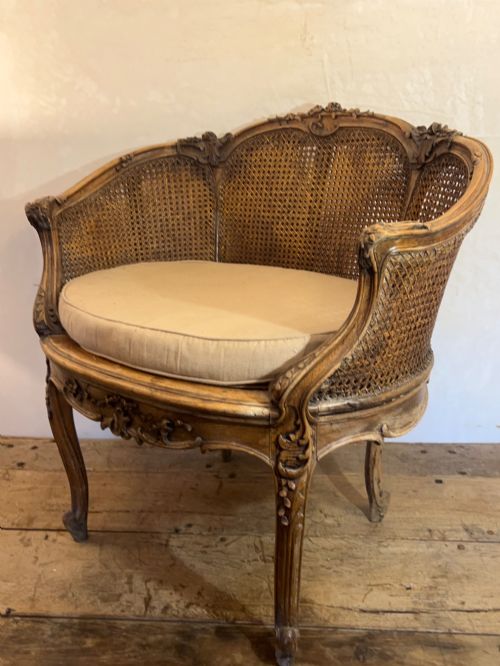
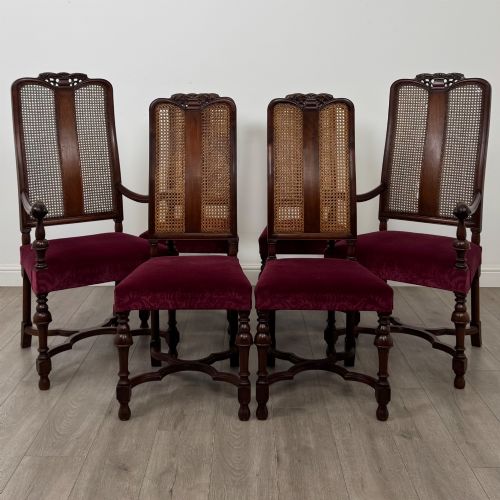
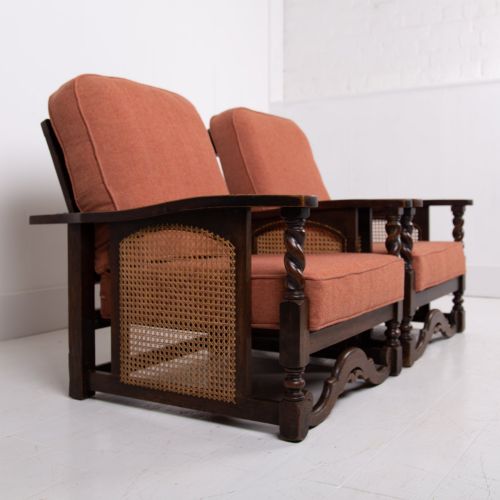
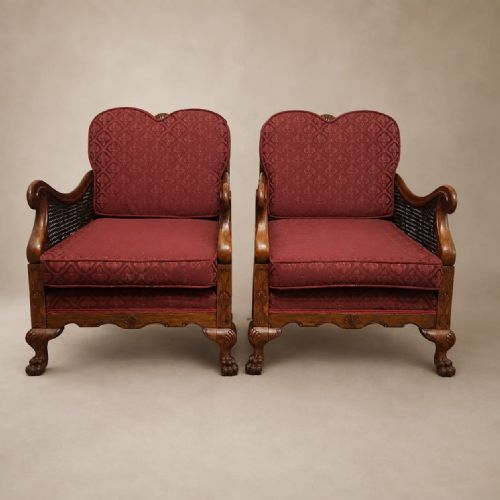
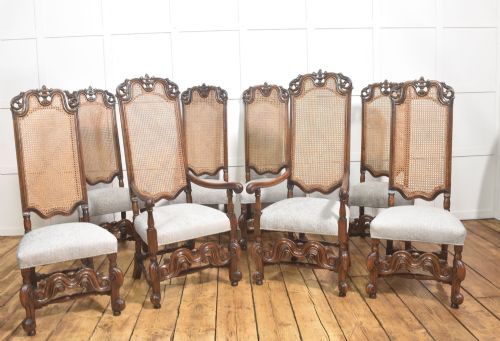
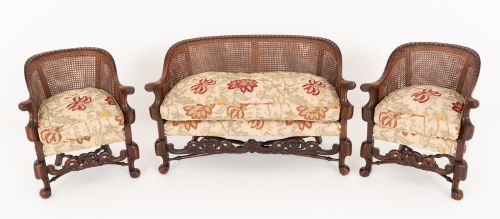
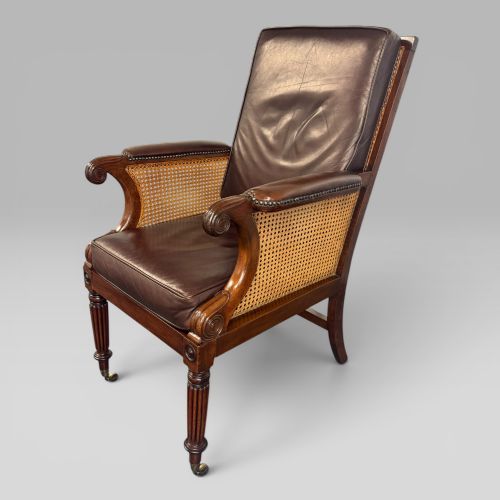
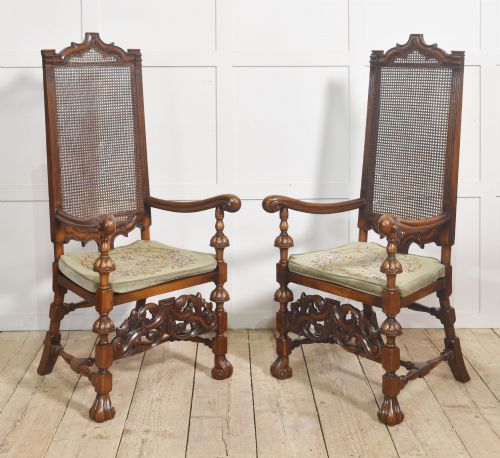
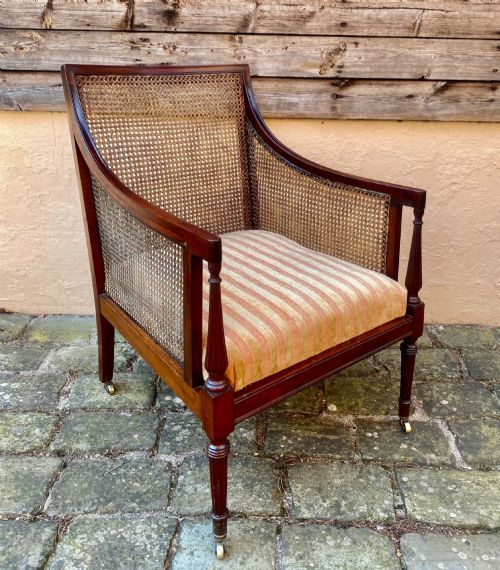
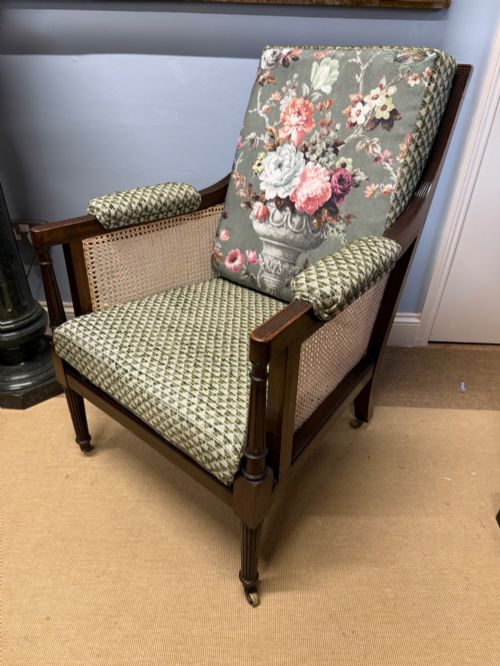
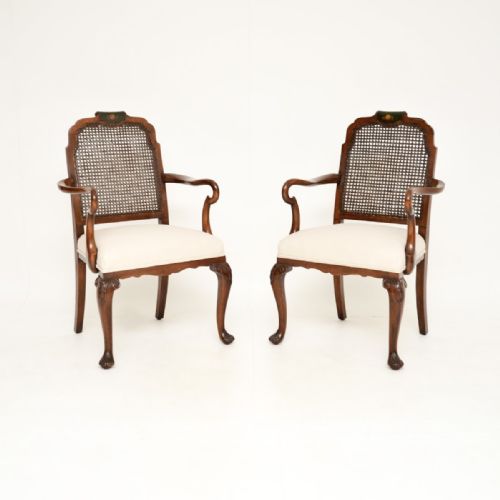
When you search for an upholstered cane chair, you encounter a seating form that combines rigid woven panels with soft fabric cushions. The pieces available span armchairs, bergères, side chairs, and larger sets originating from the nineteenth and early twentieth centuries.
Most examples you meet on this page utilise walnut, mahogany, or oak frames paired with rattan cane and textile upholstery. Styles range from Regency and Edwardian interpretations to Louis XV and Carolean revivals.
Makers produced these chairs as both single library pieces and matching suites for drawing rooms and dining spaces. The combination of woven seating elements and padded cushions provides a distinct balance of support and squab comfort.
How they were made
Craftsmen built the structural frameworks using hardwoods such as mahogany, walnut, and oak, often shaping the timber with carved details or turned supports. Selected frames received ebonised finishes, gilt highlights, or lacquered decoration.
Panels of rattan cane were hand-woven directly into the chair frames or drop-in seats to create a resilient, breathable mesh. Artisans then added upholstered elements, incorporating fabric or velvet cushions to complete the seating surface.
The selection includes dining chairs, side chairs, armchairs, and settees.
What varies in quality
The standard of timber selection and carving depth dictates the initial distinction between ordinary production and finer workshop output. Robust joinery in the frame ensures the piece retains structural integrity under daily use.
The tightness and regularity of the cane weaving indicate the level of handcraft involved in production. Well-executed upholstery work and quality textile choices complete the balance between frame and cushion.
Waring and Gillow
The Upholstered Cane Chair Glossary
- Bergère
- An enclosed armchair with upholstered sides and a cane or upholstered back. This French form appeared in various revival styles throughout the nineteenth and twentieth centuries.
- Canework
- A woven mesh made from rattan or split cane utilised for seats and backs. This technique provides flexible support while maintaining visual lightness.
- Japanned
- A European imitation of East Asian lacquerwork applied to furniture frames. Artisans built up layers of varnish and decoration on wood surfaces.
- Corbeille
- A chair or settee with a rounded, basket-like curved back. The design wraps around the sitter for enclosed comfort.
- Ebonised
- Timber treated with a dark finish to imitate ebony. This treatment appeared frequently on Regency and revival seating.
Upholstered Cane Chair: Frequently Asked Questions
What is a bergere chair?
A bergère is a closed armchair featuring upholstered panels set into a wooden frame, often accompanied by a loose seat cushion.
These chairs originated in France and appeared in various revival styles during the nineteenth and twentieth centuries.
How do I care for cane seats?
Cane requires moderate humidity to prevent the natural fibres from becoming brittle and snapping over time. Regular gentle dusting keeps the woven mesh clean without damaging the material.
Avoid placing these chairs directly next to intense heat sources or in overly dry environments.
Are these chairs comfortable?
The combination of a woven cane foundation and upholstered cushions provides a supportive yet yielding seat. Many designs include padded armrests and deep backs intended for relaxing.
Drop-in cushions can be adjusted or updated with new fabrics to suit personal preferences for softness.
How do I date an upholstered cane chair?
Dating relies on examining the timber species, framing style, and the specific type of revival influence present in the woodwork. Details such as turned supports, carved stretchers, and lacquered finishes offer clues to the period of manufacture.
Records indicate examples spanning from the Regency era through to Art Deco and later twentieth-century revivals.