
Antique Bench Back
When you search for antique bench back, you discover robust wooden settles and stately chair-backed seating designed to fend off drafts in historic hallways and parlours.
Antique Bench Back
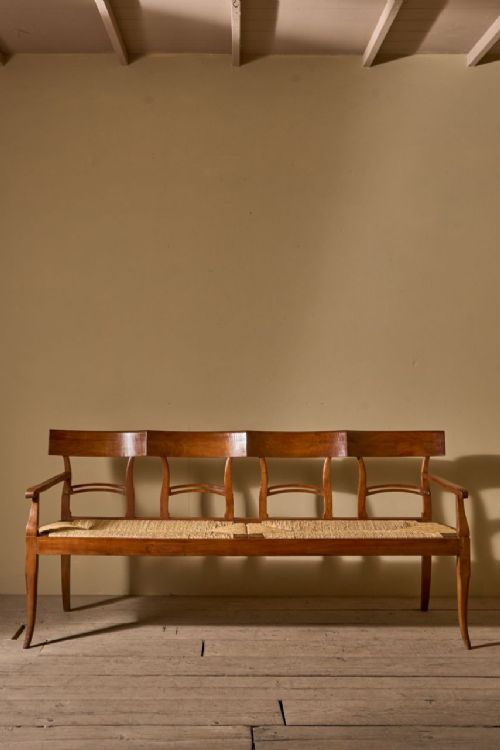
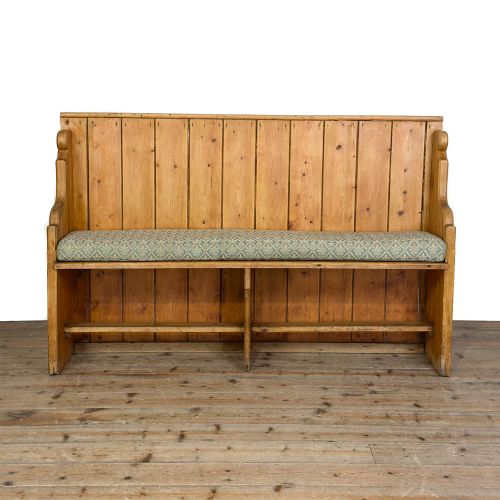
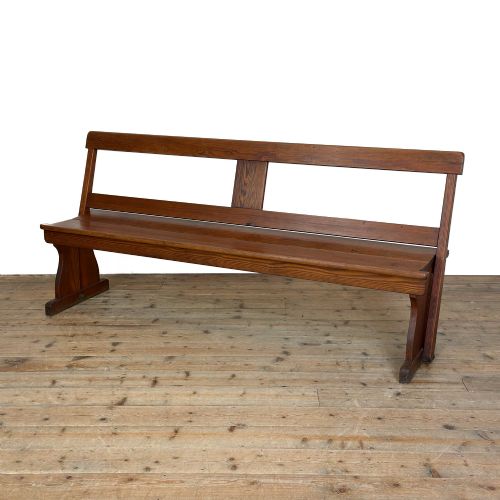
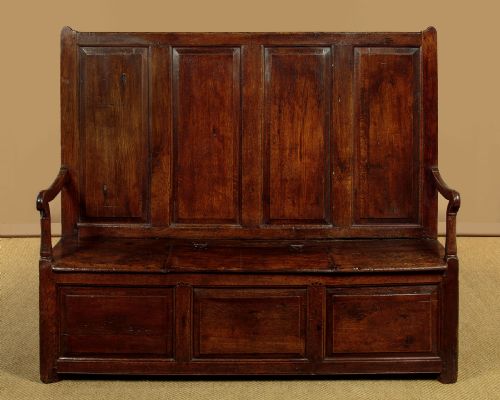
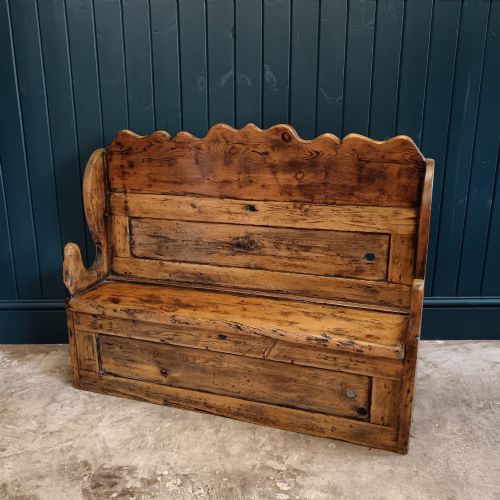
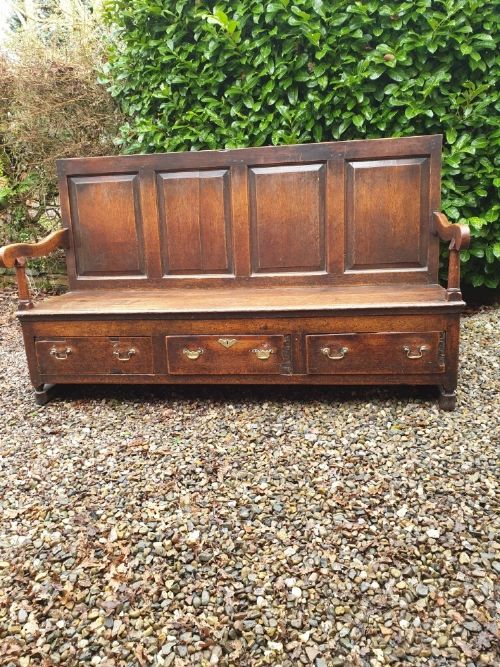
An antique bench back designation typically brings up sturdy settles, high-backed hall benches, and chair-backed settees originating from the seventeenth century through to the early twentieth century. The selection leans heavily towards robust oak examples from the eighteenth and nineteenth centuries, alongside country pine, elm, and mahogany variations.
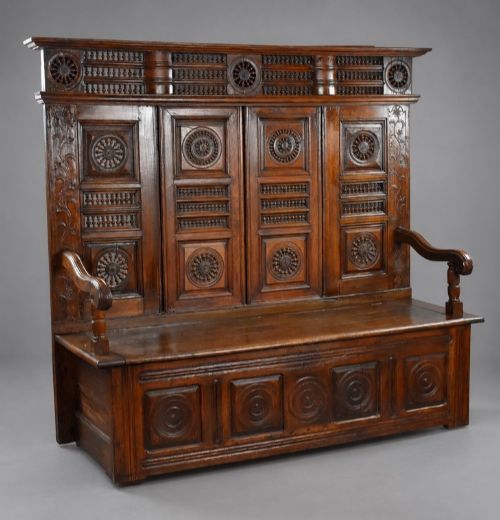
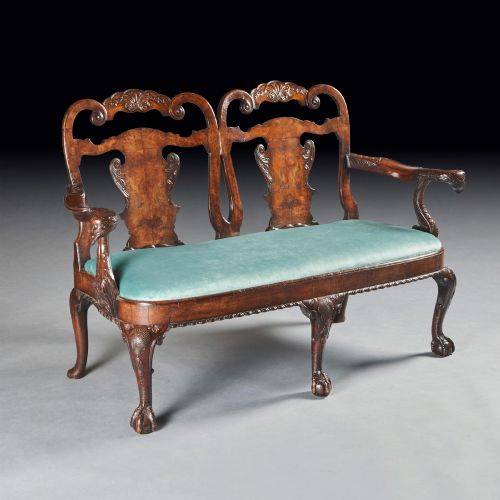
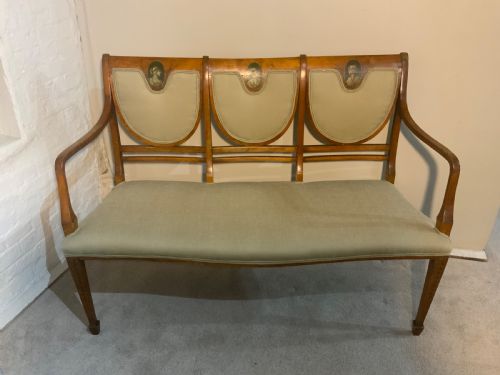
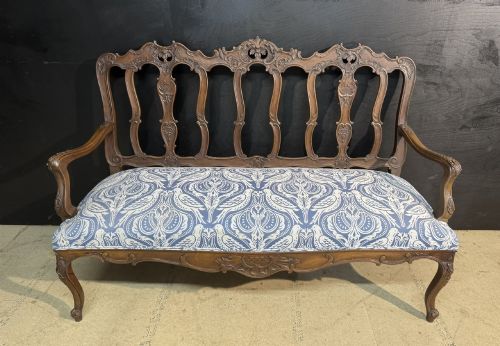
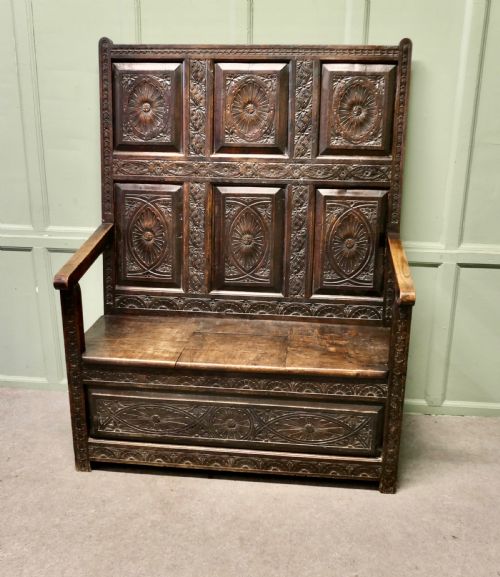
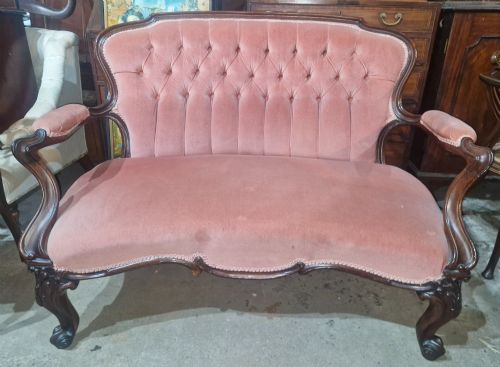
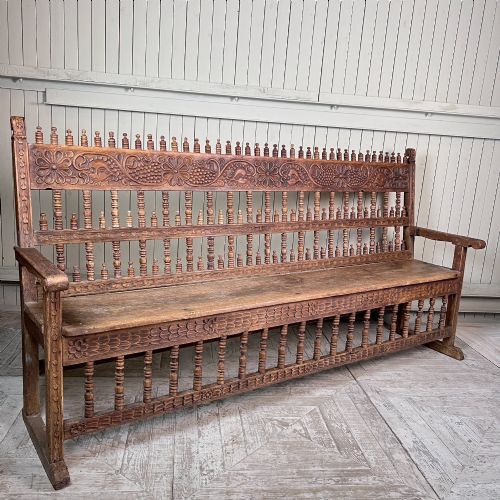
Forms range from enclosed box settles with integrated storage to open spindle-back and twin chair-back sofas inspired by earlier Georgian designs. Buyers encounter everything from utilitarian country pub benches and pitch pine church pews to ornate French Louis XVI style day beds and carved walnut reception seating.
How they were made
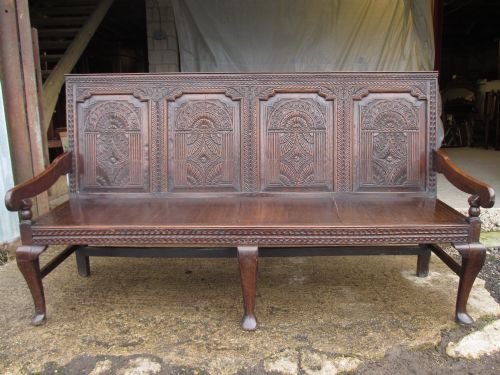
Joinery relies heavily on traditional solid timbers such as oak, pine, elm, and mahogany, often shaped with panelled backs, carved crestings, or steam-bent spindles. Artisans utilised mortise and tenon joints to construct high-back frames capable of blocking cold draughts in large rooms.
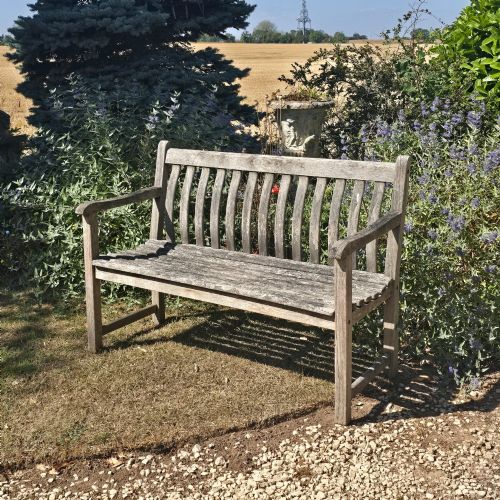
Surface treatments vary from waxed honey-brown patinas on country pine and weathered teak for garden use to giltwood, painted finishes, and cane work on formal salon pieces. Upholstered variants incorporate fabric, leather, and brass detailing over webbed or sprung seat bases.
Listings feature solid oak, pine, mahogany, and elm across periods spanning the seventeenth through to the early twentieth century.
What varies in quality
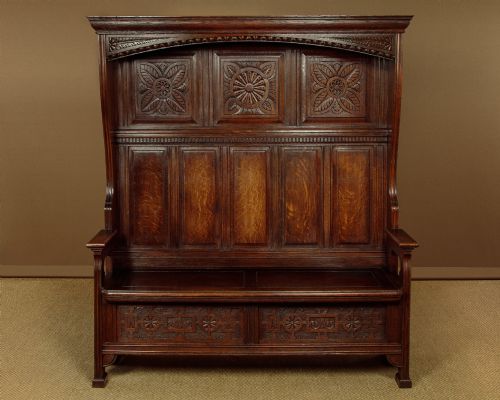
The distinction between standard utility seating and exceptional examples rests on the crispness of hand-carved detailing, such as panelled motifs, green man carvings, or drapery work on the backrest. Timber selection and structural integrity also dictate worth, with dense, tightly grained quarter-sawn oak commanding more regard than utilitarian softwood alternatives.
Proportion and originality define the upper tiers of the market, where unaltered historical patination and integrated storage boxes remain intact. Pieces that retain their original hardware, unclipped feet, and untouched surface finishes stand apart from heavily restored or later married assemblies.
C. Hindley & Sons·James Shoolbred & Co.·William Birch·Giles Grendey
The Antique Bench Back Glossary
- Settle
- A wooden bench featuring a high solid back, solid arms, and frequently a box compartment beneath the seat for storage. This form kept occupants warm by blocking cold air currents in domestic halls.
- Box settle
- A heavy seating unit incorporating a lidded chest beneath the seat squab. It served dual purposes as both a communal bench and a secure storage container for blankets or provisions.
- Chair back
- A sofa or settee design where the upper frame imitates the joined profiles of multiple individual dining chairs placed side by side. This style became popular during the Georgian and Regency periods.
- Monks bench
- A convertible piece of furniture featuring a pivoting backrest that folded down to transform the tall seat into a flat table top. It represents a versatile multi-functional format found in period interiors.
- Spindle back
- A supportive framework composed of numerous slender turned wooden rods arranged vertically along the backrest. This technique reduced weight while maintaining structural rigidity in nineteenth-century seating.
Antique Bench Back: Frequently Asked Questions
What is an antique bench back?
An antique bench back refers to sturdy seating items featuring significant upright supports, commonly found in the form of wooden settles, hall benches, and chair-backed settees.
These pieces were constructed centuries ago to provide draught-proof seating in draughty corridors, kitchens, and formal reception rooms.
How were settle benches used?
Historically, settles were positioned near hearths or in entrance halls to shield residents from cold air circulating through stone-floored rooms.
The enclosed lower box compartments also doubled as storage chests for household textiles, garments, and daily utilities.
How do I date an oak settle?
Dating relies on examining construction methods, tool marks, timber selection, and stylistic details such as panel thickness and carving motifs.
Earlier examples from the seventeenth and early eighteenth centuries display hand-riven boards and pegged mortise and tenon joints without modern fasteners.
Where should I place a hall bench?
These seating units suit spacious entryways, boot rooms, and long corridors where their substantial backrests can anchor the room's proportions.
They also function effectively in large country kitchens or dining spaces as alternative seating around family tables.