
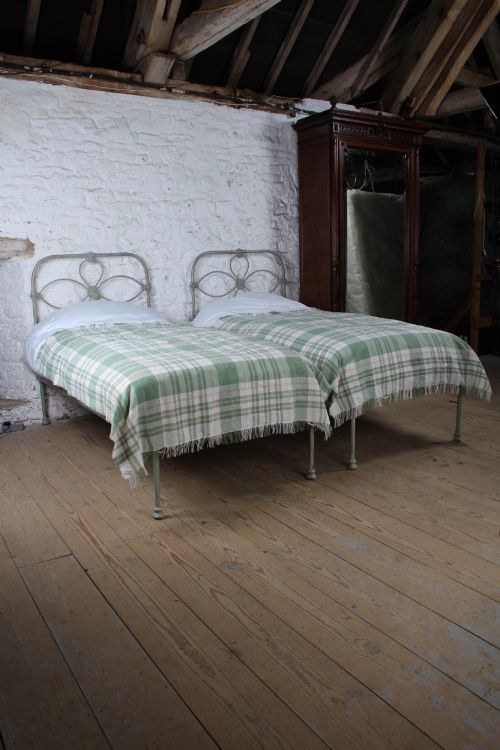
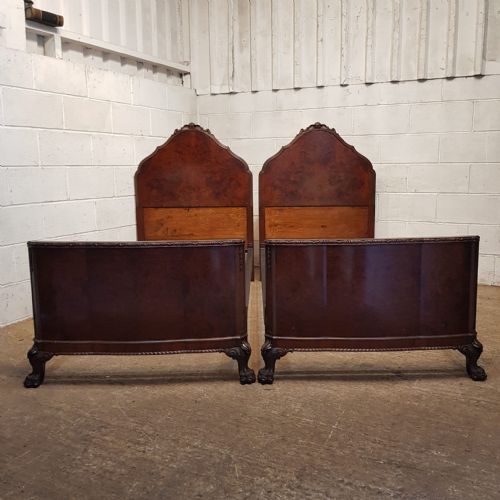


Antique Bedstead Pair
An antique bedstead pair brings matched symmetry and period character to a bedroom, offering twin frames from eras spanning the nineteenth and twentieth centuries.
Antique Bedstead Pair
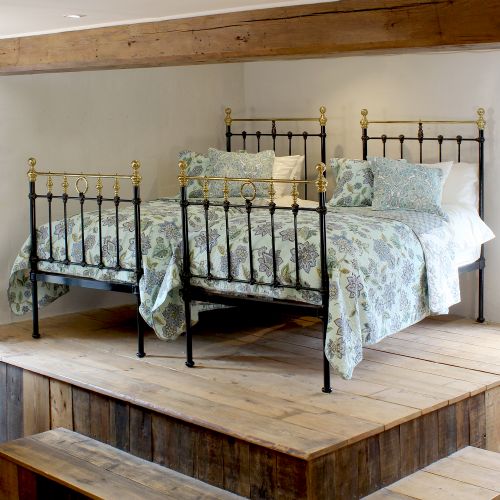
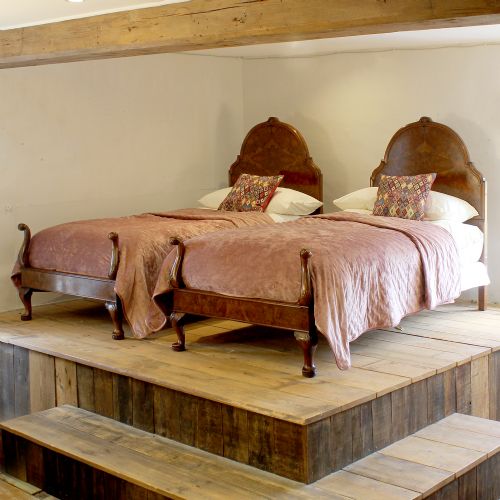
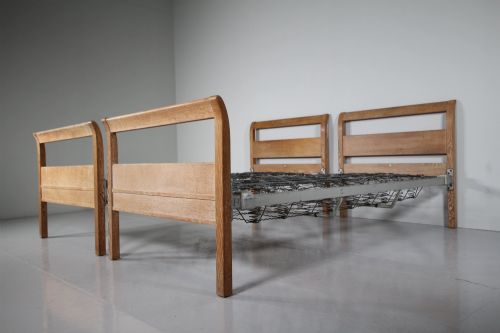
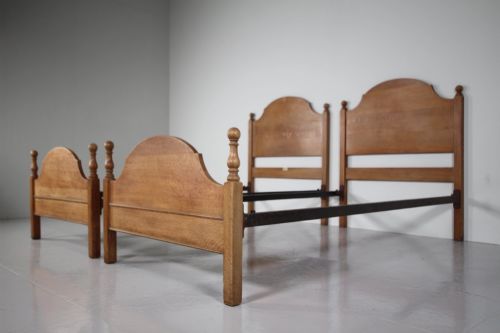
An antique bedstead pair consists of two matching frames designed to sleep two people side by side or separately in a room, predominantly found as single sizes in the current selection. These matching sets appear across various historical periods, with Edwardian and nineteenth-century examples forming a substantial portion of the available pieces.
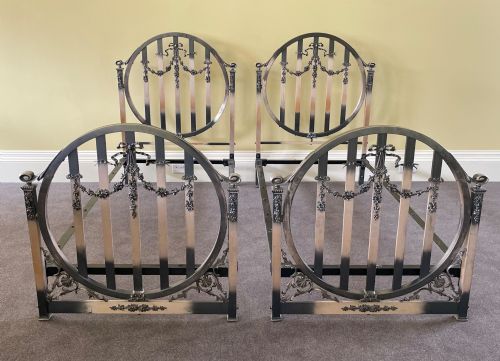
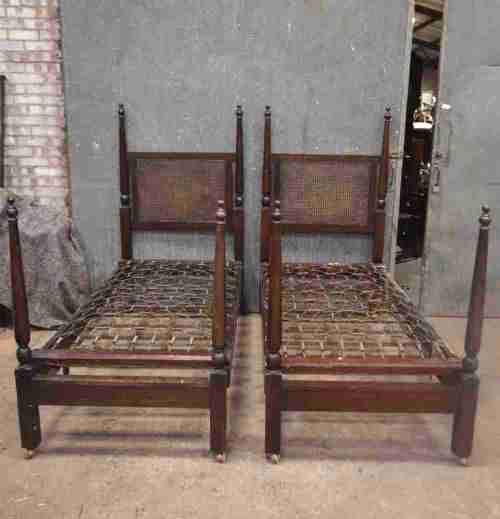
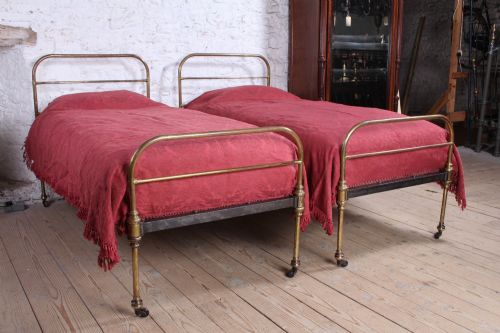
Makers and workshops produced these twin frames in numerous wood types and metals to satisfy domestic demand for coordinated chamber furnishings. Buyers encounter everything from simple iron and brass constructions to elaborately carved walnut and mahogany designs.
The configurations range from standard single beds that can be joined together to distinct French styles like corbeille and Louis XVI revival frames. Each pair retains the proportional design language of its original era, providing uniform aesthetics for historical interiors.
What varies in quality
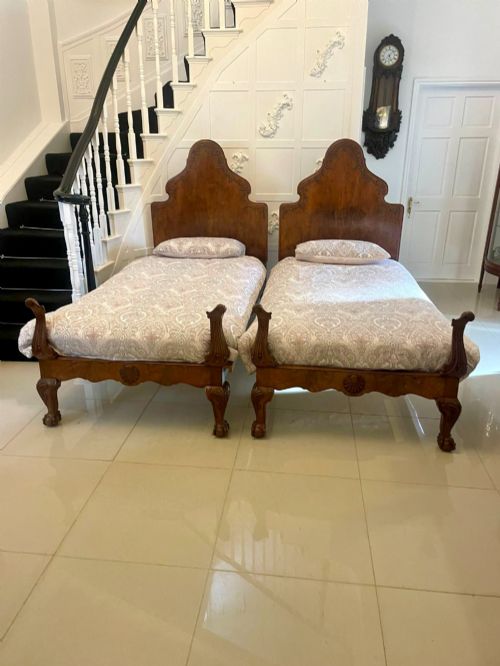
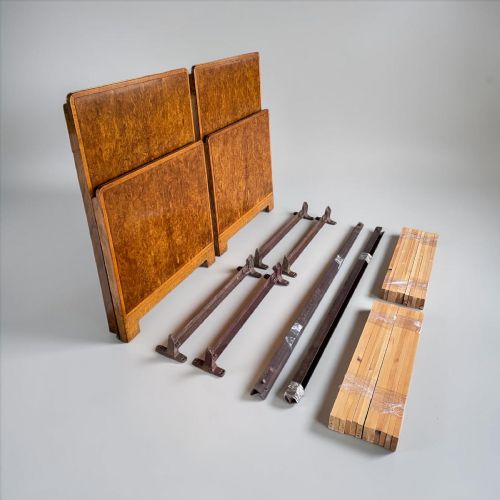
The standard of craftsmanship depends on the depth of hand-carved detailing, the choice of timber veneers such as burr walnut, and the sophistication of brass or ormolu mounts. Finer examples display carefully selected wood grain, precise inlay work, and robust structural joinery that outlasts simpler commercial production.
Maker attribution elevates desirability, particularly when pieces bear paper labels or stamps from established workshops. Furthermore, the preservation of original hand-painted portrait panels or specialised finishes like polychrome and chinoiserie distinguishes exceptional commissions from standard utility furniture.
Some pairs come with matching bedroom chairs, ensuring your wardrobe and bedside manner remain impeccably coordinated down to the last seat.
Heals·Hoskins and Sewell·Shapland and Petter
The Antique Bedstead Pair Glossary
- Bedstead
- A framework of a bed consisting of headboard, footboard, and side rails. It supports the mattress and base independently of built-in structures.
- Bergere
- A closed-arm upholstered armchair or bed component featuring woven cane panels. This French technique adds lightness and texture to wooden frames.
- Corbeille
- A French bed style featuring a curved, basket-like headboard and footboard that wrap around the sleeper. These frames are typically upholstered or polished wood.
- Ormolu
- Gilded bronze or brass mounts applied to furniture for decorative enrichment. Makers cast and chased these metal elements to accent mahogany and walnut surfaces.
- Inlay
- A technique where pieces of contrasting wood, satinwood, or shell are inserted into recess depressions to form decorative patterns. It defines much of the Edwardian cabinetwork.
Antique Bedstead Pair: Frequently Asked Questions
Can antique single beds be joined together?
Many listings specifically note whether the frames can be joined to form a larger sleeping platform. Buyers often utilise this flexibility to combine twin beds into a wider format.
Matching pairs frequently share identical dimensions and hardware, which simplifies the process of aligning them side by side in a principal bedroom.
What woods were used for Edwardian beds?
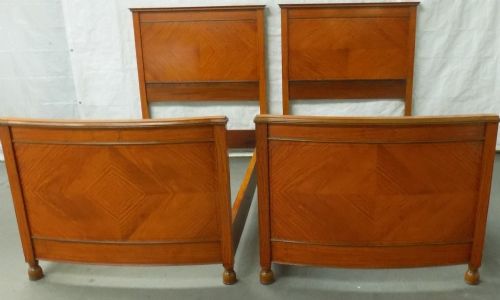
Makers during the Edwardian period favoured walnut, mahogany, and oak for domestic bed frames. Burr walnut veneers and satinwood inlay frequently decorated higher-end pieces.
Lighter woods and painted finishes also appeared as interior tastes shifted towards brighter, more airy chamber furnishings towards the turn of the century.
How do iron and brass beds differ?
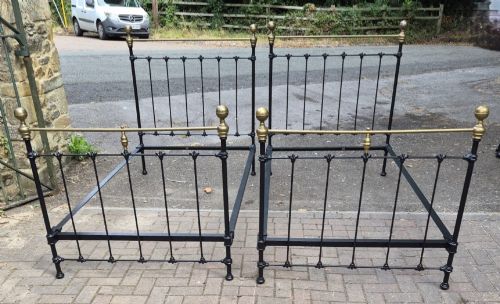
Iron frames usually feature cast or wrought iron construction, sometimes finished with black paint, cream enamel, or nickel plating. They offer structural rigidity and often include simple no-end designs.
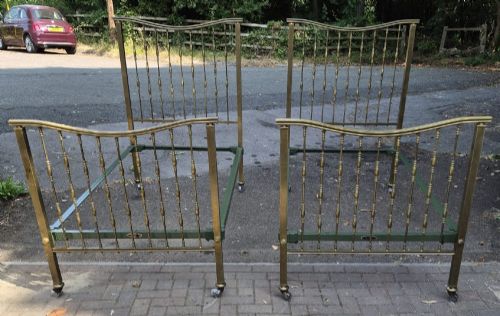
Brass bedsteads incorporate gleaming metal tubing and decorative finials, bringing a distinct warmth and brightness that contrasts with the industrial weight of cast iron.
What is a French style bedstead?
French style frames encompass designs inspired by historical periods like Louis XVI and the French Empire, alongside regional forms such as corbeille beds. They emphasise decorative carving, upholstery, and painted finishes.
These pieces often feature shaped headboards and footboards without standard posts, creating a distinct silhouette compared to British domestic equivalents.