


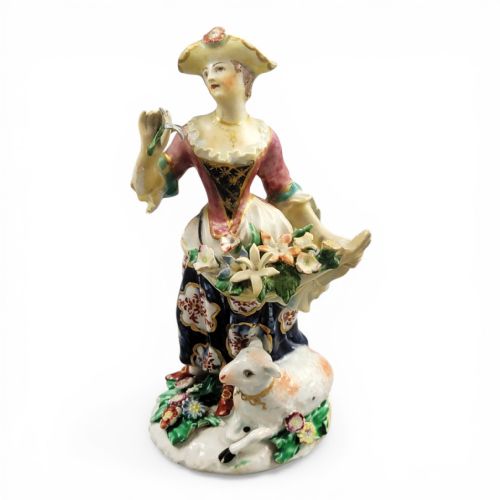


Antique Basket Figurines
Antique basket figurines combine human forms with woven receptacles, offering sculptural charm and decorative utility from past centuries.
Antique Basket Figurines
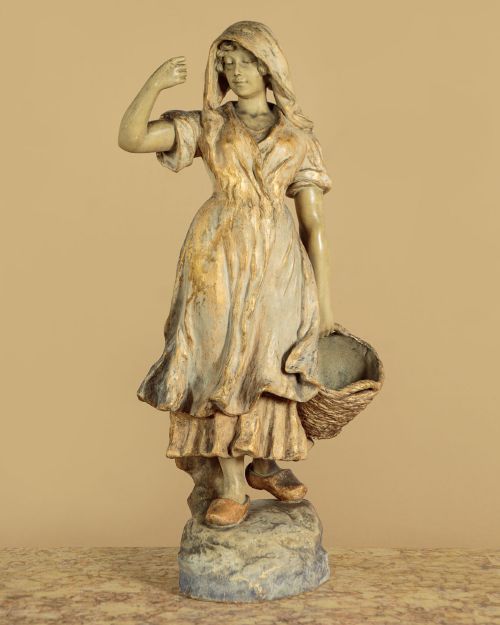
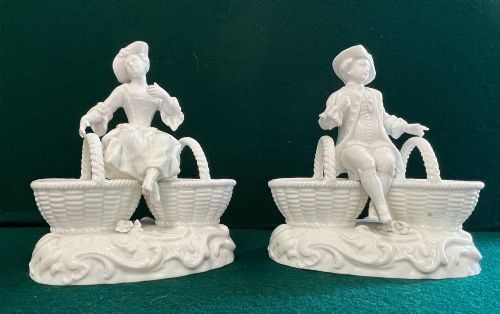
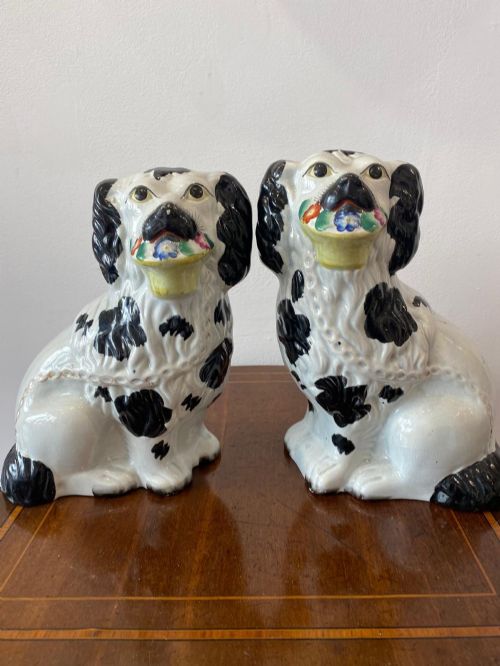
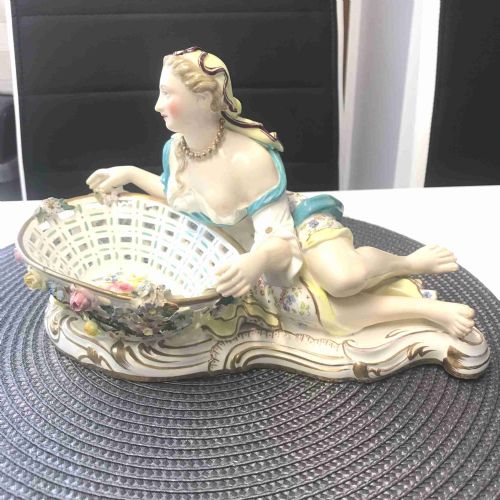
Antique basket figurines depict human and animal subjects carrying, holding, or standing beside woven receptacles across various historical periods. The search phrase encompasses everything from delicate Meissen porcelain maidens with floral sweet baskets to robust terracotta fisher girls and Staffordshire figures.
The pieces on this page span the eighteenth through the early twentieth centuries, drawing on styles such as Victorian, Rococo, and Art Nouveau. Common forms include figural candlesticks, sweetmeat dishes, and sculptural figures holding puppies, kittens, fruit, or flowers.
Origins range across European and Asian traditions, including English potteries, German porcelain factories, Austrian terracotta workshops, and Chinese kilns. Buyers encounter both single figures and symmetrical pairs modelled in porcelain, earthenware, and terracotta.
How they were made
Porcelain and earthenware forms dominate the selection, shaped through moulding or hand-modelling before undergoing high-temperature kiln firing. Artisans applied coloured glazes, enamel paints, and occasional gold leaf highlights to enhance the fine details of clothing, faces, and woven baskets.
Terracotta and parian ware pieces utilise specialised clay bodies that dry to matte or softly textured finishes, capturing the natural drape of fabric and the intricate lattice of wickerwork. Bronze sculptures demonstrate precision metal casting finished with patination.
Makers integrated functional elements such as quill holders, candle sockets, and sweetmeat dishes directly into the sculptural compositions, balancing utility with decorative modelling.
Listings feature pieces spanning from the 18th century through the 1930s, utilising porcelain, terracotta, earthenware, and bronze.
What varies in quality
Completeness of delicate elements such as applied porcelain petals, floral bases, and handles impacts the integrity of fragile ceramic figures. The presence of clear factory marks and well-preserved surface gilding further guides the discernment of the collector.
Goldscheider·Meissen·Royal Dux Bohemia·Bow Porcelain·Vion & Baury·Limbach·Volkstedt·Bernard Bloch·Royal Worcester·Sitzendorf·Samson of Paris·Derby·James Dudson·Geo Maxim·Charles Octave Levy
The Antique Basket Figurines Glossary
- Sweetmeat dish
- A small ornamental container designed for holding confectionery or sweetmeats during formal dining. These dishes often take the form of baskets supported by figures.
- Parian ware
- A fine-grained, unglazed porcelain developed in the nineteenth century to imitate marble. It produces smooth, matte white figures with a classical appearance.
- Blanc de Chine
- A white porcelain produced in Dehua, China, known for its smooth glaze and creamy tone. Pieces often depict deities and religious figures holding objects like fish baskets.
- Majolica
- A type of earthenware coated with an opaque tin-lead glaze and decorated with vibrant metallic oxide colours. It provides a glossy, rich finish on nineteenth-century figural works.
Antique Basket Figurines: Frequently Asked Questions
What were antique basket figurines used for?
Many of these pieces served as decorative ornaments on mantelpieces, sideboards, and dining tables during formal entertaining. Some specialised forms functioned as sweetmeat dishes for serving small delicacies or doubled as candlesticks and quill holders.
Over time, their primary role shifted from functional household accessories to purely decorative cabinet pieces collected for their sculptural qualities and fine ceramic artistry.
How do I identify porcelain figures from different periods?
Examining the glaze, painting style, and underlying clay body provides clues to a piece's age and origin. Eighteenth-century figures often feature hand-painted underglaze blue or polychrome enamels with soft contours, while nineteenth-century works display brighter moulded details and distinct factory marks.
Factory stamps, incised model numbers, and blue crossed swords or crown symbols help pinpoint specific European potteries and active production decades.
Are these figures usually sold as pairs?
Many nineteenth-century and Art Nouveau sculptural works were produced as symmetrical pairs to adorn mantelpieces or console tables. Listings frequently include matching figures depicting male and female companions, gardeners, or vendors.
Single figures also appear regularly, having been separated from their original pairs or manufactured as standalone decorative sculptures.
How should I care for antique ceramic and terracotta figures?
Displaying figures away from direct sunlight prevents the fading of delicate enamel paints and gold leaf highlights. Gentle dusting with a soft, dry brush keeps the intricate basket weaves and painted surfaces clean without risking abrasion.
Avoiding placement in areas with high humidity or temperature fluctuations protects fragile porcelain and terracotta bodies from structural stress.