


Vintage China Statuettes
These vintage china statuettes bring characterful figures into a room, offering sculptural charm shaped in porcelain and bone china.
Vintage China Statuettes
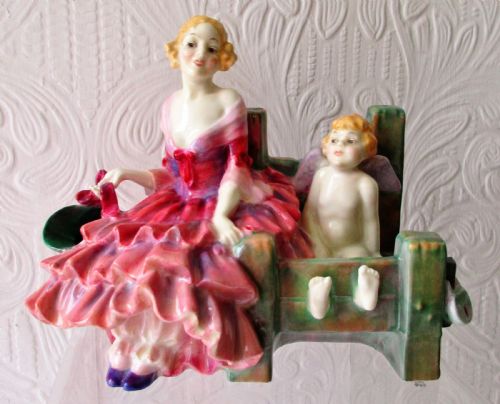
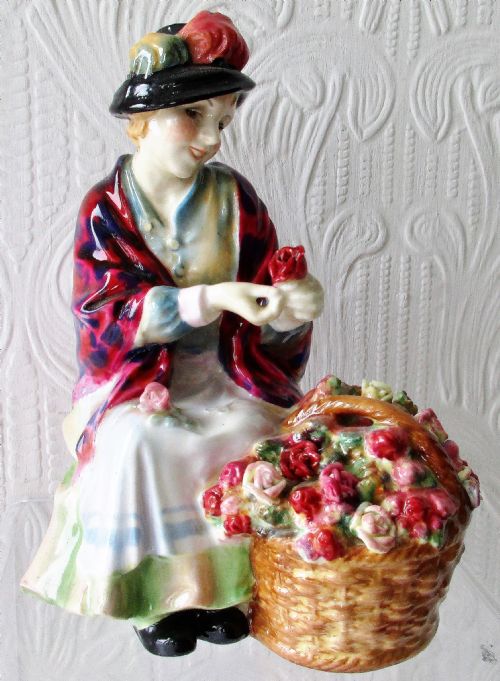
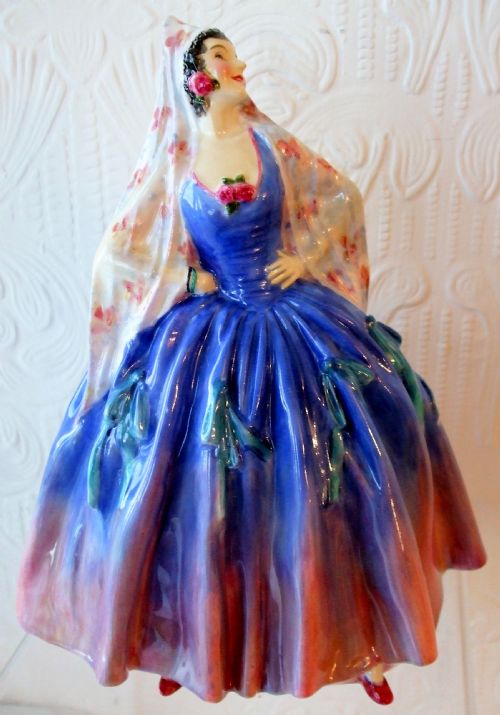
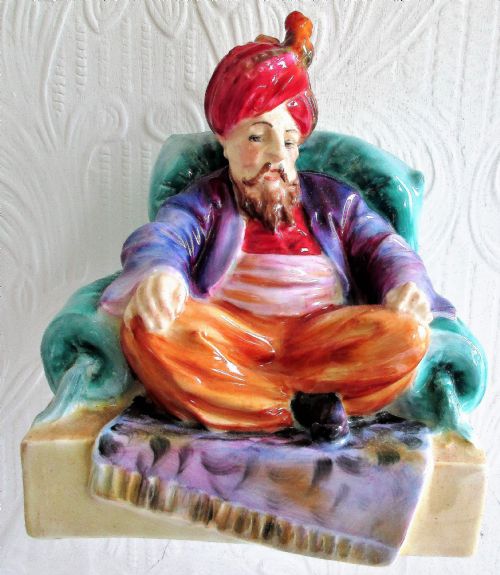
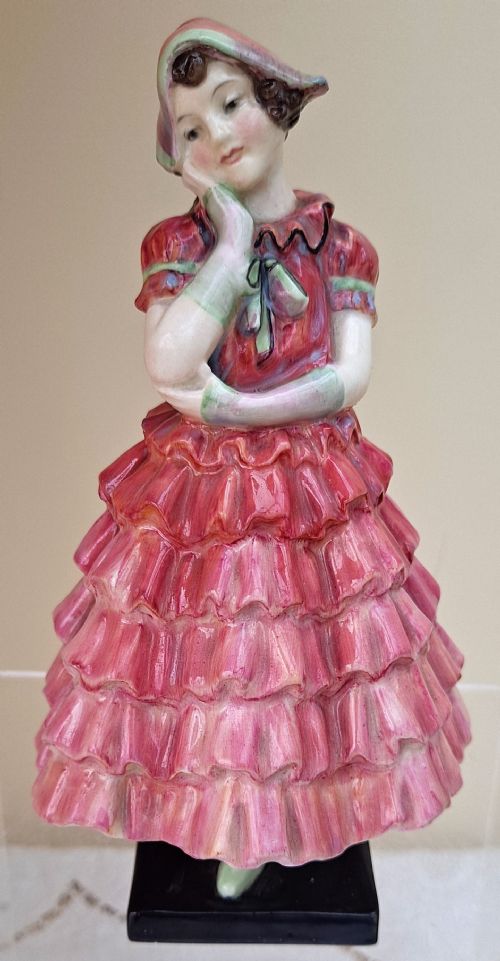
Vintage china statuettes encompass decorative figurines representing ladies, children, cherubs, and labourers modelled across the nineteenth and twentieth centuries. These pieces emerge from periods such as the Edwardian era, the nineteen-thirties, and the nineteen-forties, capturing domestic and pastoral scenes.
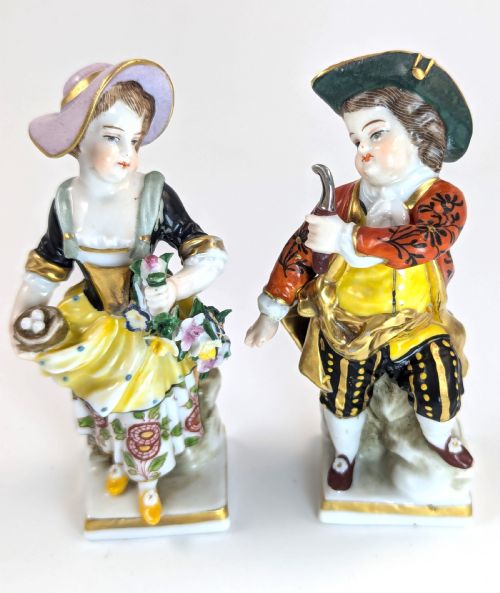
The versions most commonly met on this page include English porcelain figurines from makers like Royal Doulton, alongside Royal Worcester figures and continental pairs. Subjects range from named characters in historical dress to children and gardeners styled after earlier models.
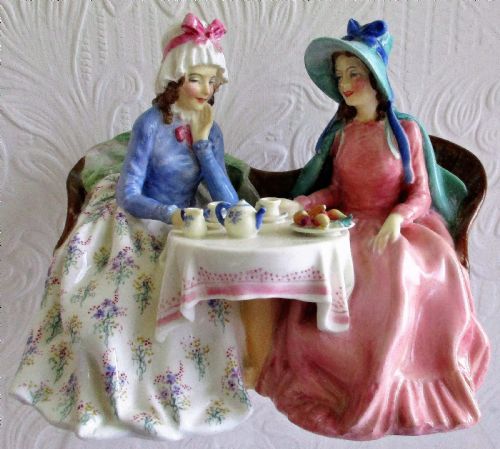
Moulded in porcelain and bone china, these statuettes reflect the changing decorative tastes spanning from Victorian and Rococo Revival aesthetics through to Art Deco design. Buyers encounter both single figures and matched pairs designed for display on mantelpieces and cabinets.
How they were made
The firing process bonded the glaze to the ceramic body, creating the hard surface seen on these statuettes. Hand-painting added the facial expressions, hair, and clothing colours characteristic of each period.
Listings feature porcelain and bone china statuettes spanning the nineteenth century, the Edwardian period, and the nineteen-thirties.
What varies in quality
The application of gilt and the complexity of the subject matter, particularly in paired figures or intricate compositions with baskets and floral elements, distinguish standard production from superior examples.
Royal Doulton·Royal Worcester·Mabel Lucie Attwell Shelley·Wedgwood and Co Ltd·Helena Wolfsohn Dresden
The Vintage China Statuettes Glossary
- Porcelain
- A hard, white ceramic material fired at high temperatures. It forms the base body for most fine figurines.
- Bone china
- A type of porcelain incorporating bone ash, yielding a durable and slightly translucent finish. It is common in twentieth-century English figures.
- Enamel
- Opaque glass applied to the fired ceramic surface as paint. It provides the permanent colour on robes, hair, and accessories.
- Glaze
- A glassy coating fused to the ceramic body during firing. This layer gives the statuette its smooth and shiny appearance.
- Gilt
- A thin layer of gold applied for decoration. It highlights edges, garments, and bases.
Vintage China Statuettes: Frequently Asked Questions
What periods do these statuettes cover?
The pieces span from the nineteenth century through the Edwardian era into the nineteen-thirties and nineteen-forties. This covers Victorian, Rococo Revival, and Art Deco styles.
Twentieth-century examples often bear specific model numbers or titles on the base, while nineteenth-century pieces lean towards pastoral pairs.
How do I identify the maker?
Makers mark their pieces on the underside using stamped ciphers, painted names, or impressed numbers. Factory marks help date the production era.
English potteries like Royal Doulton utilised specific alphanumeric codes, such as HN numbers, alongside printed factory crests.
How should I display them at home?
Statuettes suit enclosed cabinets or sturdy mantelpieces where they remain safe from knocks and heavy vibrations. Adequate lighting helps reveal the enamel details and gilt accents.
Keeping them out of direct sunlight preserves the painted enamel colours over time.