




Victorian Porcelain Children
Victorian porcelain children capture youthful innocence in delicate ceramic, offering collectors charming historic scenes crafted by master European potteries.
Victorian Porcelain Children
Victorian porcelain children encompass figural groups, statuary, and miniature services produced across the nineteenth century. These objects portray youngsters in gardens, with pets, or engaged in play, reflecting nineteenth-century domestic sentiments.
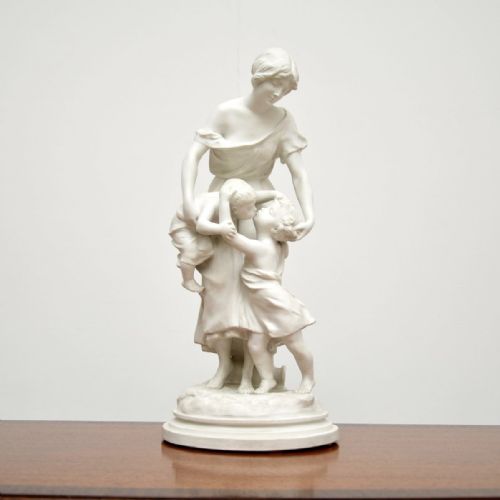
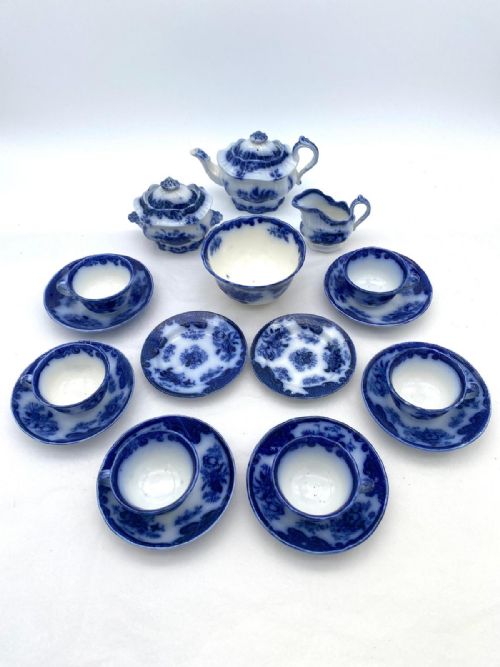
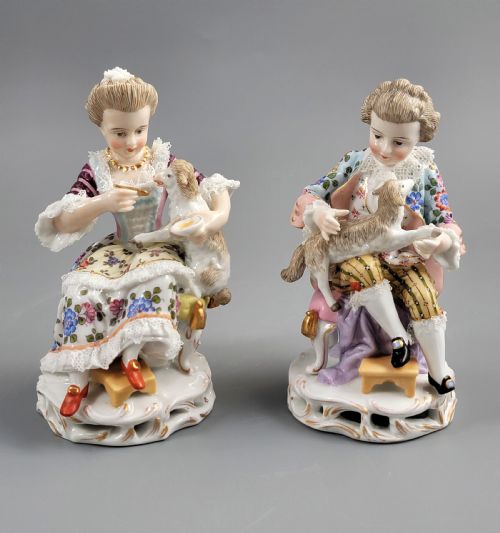
The most common examples on this page are figural pairs and groups rendered in bisque porcelain, parianware, or painted ceramics. Pieces range from German and French porcelain figures to English parian sculptures and flow blue child's tea and dinner services.
What varies in quality
Quality rests in the crispness of the modelling and the sensitivity of the hand-painting on faces and garments. Finer figures retain subtle facial expressions and sharp botanical or textural details without blurring in the porcelain body.
The weight, purity, and finish of the material distinguish standard production wares from important statuary and marked factory pieces. Superior parianware displays an even, marble-like texture, whereas exceptional painted pieces exhibit precise brushwork executed by skilled artists.
Listings feature nineteenth-century materials including parian porcelain, bisque, majolica, earthenware, and enamel, alongside gold leaf accents.
Copeland·Sitzendorf·Carl Thieme Dresden·Ernst Bohne Sohne·Royal Worcester·Helena Wolfsohn·Royal Dux Bohemia·Gebruder Heubach
The Victorian Porcelain Children Glossary
- Bisque Porcelain
- Un-glazed white porcelain with a matte, marble-like texture resulting from a single high-temperature firing. It gained popularity for neoclassical and Victorian figural sculpture.
- Parian Porcelain
- A fine-grained biscuit porcelain developed in Britain to imitate carved marble. It is prized for statuary and figural groups.
- Flow Blue
- A cobalt blue transfer-printing technique where the colour intentionally bled slightly into the glaze during firing. It appears frequently on nineteenth-century children's tea and dinner services.
- Majolica
- A type of earthenware coated with an opaque tin-glaze and painted with metallic oxide colours. It produces rich, glossy green and brown tones found on nineteenth-century figural works.
Victorian Porcelain Children: Frequently Asked Questions
How do I clean antique porcelain?
Dust figures gently with a soft, dry brush to prevent the accumulation of dirt in crevices. Avoid using harsh chemical cleaners or submerging painted and gilded surfaces in water.
For unglazed bisque, a slightly damp cloth can remove surface marks, but care must be taken with delicate hand-modelled elements like flower petals.
What is parianware?
Parianware is a type of fine biscuit porcelain developed in the nineteenth century to imitate carved marble. Its smooth, matte finish made it popular for portrait busts and children's statuary.
Named after Parian marble from the Greek island of Paros, the material allowed British potteries to produce affordable neoclassical and Victorian sculptures.
Were toy services used by children?
Many miniature tea and dinner services served as decorative nursery ornaments rather than functional toys for daily play. The delicate nature of nineteenth-century ceramic wares meant they were often displayed safely on shelves.
Some robust earthenware and flow blue services saw actual use in middle-class nurseries, surviving today through careful preservation.
How are German and French figures different?
German factories frequently utilised colourful hand-painted enamels and intricate applied floral details on their figural groups. Makers often focused on lively narrative scenes involving children and pets.
French and British manufacturers leaned towards unglazed parian or bisque finishes, emphasising sculptural form and classical purity over bright polychrome decoration.