



Antique Ball Mould Mirror
An antique ball mould mirror catches the light and distorts the room, bringing a clever focal point to any wall.
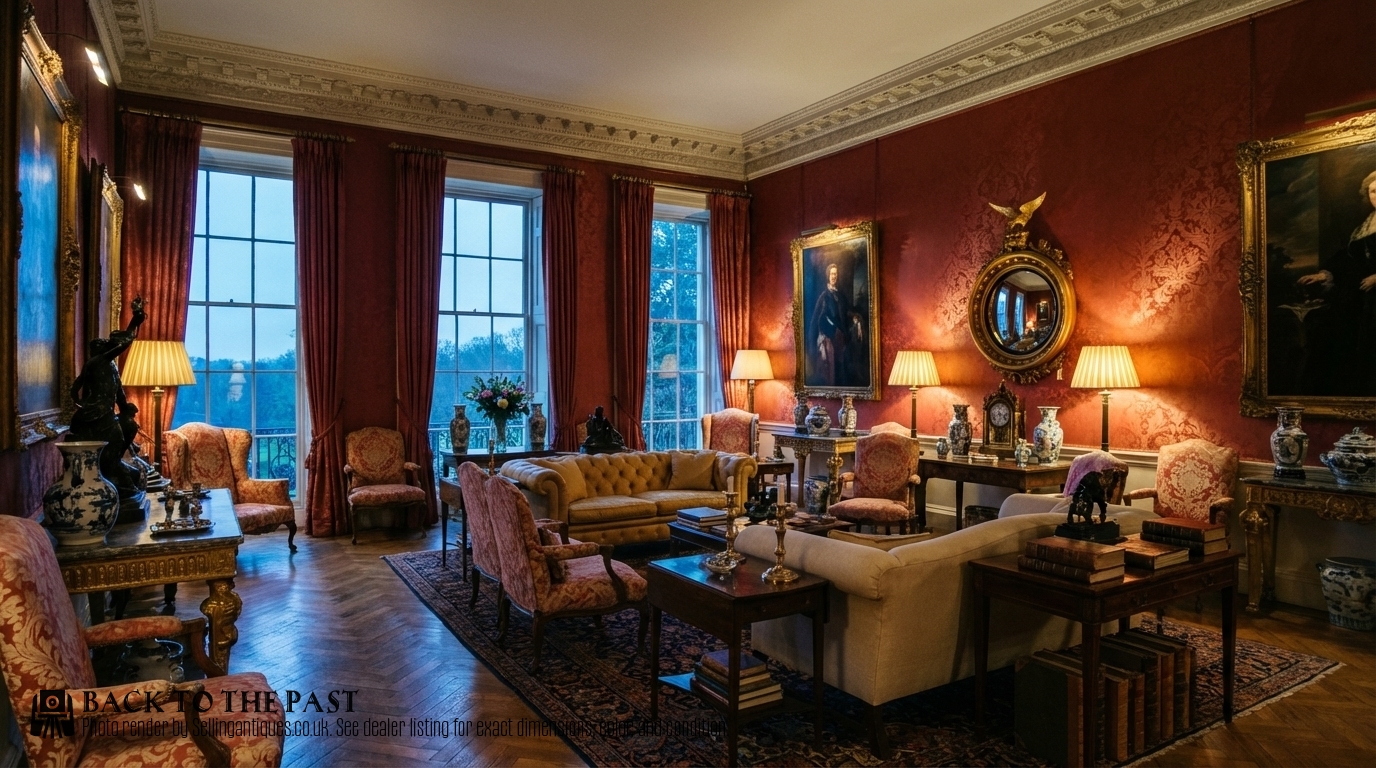
Antique Ball Mould Mirror
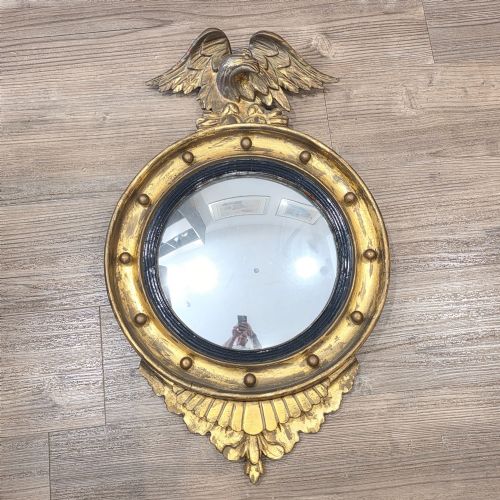
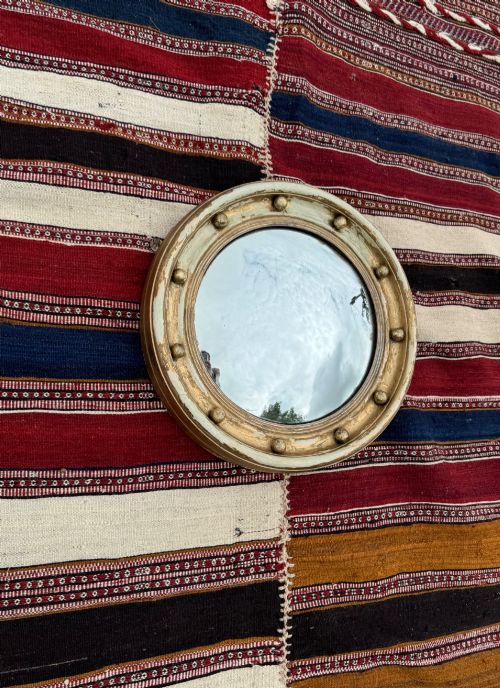
An antique ball mould mirror is a circular or rectangular glass framed by giltwood and composition moulded balls, often called a convex or bullseye mirror. These pieces catch the light and curve the room, offering a wide perspective from a compact circular or rectangular frame. The examples you find here span the Regency period through to Edwardian interpretations and later nineteenth century revivals.
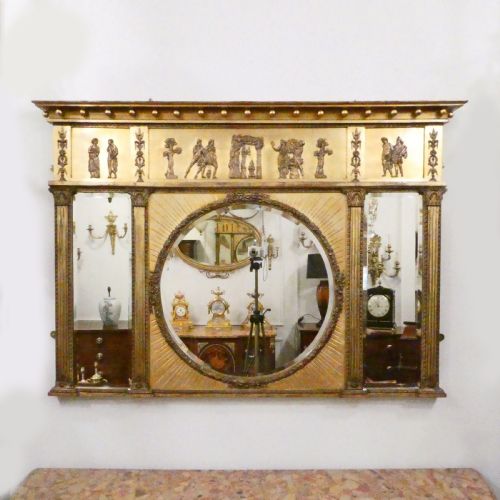
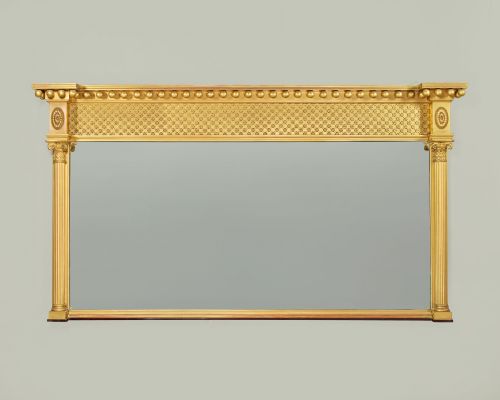
Most pieces on this page take the form of circular convex mirrors topped with spread eagles or simple crests, alongside larger overmantel and landscape mirrors. You will encounter classical Regency frames, Grand Regency statements, and Edwardian nods to earlier designs. They hang in hallways and reception rooms to bounce daylight into dark corners.
How they were made
Makers built these frames using carved giltwood, ebonised wood, and composition ornament built up over a wooden base. The spherical balls lining the inner or outer moulding were cast in composition or turned from wood before receiving layers of gold leaf or gesso. Some pieces incorporate verre eglomise panels into the frame, adding dark painted glass borders that frame the main reflector.
The mirror glass itself is typically curved for convex forms, creating the characteristic fish-eye reflection used to survey an entire parlour. Craftsmen gilded the surfaces with gold leaf applied over red bole, which shows through as the metal thins with age. Carved eagles, sconces, and delicate acanthus leaves were pinned and glued to the primary frame structure.
The fierce eagle perched atop many convex mirrors supposedly watched over the parlour to ward off unwanted spirits.
What varies in quality
The distinction between ordinary and exceptional work lies in the crispness of the carved details and the depth of the gilding. Better pieces display finely modelled eagles, sharp composition ball mouldings, and deep, lustrous gold leaf rather than flat modern paint. The quality of the original curved glass also matters, as clear, distortion-free reflection indicates superior early manufacture.
Proportion and structural integrity dictate the standing of a frame. Superior examples retain their original gilding without heavy over-painting, and the joints of the frame remain tight and true. Finer mirrors show thoughtful integration of verre eglomise panels and well-balanced crestings that complement the primary glass diameter.
The Antique Ball Mould Mirror Glossary
- Convex mirror
- A round mirror with a bulging spherical glass surface that reflects a wide, curved view of the interior. These pieces are frequently surrounded by ball mouldings and gilt frames.
- Giltwood
- Timber coated with a thin layer of gold leaf or gold powder. It provides the bright metallic finish seen on classical and revival frames.
- Gesso
- A plaster mix applied to wood frames to create a smooth surface for gilding or to form moulded decorations. It holds fine detail well before the application of gold leaf.
- Verre eglomise
- A cold decoration technique where designs are painted on the reverse side of glass panels. It often appears as a dark border with gilt motifs on Regency mirrors.
- Composition
- A moulded mixture of whiting, resin, glue, and linseed oil pressed into metal dies to form decorative ornaments. Makers used it as a faster alternative to hand-carved wood.
Antique Ball Mould Mirror: Frequently Asked Questions
Where should I hang a convex mirror?
Hang your convex mirror at eye level in a hallway, dining room, or opposite a window where it can capture the light. Because the curved glass shrinks the reflection, placing it where people walk past adds movement and interest to the room.
Ensure the wall fixings are secure, as heavier giltwood frames require proper anchors to support their weight safely over time.
How do I clean an old gilt frame?
Dust giltwood and composition frames gently with a soft, dry brush to remove settled dirt without disturbing the gold leaf. Avoid using water, detergents, or modern chemical sprays, which can strip the fragile metallic finish or damage the gesso beneath.
If the glass needs attention, apply a small amount of mild cleaner to a cloth rather than spraying the glass directly, preventing liquid from seeping behind the mirror plate.
What is the difference between Regency and Edwardian pieces?
Regency mirrors date from the early nineteenth century and typically feature bolder carved details, crisper ball mouldings, and distinct eagle crests. Edwardian pieces from around nineteen hundred often revive these classical lines with slightly softer carving and different secondary woods.
Examining the construction methods, backing boards, and the wear on the gold leaf helps distinguish the original nineteenth century work from later Edwardian revivals.
Why do some mirrors have black spots?
Dark spots and foxing occur as moisture over decades breaks down the silvering behind the glass plate. This ageing process is natural in antique mirrors and confirms the historical nature of the glass.
Collectors generally accept light foxing as part of the piece's character, provided the reflection remains clear enough to enjoy the overall room view.