

Antique Art Pottery Pair
An antique art pottery pair brings balanced symmetry and expressive studio craftsmanship to a room through matching glazed ceramic and stoneware forms.
Antique Art Pottery Pair
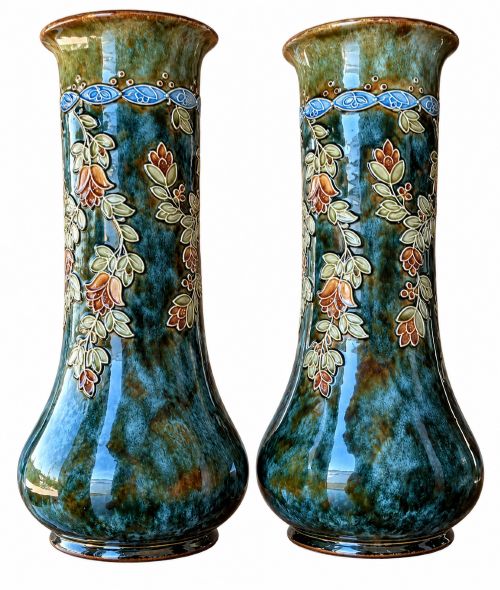
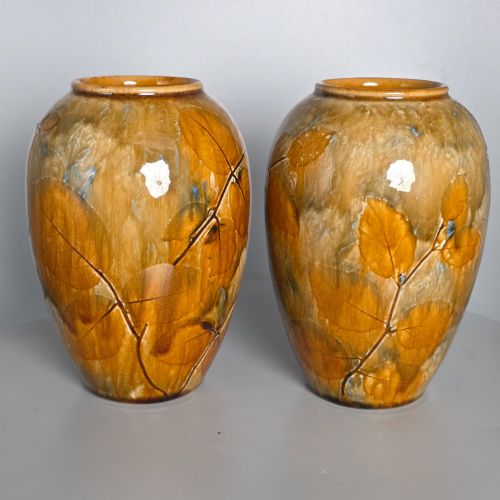
When you search for an antique art pottery pair, you encounter matched sets of decorative vessels, figurines, and plaques produced during periods like the Victorian, Edwardian, and early twentieth century. These items reflect distinct artistic movements, including Art Nouveau, Arts and Crafts, and Art Deco, originating from British, European, and Japanese makers.
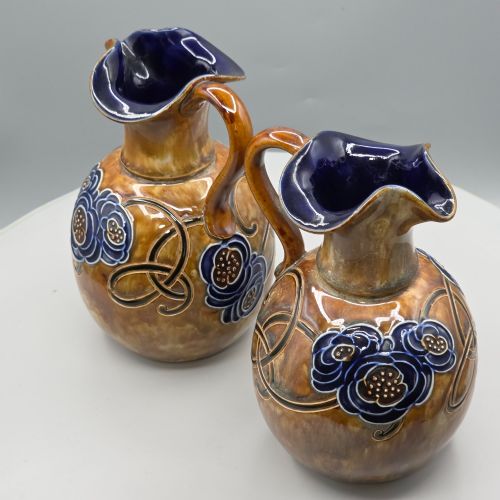
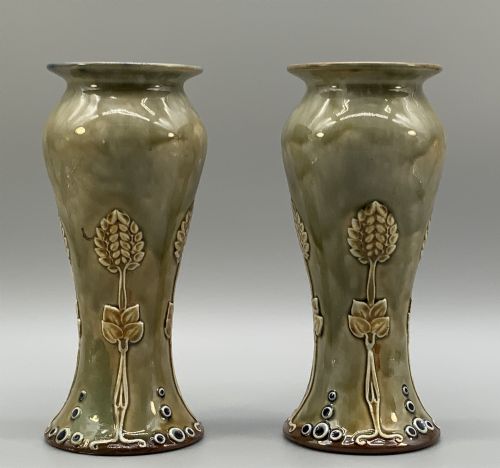
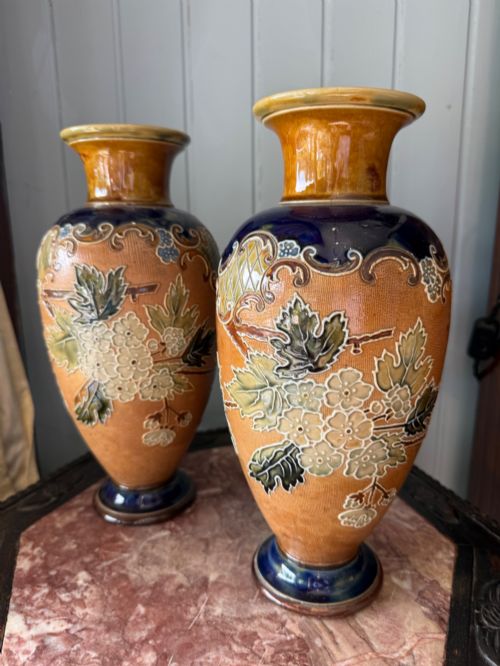
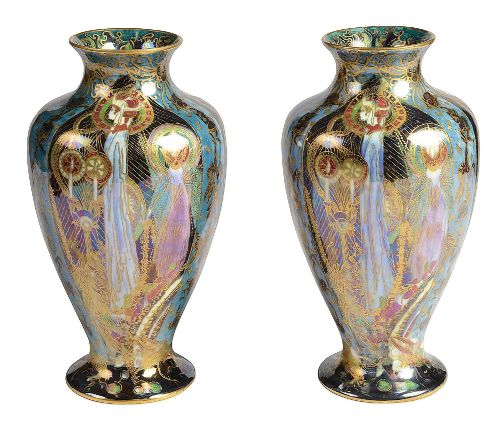
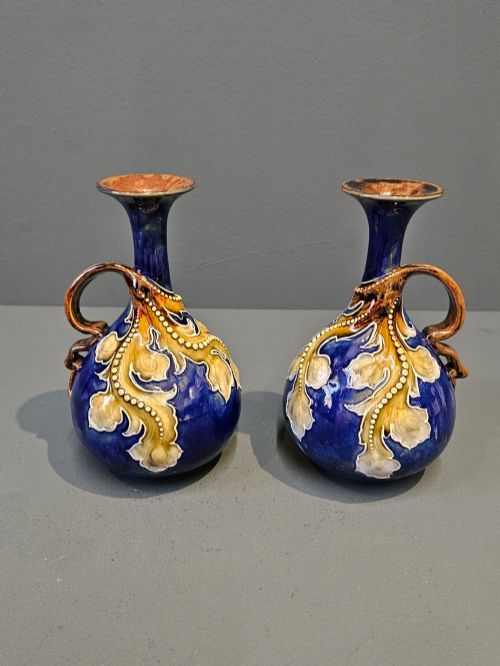
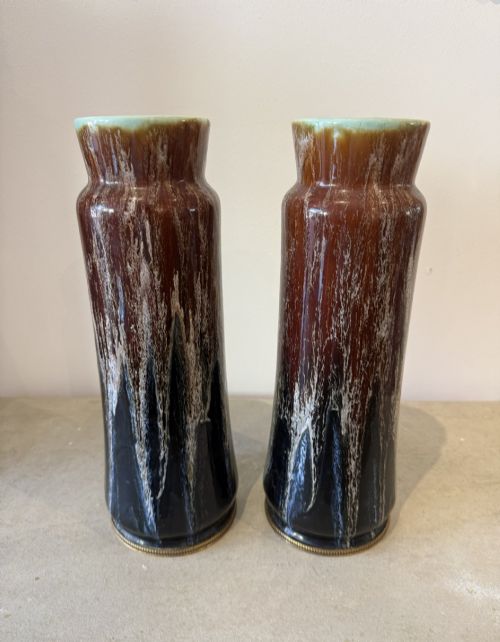
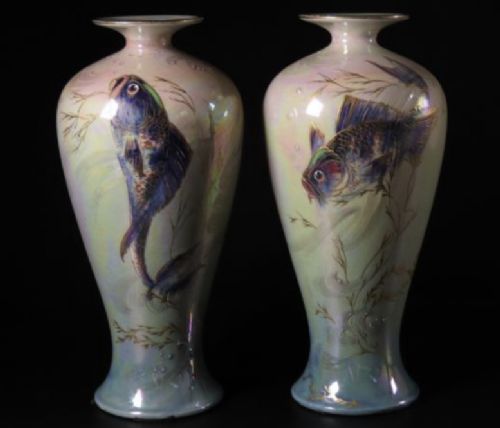
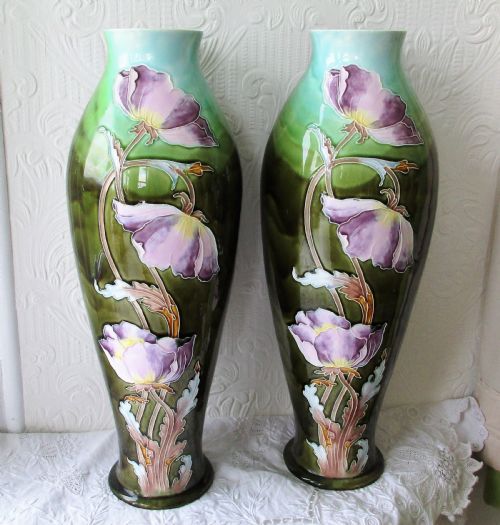
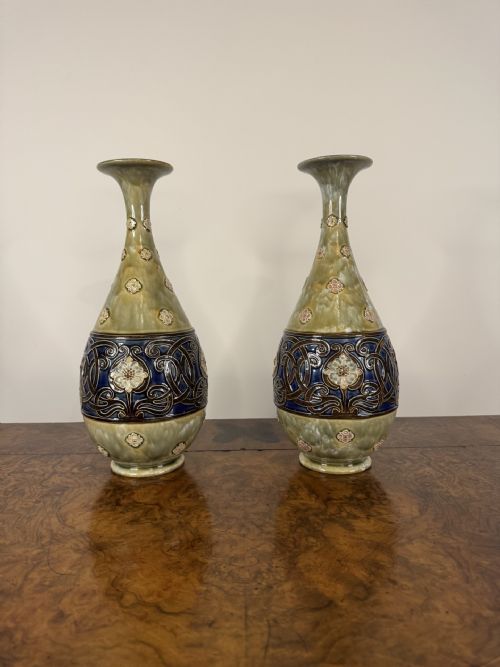
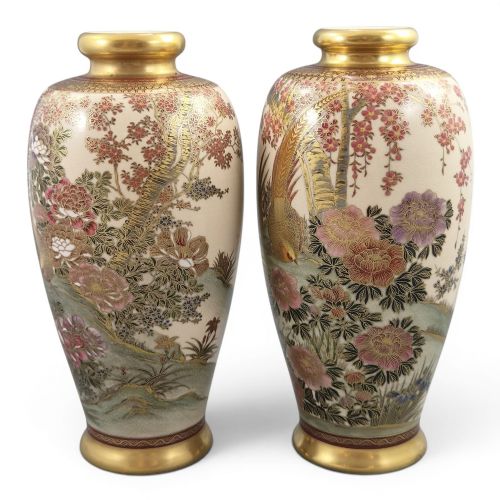
The most common forms on this page are matched pairs of baluster vases, jugs, and mantel ornaments created from stoneware, earthenware, and porcelain. Such pairs frequently display coordinated hand-painted motifs, relief decoration, or lustre glazes designed to complement each other in domestic displays.
How they were made
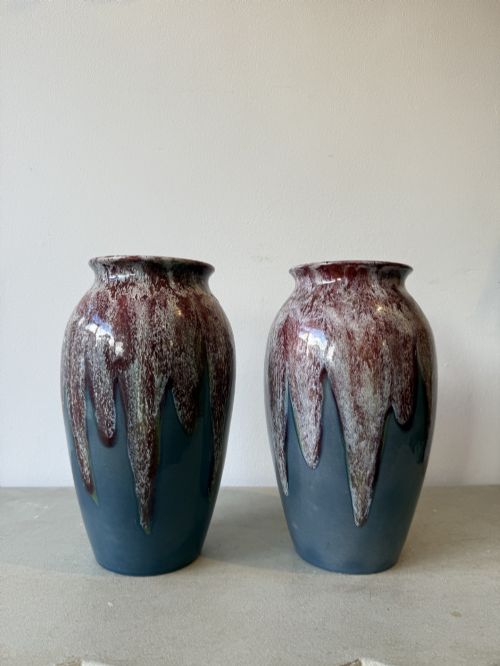
Potters shaped these objects using local stoneware, earthenware, and porcelain clays, often employing slip casting or throwing techniques before applying detailed hand-painted or transfer-printed decoration. Many pieces incorporate specialised surface treatments such as reactive glazes, enamel, gold leaf, and high-fired lustre finishes.
Makers utilised complex kiln firings to achieve distinct surface effects, including crystalline and matte glazes, alongside raised slip or moulded relief patterns. Stoneware items from this tradition typically underwent high-temperature salt glazing or rich chemical glazing to secure their durable, textured finishes.
Listings feature periods spanning from the Victorian era and 1880 through the Edwardian years up to 1930.
What varies in quality
The standard of an antique art pottery pair depends heavily on the crispness of the moulded relief work and the depth of the glaze application. Superior examples demonstrate careful control during the firing process, resulting in rich, even colour distribution and well-defined decorative details without distracting surface blemishes.
Artistic execution and attribution further differentiate the collection, with pieces bearing the specific hand signatures or monograms of renowned studio artists holding greater design integrity. The harmony between the two matched items also influences the overall balance, as true pairs maintain identical proportions and consistent glazing across both pieces.
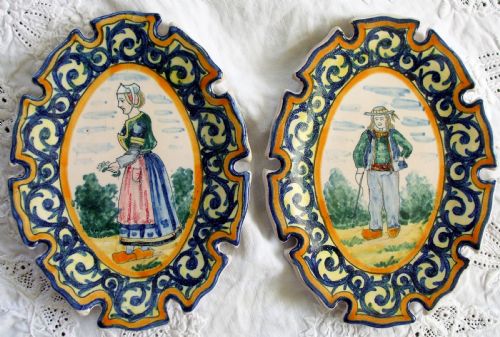
Royal Doulton Lambeth·Wedgwood·Boch Freres·Shelley·HR Quimper·Sherwin and Cotton·Royal Dux Bohemia·TG Green·Mettlach·Minton·Makuzu Kozan·Carlton Ware·Bretby·Compton Potters Art Guild·Rozenburg·Ernst Wahliss·Staffordshire
The Antique Art Pottery Pair Glossary
- Stoneware
- A robust, vitrified ceramic pottery fired at high temperatures until impervious to liquid even without glaze. This dense material allows for sharp surface relief and rich chemical colour reactions.
- Lustre
- A type of pottery glaze containing metallic elements that produce an iridescent, shimmering sheen upon firing. This technique reflects light differently depending on the viewing angle.
- Baluster
- A vertical architectural form featuring a rounded, bulging lower body that tapers towards a narrow neck. Many decorative vases utilise this traditional silhouette.
- Earthenware
- Porous pottery fired at lower temperatures than stoneware and typically coated in an opaque glaze or enamel. This medium provides a reliable base for bright hand-painted pigments.
- Slip
- A liquid suspension of clay and water applied to ceramic bodies for decorative surface effects or as a base colour. Artisans often pipe or brush it onto greenware to create raised patterns.
Antique Art Pottery Pair: Frequently Asked Questions
How do I display an art pottery pair?
These matched vessels look best placed symmetrically on a mantelpiece, sideboard, or dedicated display console where their balanced forms can be appreciated together. Ensure they sit away from high-traffic edges to protect their glazed surfaces from accidental knocks.
Allow adequate natural light to reach the items so that subtle lustre finishes and hand-painted glaze variations remain visible. Keeping the pair together preserves their original decorative intent.
Are these items waterproof for fresh flowers?
While many stoneware and glazed ceramic vessels were originally designed for functional use, antique pieces warrant cautious handling due to age. Thermal shock or lingering moisture can affect older bodies and historic glazes.
Consider utilising a discreet plastic liner inside older vases if you intend to display fresh stems regularly. This protects the historic interior from mineral deposits and water seepage.
What defines an art pottery pair?
An art pottery pair consists of two matching decorative objects created by the same pottery, studio, or artist during the late nineteenth or early twentieth century. They share identical or complementary forms, glazes, and decorative motifs.
These pieces were conceived to balance interior mantel displays or architectural shelving. Finding them together intact remains a key aspect of their collectable appeal.