

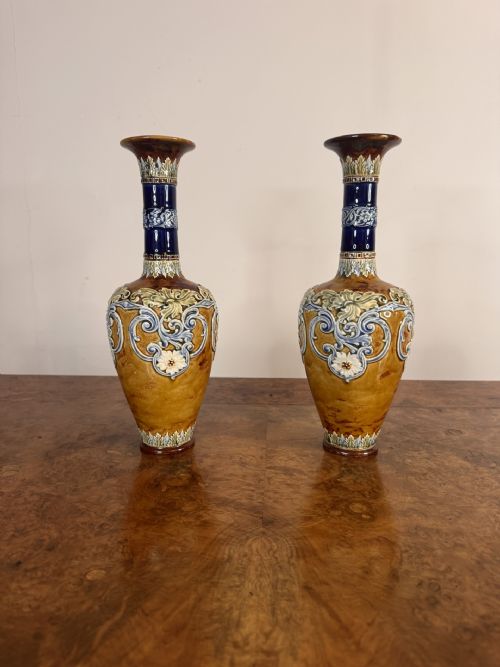
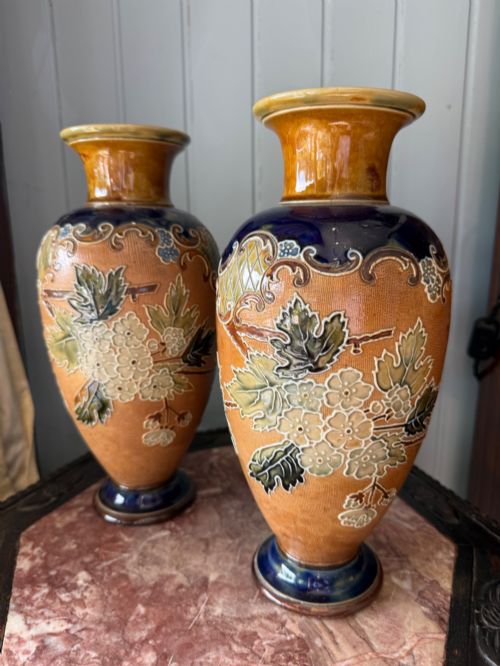



Relief Decorated Ceramic Vases
Relief decorated ceramic vases are sculptural vessels built with raised ornament that repays close inspection.
Relief Decorated Ceramic Vases
Relief decorated ceramic vases encompass nineteenth century vessels featuring raised surface modelling, sprigged details, and moulded motifs. These pieces range from substantial English stoneware jugs to delicate Japanese baluster forms and large Victorian display pieces.
Buyers are most likely to encounter Victorian and nineteenth century examples on this page, spanning stoneware, porcelain, and earthenware bodies. Forms extend from pairs of classical vases to jardinieres and country house exhibition pieces.
The selection reflects diverse regional traditions, including English potteries like Royal Doulton and Burmantofts alongside Japanese Meiji period ceramics. Each maker utilises distinct surface techniques to bring dimension to the clay.
How they were made
Makers formed these vases using stoneware, porcelain, terracotta, and earthenware bodies, often shaping them as baluster vessels or grand jardinieres. Artisans applied surface embellishments through hand modelling, sprigging, and intricate moulding techniques.
Decoration relied on applied enamel, rich glaze, and delicate gold leaf to highlight the raised ornament. Salt glazing and cream sprigging created textured, durable surfaces on utilitarian and exhibition stoneware alike.
Relief Decorated Ceramic Vases Retail Price Guide 2026
Typical asking prices for relief decorated ceramic vases among the pieces listed under this phrase on Sellingantiques today, from the lower quarter to the upper quarter. They describe what is for sale here now, not the wider market.
Listings span the nineteenth century, featuring Victorian, Regency, and Meiji period pieces in stoneware, porcelain, and earthenware.
What varies in quality
Quality rests in the crispness of the moulded or applied relief work and the sureness of the hand applied glaze and enamel. Superior examples display sharp definition in every sprigged motif and a balanced relationship between body and ornament.
Exhibition pieces and named makers demonstrate a higher ambition in scale and decorative complexity than standard production items. The harmony of the gilding and the purity of the ceramic body separate fine studio output from ordinary manufacture.
Royal Doulton·Makuzu Kozan II·Emma Shute·Bernhard Bloch·Burmantofts Faience Pottery·Royal Worcester
The Relief Decorated Ceramic Vases Glossary
- Baluster
- A vase form with a rounded body that tapers toward the neck. This silhouette provides a stable base for substantial relief decoration.
- Sprigged
- Applied ornament made separately in a mould and pressed onto the unfired leather hard clay body. It creates a sharp, raised design across the surface.
- Faience
- Tin glazed earthenware noted for bright colours and decorative versatility. It became popular in late nineteenth century art pottery.
- Jardiniere
- A large ornamental pot designed to hold growing plants. These vessels often feature heavy relief moulding suited to architectural display.
- Salt glazed
- A stoneware finish achieved by throwing common salt into the kiln during high temperature firing. This produces a textured, pebble like surface sheen.
Relief Decorated Ceramic Vases: Frequently Asked Questions
What periods do these vases come from?
The selection spans the nineteenth century, taking in the Regency era, the Victorian period, and the early twentieth century. Most pieces reflect the decorative tastes of the eighteen eighties and nineties.
Production methods shifted across these decades from robust salt glazed utility wares to refined porcelain exhibition pieces and Japanese import ceramics.
How do I identify Japanese Satsuma vases?
Japanese Satsuma pieces feature a characteristic crackle glaze over a cream coloured earthenware body. They often combine painted enamels with raised gilding.
Originating during the Meiji period, these vases demonstrate meticulous attention to detail and traditional narrative or floral motifs.
Where were English stoneware jugs made?
English stoneware production centred on established pottery districts, with notable output from London workshops such as Doulton in Lambeth. These regional centres possessed the local clay resources and kiln technology necessary for high temperature firing.
Potters utilised salt glazing and applied sprigged decoration to create durable vessels that doubled as decorative objects.
How should I display a large jardiniere?
Large jardinieres require a sturdy surface capable of supporting heavy ceramic weight, such as a low table or a dedicated plant stand. Placing them away from high traffic areas protects the raised relief decoration from accidental knocks.
These substantial pieces work well as focal points in entrance halls or reception rooms, echoing their original nineteenth century use.