




Royal Doulton Ceramic Vases
Royal Doulton ceramic vases bring together late nineteenth and early twentieth century British studio pottery skill and decorative artistry.
Royal Doulton Ceramic Vases
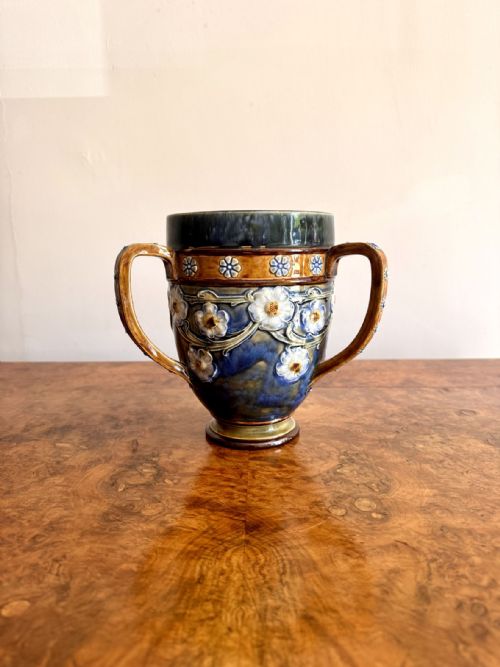
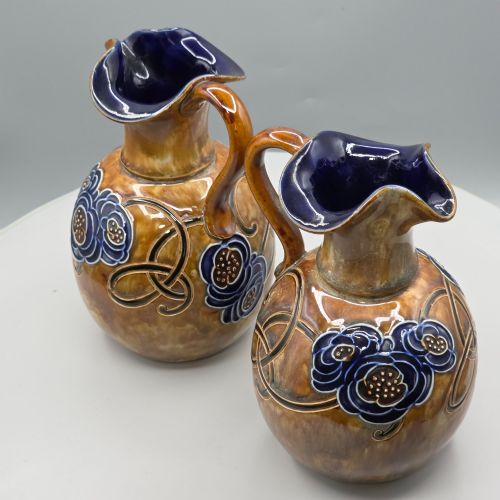
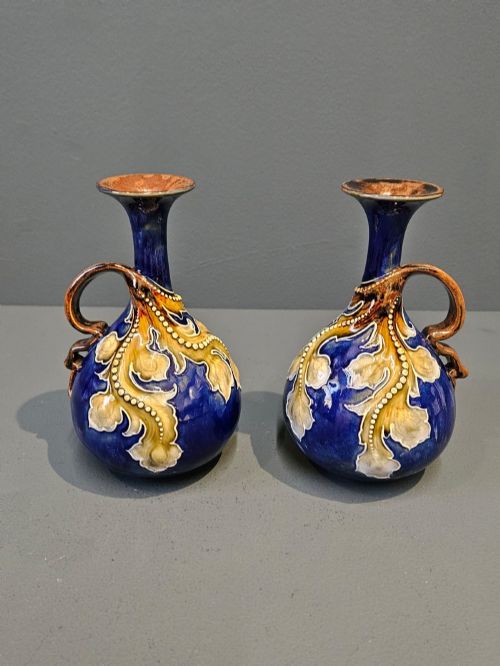
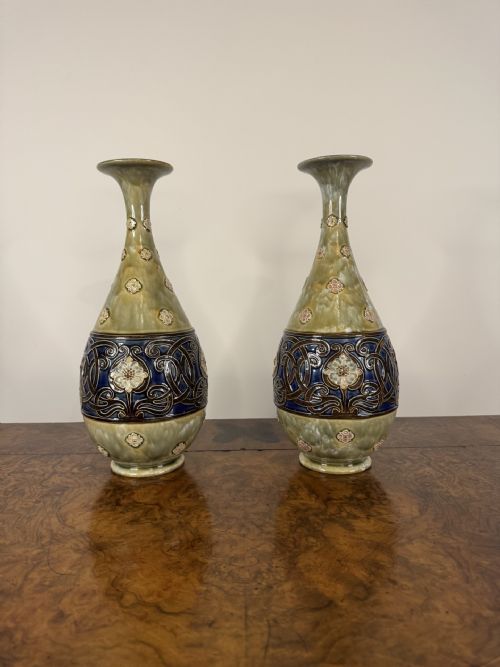
Royal Doulton ceramic vases encompass a variety of decorative forms originating from periods spanning the Victorian era through to the 1920s. Buyers searching for royal doulton ceramic vases encounter stoneware, glazed earthenware and porcelain pieces shaped as baluster vessels, jugs and beaker-form vases.
The objects frequently display characteristic aesthetics of the Arts and Crafts and Art Nouveau movements. Pairs of vases dominate the selection alongside individual decorative showpieces.
Origins trace back to key production centres including Lambeth and Burslem. The forms range from small cabinet pieces to large decorative vases with patterned or pictorial surfaces.
How they were made
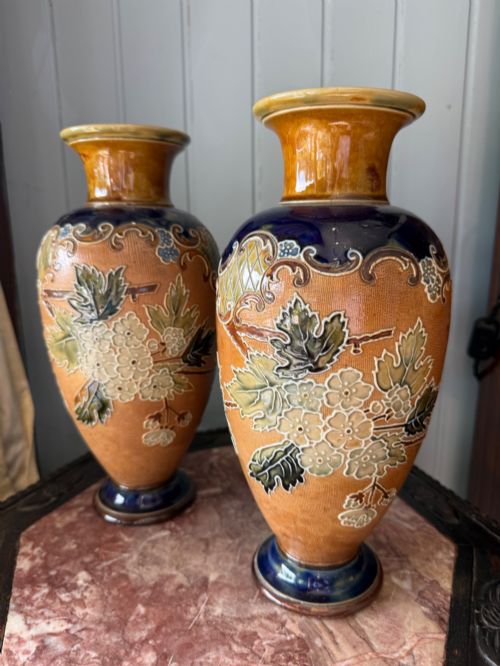
The manufacture relies on heavy stoneware and ceramic bodies shaped into vessels and fired with salt or liquid glazes. Makers applied specialised techniques such as Slater's Patent texturing alongside hand-painted enamel and floral decoration.
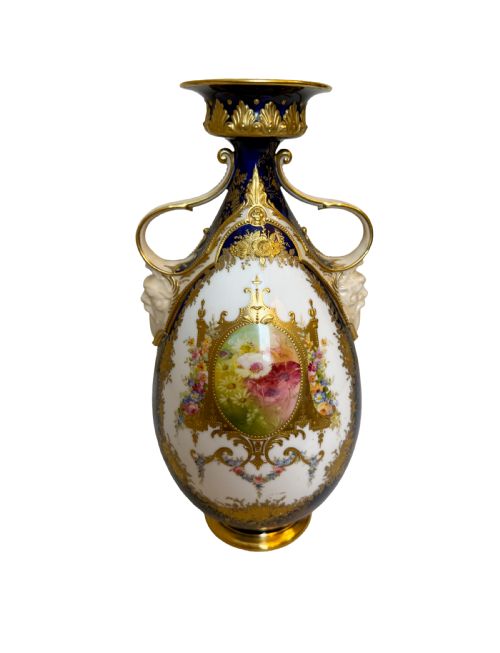
Surface enhancement often involved intricate hand-painted scenery or botanical motifs executed by named studio artists. Gilding with gold leaf frequently highlights raised structural details on finer examples.
Royal Doulton Ceramic Vases Retail Price Guide 2026
Typical asking prices for royal doulton ceramic vases among the pieces listed under this phrase on Sellingantiques today, from the lower quarter to the upper quarter. They describe what is for sale here now, not the wider market.
The selection includes beaker-form vases, baluster vessels, jugs and planters produced across multiple decades.
What varies in quality
Quality rests upon the ambition of the form and the complexity of the surface decoration. Standard factory output differs distinctly from pieces bearing the individual signature or monogram of known studio artists.
The crispness of moulded relief work and the depth of the glaze application determine visual success. Hand-painted pictorial scenes or detailed enamelling elevate the standing of a piece considerably.
Louisa Wakely·John H Plant·Emily Stormer·Ethel Beard·Charles Noke
The Royal Doulton Ceramic Vases Glossary
- Stoneware
- A robust, vitrified ceramic fired at high temperatures until non-porous. It forms the heavy body of many Lambeth studio pieces.
- Baluster
- A vase shape featuring a rounded body that tapers towards a narrow neck and widens again at the base. This silhouette appears frequently in Art Nouveau designs.
- Slater's Patent
- A decorative technique utilising lace or fabrics pressed into wet clay to create textured background patterns. This method was often combined with raised enamel floral motifs.
- Enamel
- Vitrified coloured glass paste applied to the ceramic surface for decoration. It provides bright colour accents against natural stoneware bodies.
Royal Doulton Ceramic Vases: Frequently Asked Questions
How do I date my Royal Doulton vase?
Dating relies on stylistic clues, registered design numbers and factory stamp variations found on the underside. Pieces from the Victorian era differ markedly in palette from later Edwardian or 1920s examples.
Examining the specific type of glaze and the form can narrow down the decade of production when factory marks are unclear.
Are these vases glazed?
Most examples feature either salt glazes, glossy transparent finishes or opaque coloured enamels. Stoneware pieces often combine textured unglazed areas with glossy decorated panels.
The glazing method typically reflects the period and the specific decorative style of the piece.
How should I display a large ceramic vase?
Large baluster or beaker-form vases suit stable placement on low tables, pedestals or sturdy mantels where their weight is supported. Keeping them away from direct foot traffic protects the raised enamel and gold leaf details.
Pairing matching vessels symmetrically creates a traditional display that mirrors their original design purpose.