


Antique Aperitif Glass
These antique aperitif glass pieces bring period elegance to pre-dinner drinks, combining traditional craftsmanship with historical charm.
Antique Aperitif Glass
An antique aperitif glass encompasses small stemware designed for serving fortified or dessert wines before a meal, appearing in forms such as cordial, liqueur, and sherry glasses. You will regularly encounter Victorian and 18th-century pieces, alongside Art Deco suites and Edwardian sets.
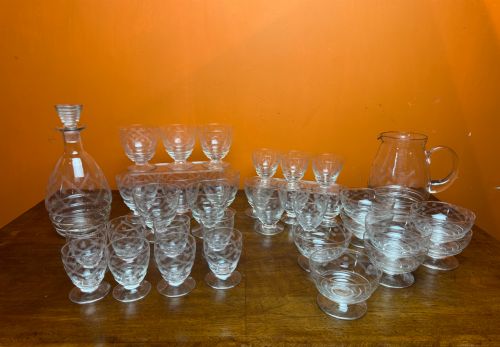
The selection ranges from single pedestal stems originating in the Georgian era to matched sets of coloured liquor glasses and extensive French drinking glass suites. Serving trays and decanters frequently accompany these glasses to form complete drinks services.
How they were made
Glassmakers utilised clear glass, lead glass, and coloured variants, often shaping them by hand before applying decorative techniques. Production methods rely heavily on cutting, etching, and engraving to create surface patterns.
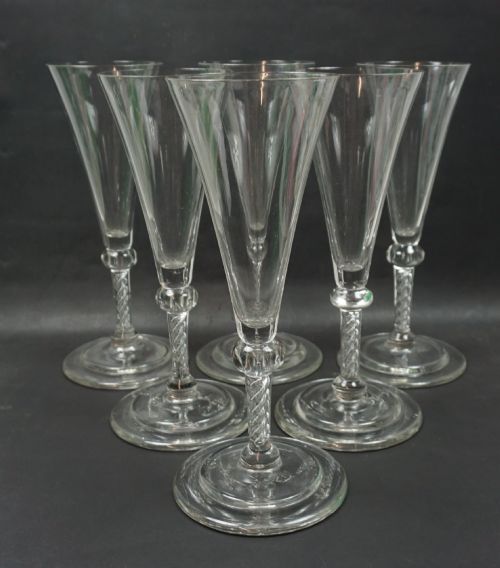
Many examples incorporate hand-enamelled details or silver-plated mounts. Specialised stem formations, including basal bubbles and opaque twists, demonstrate advanced glasshouse manipulation.
A solitary basal bubble hides inside an 1730s gin glass, preserving a breath of Georgian air within the stem.
What varies in quality
Quality rests on the crispness of the cutting, the fineness of the engraved or enamelled decoration, and the overall weight and clarity of the glass. Early lead glass carries a distinct ring and heft that distinguishes it from lighter modern alternatives.
Completeness of a matched set and the presence of makers such as Moser or Theresienthal elevate the standing of a service. The finesse of specific details, like a folded foot or an opaque twist stem, determines the desirability of 18th-century pieces.
Theresienthal·Moser
The Antique Aperitif Glass Glossary
- Thumb-Cut
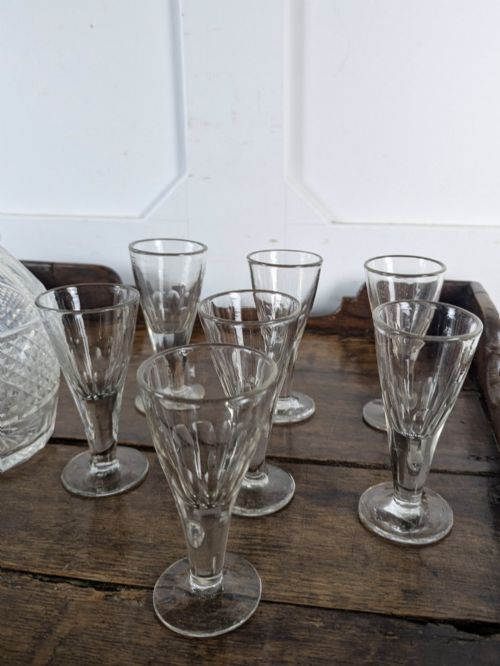
- A decorative pattern of shallow, concave depressions ground into the exterior of the glass. This technique provides both a tactile grip and a prismatic play of light.
- Opaque Twist
- A white or coloured enamel glass rod enclosed within the transparent stem of 18th-century glassware. It is formed by drawing and twisting canes of glass during manufacture.
- Basal Bubble
- A small trapped air inclusion intentionally positioned at the base of the bowl or near the top of the stem. It serves as a stylistic flourish in early English drinking glasses.
- Folded Foot
- A rim folded under the footplate to strengthen the edge and add stability. This characteristic indicates earlier manufacturing methods.
- Enamel
- An opaque, pigmented glass paste applied to the surface and fired to fuse with the vessel. It allows for colourful painted motifs on the glass body.
Antique Aperitif Glass: Frequently Asked Questions
How do I use them today?
These small glasses suit their original purpose for serving aperitifs, cordials, and dessert wines before dinner. Their modest capacity also makes them practical for serving small portions of spirits or digestifs.
Displaying them on a matching silver-plated tray adds function and visual interest to a sideboard or drinks trolley. Handle older lead glass pieces with care, washing them by hand rather than placing them in a dishwasher.
How are 18th-century glasses distinguished?
Eighteenth-century examples often feature distinct stem constructions like opaque twists or air bubbles, alongside heavy lead metal content. Their feet may show pontil marks on the underside where the glassblower snapped the pontil rod.
Later Victorian and 20th-century pieces tend toward pressed patterns, brighter colours, and larger matched sets. Comparing the weight, pontil evidence, and stem style helps separate Georgian stems from later reproductions or Victorian revivals.
What defines an aperitif glass?
An aperitif glass is a smaller drinking vessel intended for beverages consumed to stimulate the appetite prior to a meal. This category spans cordial glasses, liqueur glasses, and sherry flutes.
Their capacities are substantially lower than standard wine glasses, reflecting the stronger alcohol content and smaller serving sizes of aperitif drinks. They appear individually or as part of larger dining suites.
How do I store matched sets?
Store matched sets in a secure cabinet with adequate clearance between pieces to prevent rim chipping. If space permits, keeping them on their designated serving tray maintains the set together.
Avoid stacking glasses inside one another unless they are specifically designed for it. Ensure shelves are stable and level to protect delicate stems and thin Edwardian or Georgian glass walls.