


Antique Amethyst Pin
These antique amethyst pin examples are vibrant gemstone jewels set in gold or silver, offering a rich flash of purple to brighten a lapel.
Antique Amethyst Pin
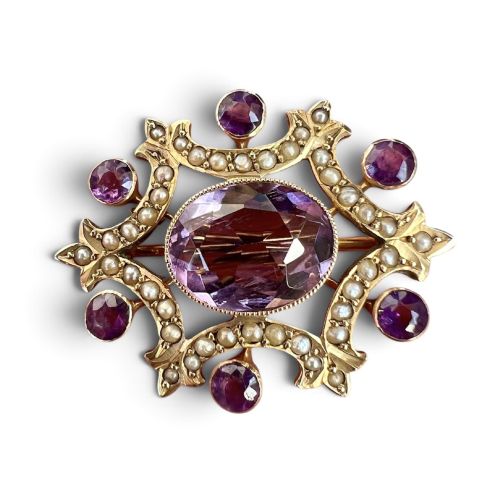
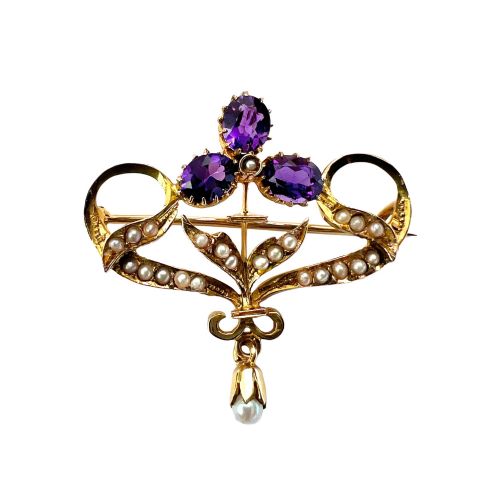
An antique amethyst pin is a wearable jewel featuring violet quartz mounted in gold, silver, or brass. The pieces gathered here range from Georgian clusters to Edwardian pendants and Victorian brooches.
Buyers seeking an antique amethyst pin most often encounter Victorian and Edwardian 9ct gold brooches set with seed pearls or natural pearls. These cluster forms and heart motifs dominate the selections available to collectors today.
The archive shows that smaller stick pins and hatpin holders occasionally supplement the larger brooches. Scottish Luckenbooth designs and French yellow gold settings appear alongside standard British pieces.
How they were made
Maker's hands shaped these pieces using yellow gold, 9ct gold, 18ct gold, and silver as primary structural metals. Artisans secured the central violet quartz stones using traditional collet and prong settings.
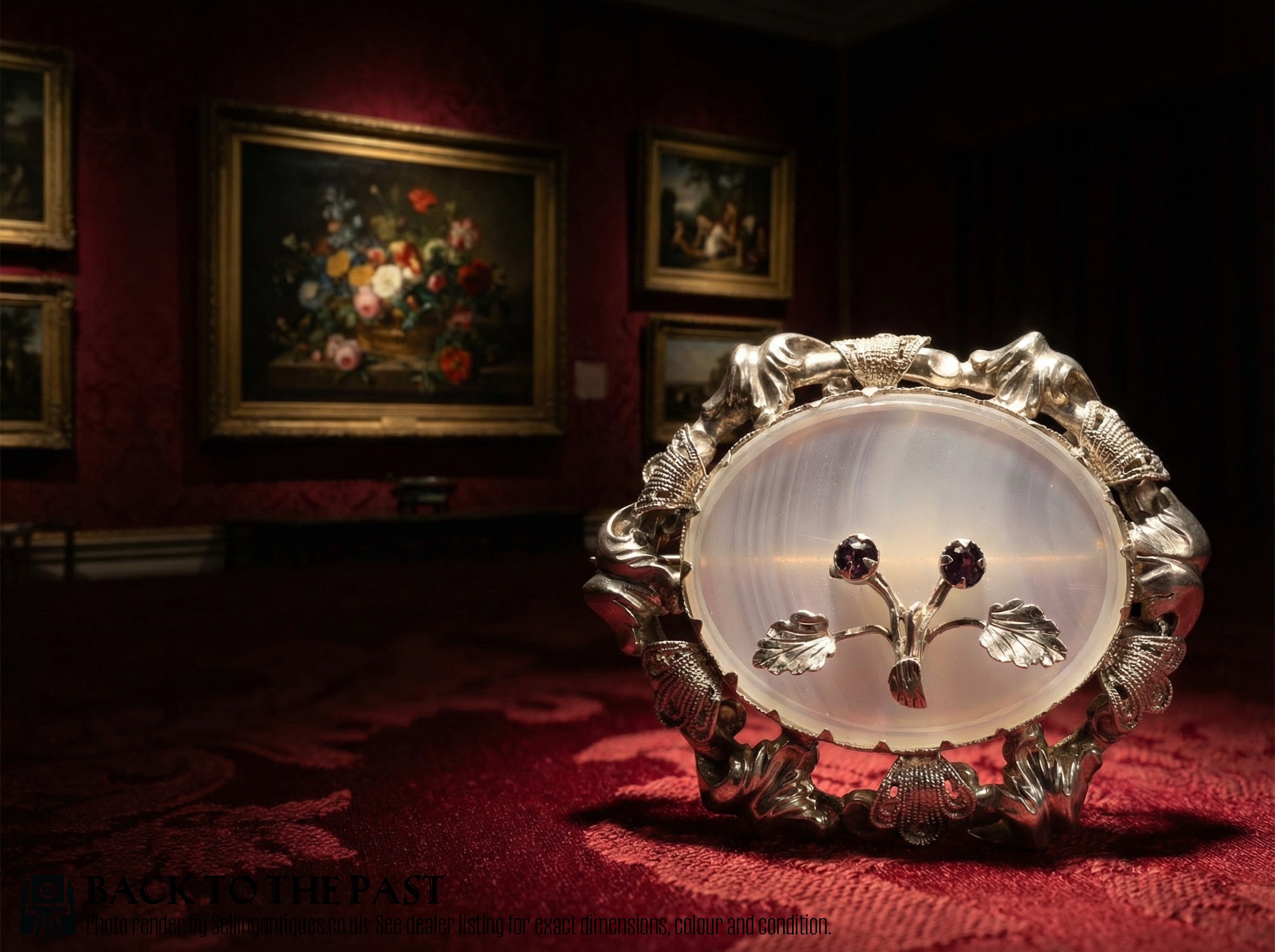
Goldsmiths enhanced many of the gold and silver frames with seed pearls, enamel, chalcedony, and paste accents. Some examples also incorporate rose diamonds and flat cut rubies surrounding the main stones.
Antique Amethyst Pin Retail Price Guide 2026
Typical asking prices for amethyst pin among the pieces listed under this phrase on Sellingantiques today, from the lower quarter to the upper quarter. They describe what is for sale here now, not the wider market.
A Scottish thistle brass hatpin holder stands ready to guard your sharpest accessories.
What varies in quality
The depth of colour in the quartz and the clarity of the stone separate simpler examples from finer ones. Deeper purple hues and clean facets command greater attention from buyers.
The intricacy of the surrounding metalwork and the inclusion of natural pearls or rose diamonds elevate the overall standard. Solid gold construction and delicate pierced silver frames display superior craftsmanship.
The Antique Amethyst Pin Glossary
- Amethyst
- A purple variety of quartz prized in jewellery for its distinct violet tone. It serves as the principal gemstone in these pins.
- Seed pearl
- A very small, natural or cultured saltwater pearl used in clusters around a central stone. Edwardian and Victorian makers utilised them extensively.
- Cluster brooch
- A jewellery design featuring a prominent centre stone surrounded by a ring of smaller gems. Amethyst cluster pieces frequently pair the purple quartz with pearls.
- Luckenbooth
- A traditional Scottish love token design shaped like twin hearts surmounted by a crown. Sterling silver examples incorporate amethyst alongside citrine.
- Stick pin
- A long pin with a decorative head worn in a cravat, tie, or lapel. Georgian and Victorian examples often test as high-carat gold.
Antique Amethyst Pin: Frequently Asked Questions
How do I wear an antique amethyst pin?
Pin these jewels securely to the lapel of a coat, the front of a scarf, or the fabric of a heavy knit cardigan. The substantial weight of cluster designs requires sturdy material to hold the piece flat.
Smaller stick pins slide easily into silk ties, cravats, or the woven cloth of a hat. Ensure the safety clasp or protective cap is secure before wearing antique silver and gold pieces out.
Are these pins made of real gold?
Many listings feature 9ct gold or 18ct gold settings, while others utilise sterling silver, brass, or yellow gold over varying base metals. Hallmarks and professional metal tests confirm the precise alloy content.
Georgian and Victorian makers often worked with unmarked gold or silver. Descriptions note when a piece tests as a specific gold standard.
What periods do these pieces come from?
The selection spans the Georgian, Victorian, and Edwardian eras, covering the eighteenth, nineteenth, and early twentieth centuries. Georgian pieces often display rose diamonds and flat cut rubies.
Victorian and Edwardian examples make up the majority of current items, showcasing 9ct gold frames combined with seed pearls and target motifs.
How should I clean my antique pin?
Wipe the gold or silver mount gently with a soft, dry polishing cloth to remove surface dust. Avoid harsh chemical dips, as they can damage delicate seed pearls or alter softer backing metals.
Keep the quartz away from extreme heat and ultrasonic cleaners to protect the integrity of the stone and any historic settings. Store the jewel separately in a lined box.