
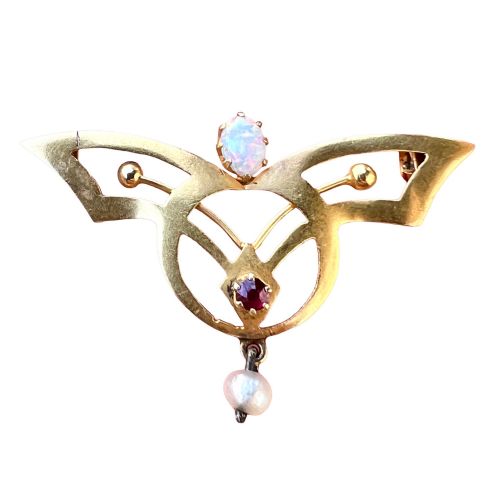


Art Nouveau Gold Brooch
An art nouveau gold brooch brings fluid botanical lines and colourful enamel work to the lapel.
Art Nouveau Gold Brooch
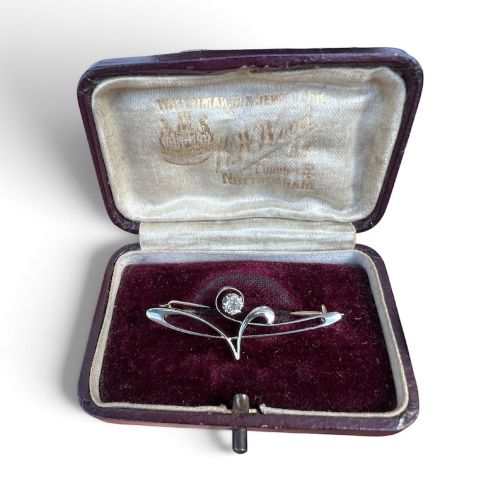
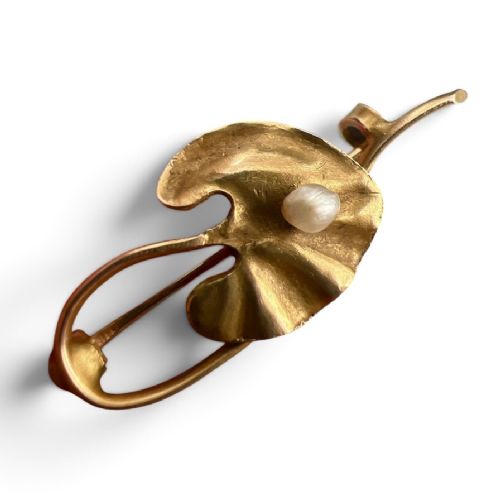
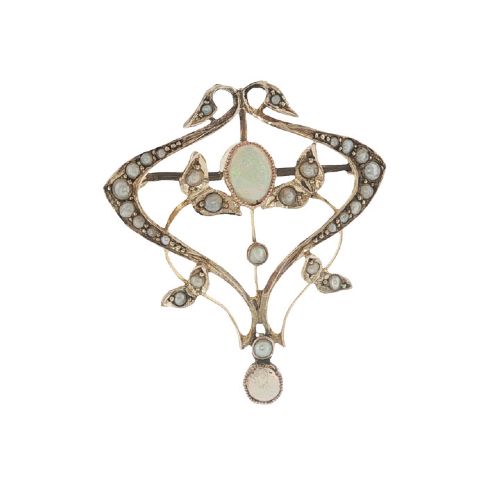
An art nouveau gold brooch captures the organic curves and natural motifs characteristic of the turn of the twentieth century. These pieces draw heavily on floral and insect designs, translating flowers, butterflies, and dragonflies into wearable ornaments.
The common form on this page pairs yellow gold with pearls, opals, and peridots within asymmetric frames. Many examples double as pendants, offering dual utility through a concealed bail.
Originating across Victorian and Edwardian periods, these jewels span roughly from eighteen ninety to nineteen ten. Pieces often combine regional British craftsmanship with continental European influences.
Materials and construction methods
Goldsmiths utilised varying purities of yellow gold, ranging from nine carat up to eighteen carat, alongside platinum for specific stone settings. Cast and fabricated foundations support delicate wirework and relief motifs.
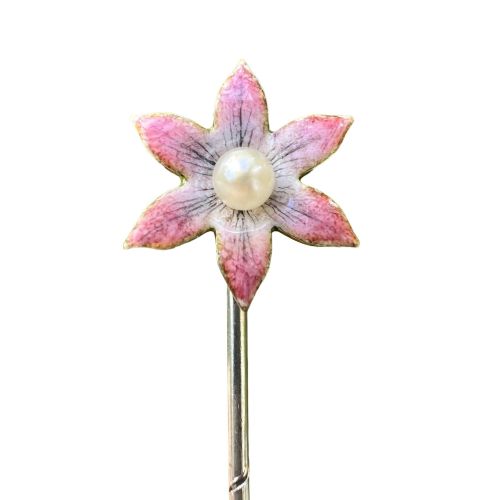
Enamelling techniques, notably translucent plique-à-jour which resembles stained glass, provide vibrant colour to petals and wings. Gemstones including diamonds, rubies, amethysts, and turquoise are flush or bezel set into the gold structure.
The listings combine Victorian and Edwardian periods, utilising materials like nine carat gold, fourteen carat gold, enamel, pearls, and peridots.
Distinctions in craftsmanship
Quality rests in the precision of the enamel work and the crispness of the hand-chased gold details. Finer items display translucent depth in the enamel without stress fractures, alongside secure stone settings.
Maker attribution and the presence of natural stones rather than synthetic substitutes elevate a piece. The fluidity of the asymmetric design distinguishes superior artistic execution from simpler commercial production.
Murrle Bennet And Co·Gustav Gaudernack·Rene Lalique
The Art Nouveau Gold Brooch Glossary
- Plique-a-jour
- An enamelling technique where enamel is applied within a open wire frame without a backing, creating a stained glass effect. This allows light to pass directly through the translucent coloured glass.
- Bail
- A small ring attached to the reverse of a brooch that allows the piece to be suspended from a chain as a pendant. This conversion feature is common in turn-of-the-century jewellery.
- Stick pin
- A long pin topped with an ornamental head, designed to secure a cravat or lapel. These share stylistic motifs with larger brooches from the same era.
Art Nouveau Gold Brooch: Frequently Asked Questions
How do I wear an art nouveau gold brooch?
Pin these pieces securely to heavy fabrics like wool coats, structured jackets, or thick knit scarves to support their weight.
Many examples feature integrated loops that allow you to thread a chain through the back and wear them as pendants.
How do I date an art nouveau gold brooch?
Examine the metal purity stamps, pin mechanisms, and accompanying gemstones to narrow down the decade of production.
Pieces generally fall between eighteen ninety and nineteen ten, spanning late Victorian and Edwardian eras.
Are these brooches fragile?
The enamel components require careful handling to avoid impact fractures against hard surfaces.
Gold and gemstone settings are relatively durable for daily wear when treated with standard antique jewellery care.
What stones appear on these brooches?
Pearls, opals, peridots, and amethysts dominate the gemstone selections found across these listings.
Diamonds and turquoise also appear frequently as accent stones within the floral designs.