
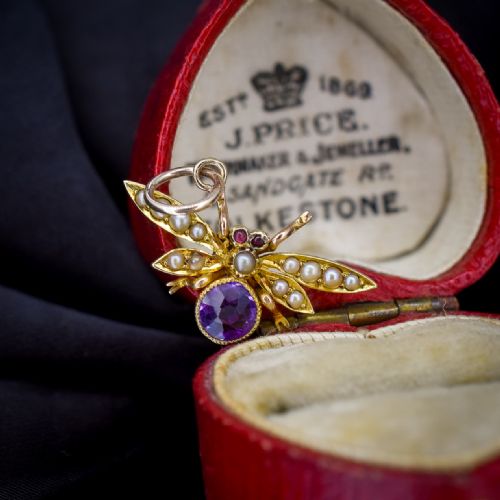


Victorian Amethyst Brooch
A victorian amethyst brooch brings together deep purple quartz and period goldwork, offering a wearable piece of nineteenth-century design.
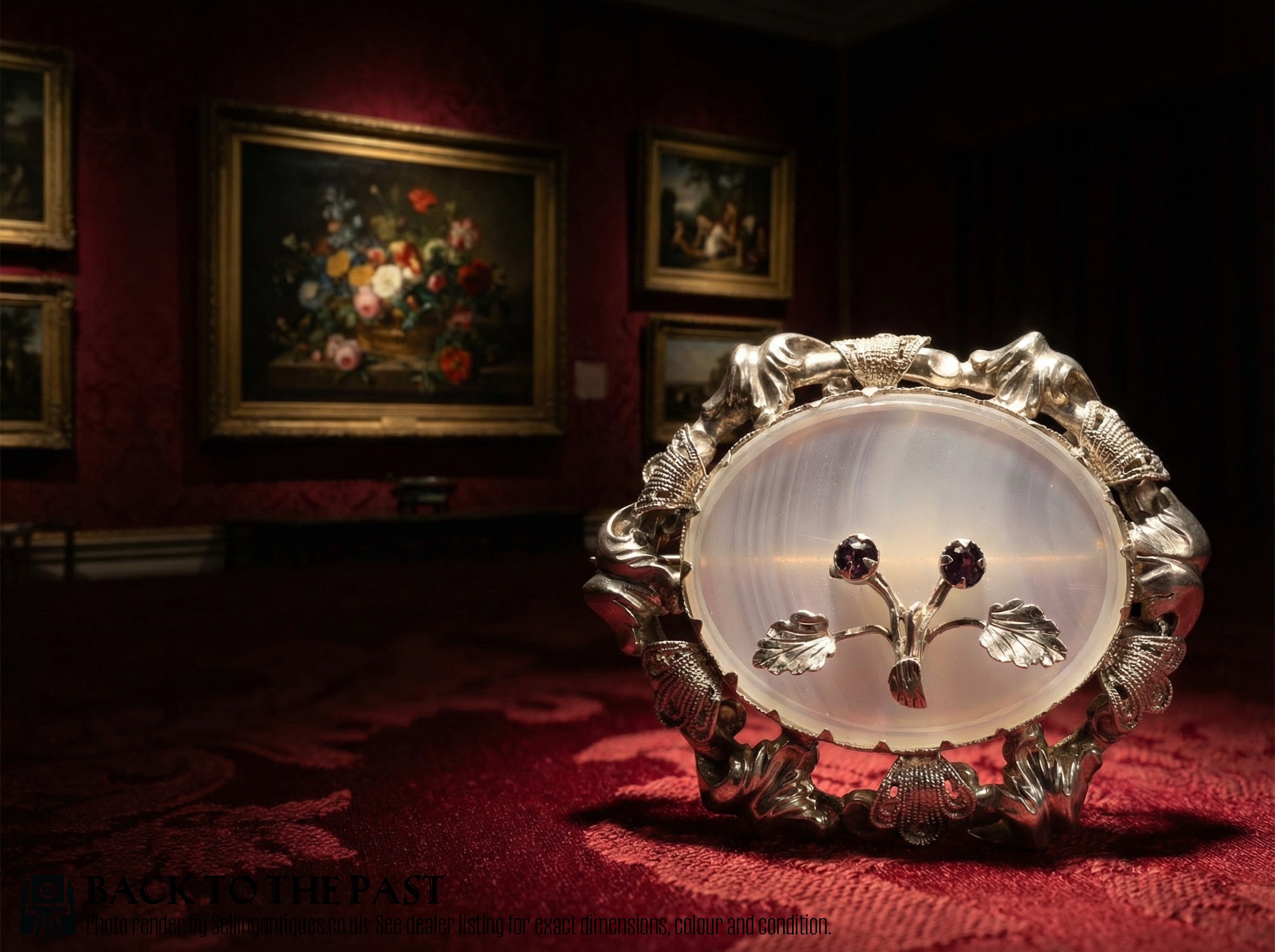
Victorian Amethyst Brooch
A victorian amethyst brooch encompasses cluster designs, bar brooches, and convertible pendant forms that transition from neckwear to lapel fastenings. You encounter pieces executed in 9ct gold, 15ct gold, 18ct gold, and silver, frequently paired with seed pearls or natural pearls.
The selection ranges from large cluster settings and insect motifs to Scottish-inspired designs incorporating agate. Many examples originate from British workshops, alongside nineteenth-century French pieces in yellow gold.
Demi-parure sets pairing earrings with a victorian amethyst brooch appear alongside single pins, giving varied options for period jewellery collections.
Materials and Technique
Makers set large purple amethysts into mounts of solid yellow gold, rose gold, or silver, securing the stones with collet or claw settings. Seed pearls and natural pearls are frequently applied as borders or accents around the central quartz.
Metalwork techniques include granulation, repoussé, and engraved details typical of nineteenth-century jewellery production. Some pins incorporate pinchbeck or paste alongside precious metals and gemstones.
Victorian Amethyst Brooch Retail Price Guide 2026
Typical asking prices for victorian amethyst brooch among the pieces listed under this phrase on Sellingantiques today, from the lower quarter to the upper quarter. They describe what is for sale here now, not the wider market.
Victorian makers turned beetles, flies, and wishbones into gold and amethyst traps for your lapel.
Craftsmanship and Proportion
Quality rests in the depth of colour and clarity of the central amethyst, alongside the precision of the surrounding metalwork and pearl setting. Superior pieces show crisp chasing, substantial gold weight, and secure original pin mechanisms.
Multi-stone cluster arrangements and convertible pendant fittings demand higher skill in fabrication than simple bar pins. The survival of fitted boxes and unaltered gemstone surfaces elevates the standing of an individual piece.
The Victorian Amethyst Brooch Glossary
- Demi parure
- A matched set of jewellery, typically comprising earrings and a brooch designed to be worn together. Such suites often survive within their original fitted presentation boxes.
- Cluster brooch
- A jewellery format featuring a prominent central gemstone surrounded by a border of smaller stones, such as seed pearls or diamonds. This arrangement maximises the visual impact of the principal quartz.
- Pinchbeck
- An alloy of copper and zinc developed to imitate gold, commonly found in historic jewellery mounts. It offers a warm metallic tone without employing precious metal.
- Seed pearl
- Very small natural or cultured pearls threaded and stitched into place as decorative borders. They provide a delicate contrast to the saturated purple tones of the amethyst.
- Collet setting
- A metal collar that encircles the edge of a gemstone to hold it securely in place. This technique defines the clean bezels seen on many nineteenth-century pieces.
Victorian Amethyst Brooch: Frequently Asked Questions
How do I wear a victorian amethyst brooch?
Pin the piece securely to heavy fabrics like wool coats, scarves, or structured jackets to support the weight of the gold and quartz.
Many examples feature integrated loops that allow conversion into a pendant hung from a chain.
Were these brooches used as pendants too?
Numerous pieces incorporate hidden loops or hinged bales designed to accommodate a neck chain.
This dual functionality made convertible jewellery popular throughout the nineteenth century.
What metals are used in these brooches?
Makers utilised silver, yellow gold, rose gold, and specific carat standards including 9ct, 14ct, 15ct, and 18ct gold.
Silver was often paired with gold backs or utilised entirely in Scottish agate and amethyst designs.
How do I identify a period piece?
Examine the construction of the pin stem, hinge, and C-clasp, which typically display hand-finished characteristics rather than modern safety catches.
Material combinations like seed pearls, coloured golds, and foiled or open-back quartz settings point directly to nineteenth-century manufacturing methods.