


Anglo Indian Trunk
An anglo indian trunk is a sturdy travelling or storage chest combining British military utility with traditional craftsmanship, prized for exotic woods and robust metal fittings.
Forms and Origins
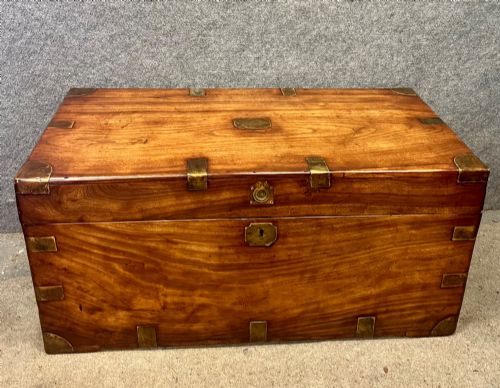
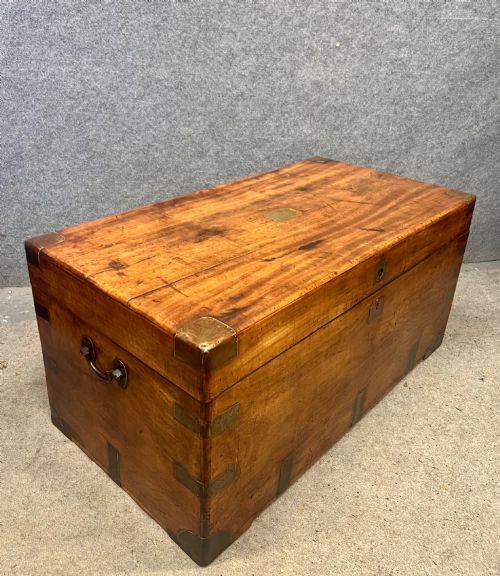
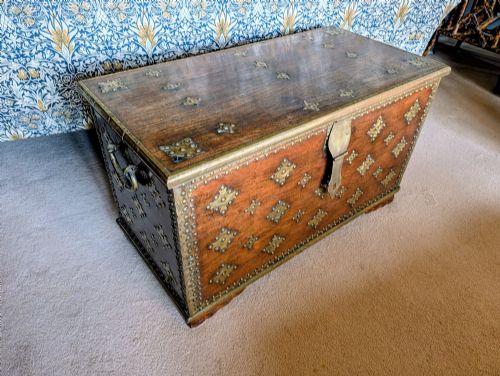
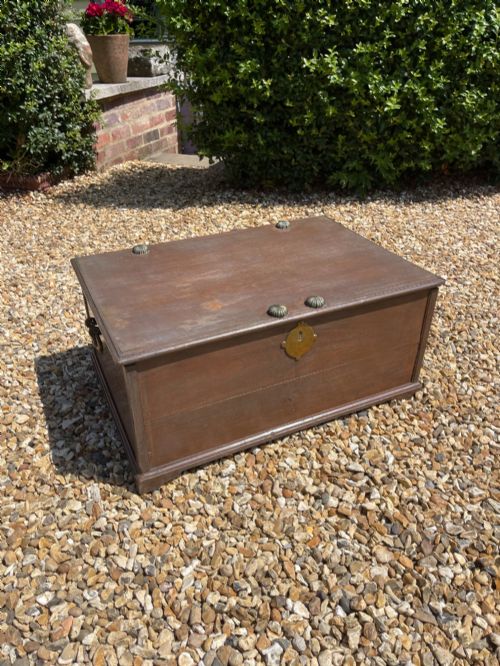
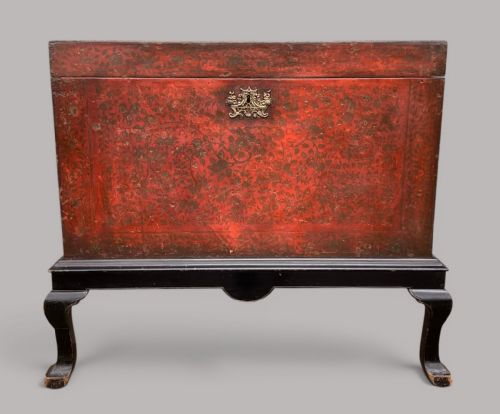
The term anglo indian trunk covers a wide variety of storage pieces, from heavy blanket boxes to compact deed boxes and travelling chests made during the nineteenth century. These items reflect the colonial exchange of design, frequently taking the form of camphorwood or teak chests fitted for transport across distant territories.
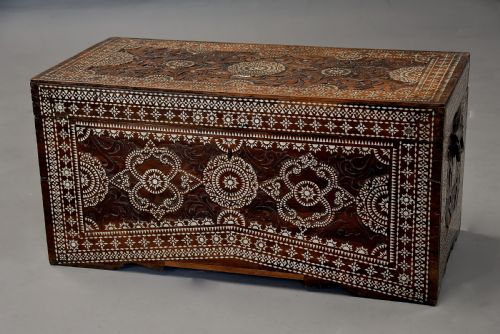
On this page, buyers frequently meet campaign-style trunks alongside large dowry chests and occasional lacquer or inlaid examples. The typical piece relies on solid timber construction paired with metal bindings designed to withstand long journeys.
Materials and Construction
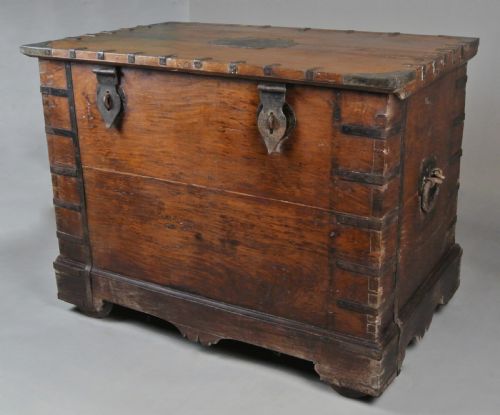
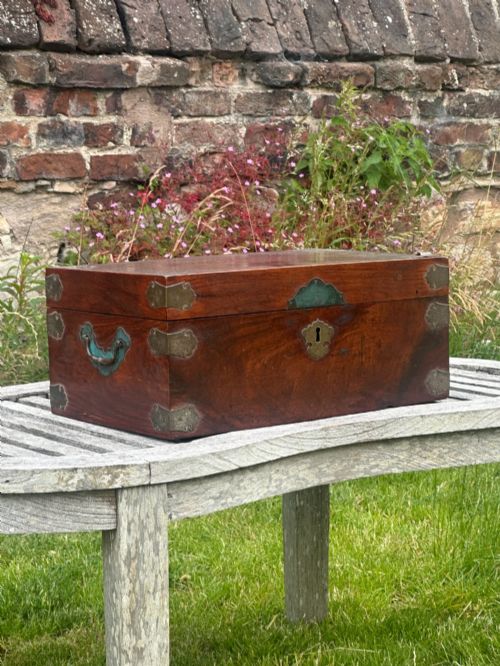
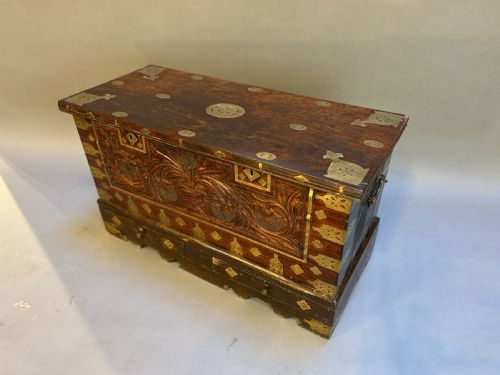
Construction relies heavily on dense timbers such as teak, padouk, camphorwood, satinwood, and elm, selected for durability and resistance to humidity. These woods are frequently framed by robust iron straps or fitted with heavy brass corners and recessed handles.
Additional surface treatments include lacquer work, intricate carving, and leather covering. Metal bindings and hinges are typically secured with numerous small pins or rivets to reinforce the chest structure.
Retail Price Guide 2026
Typical UK retail prices for anglo indian trunk, calculated from the Sellingantiques database of over a million retail prices indexed since 2003. This retail price guide relies exclusively on Sellingantiques data; no external sources or auction records are used, so the figures do not describe the wider market.
Listings feature nineteenth-century examples constructed from teak, camphorwood, padouk, and satinwood, often reinforced with brass or iron.
Evaluating the Pieces
Quality rests primarily on the integrity of the timber selection and the precision of the metal mounts. Pieces featuring dense, finely figured padouk or camphorwood alongside neatly fitted brass strapping sit at the upper end of the range.
The finesse of secondary details, such as integrated lock mechanisms, hand-carved panels, and structural dovetailing, distinguishes standard utility trunks from more ambitious decorative examples.
The Anglo Indian Trunk Glossary
- Camphorwood
- An aromatic timber traditionally utilised for campaign trunks because its natural scent deters insects. This wood darkens gracefully over time with exposure to light.
- Campaign chest
- A modular storage chest built in sections with recessed brass handles and corner brackets designed for military transport. These items dismantle easily for travel.
- Dowry chest
- A large storage box traditionally commissioned for a bride's household goods. These pieces often display heavier iron strapping and larger proportions.
- Deed box
- A compact storage container intended for important documents and legal papers. They typically feature secure locks and internal compartment dividers.
Frequently Asked Questions
What is an anglo indian trunk?
An anglo indian trunk is a storage chest produced during the colonial period, combining British furniture forms with local craftsmanship and exotic timbers like teak and camphorwood.
These pieces were built for utility and travel, frequently featuring reinforced corners and secure locking mechanisms.
Why use camphorwood for trunks?
Camphorwood was selected for travel chests because its natural aromatic oils repel moths and other insects, protecting stored textiles during long voyages.
This timber also offers good dimensional stability in humid climates.
How to identify a campaign trunk?
Campaign trunks are distinguished by flush-fitting brass handles, protective metal corner brackets, and a sectional construction designed to withstand frequent transport.
Many examples separate into distinct stacked sections for easier loading.
Are these trunks suitable for modern storage?
These chests offer generous internal capacity and robust construction, making them practical for storing blankets, bedding, or household items.
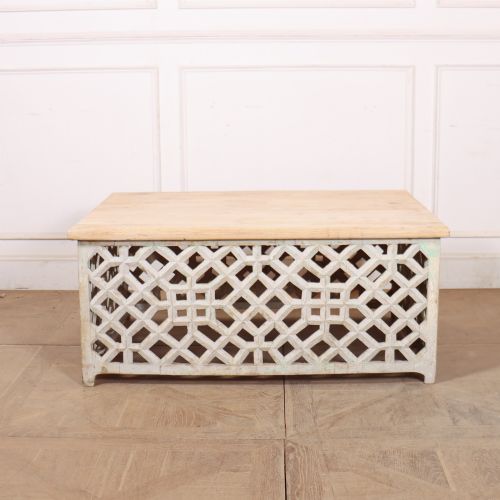
Their substantial timber frames also allow them to function well as low coffee tables or decorative focal points.