

Anglo Indian Teak Table
When choosing an anglo indian teak table, you are selecting a piece of colonial craftsmanship defined by intricate carving and dense tropical timber.
Anglo Indian Teak Table
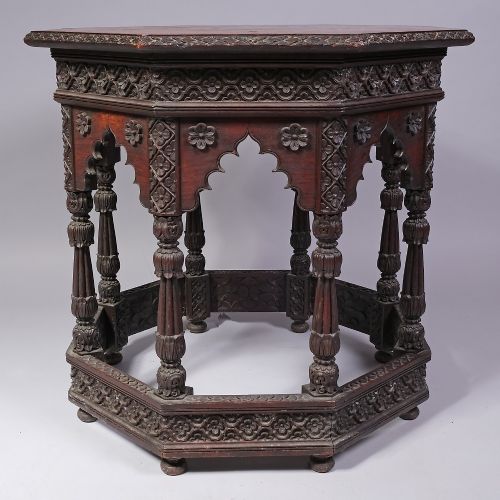
An anglo indian teak table spans forms such as octagonal occasional pieces, coffee tables, side tables, and larger dining or console formats. These items reflect the exchange of British domestic requirements and Indian woodworking traditions during the nineteenth and early twentieth centuries.
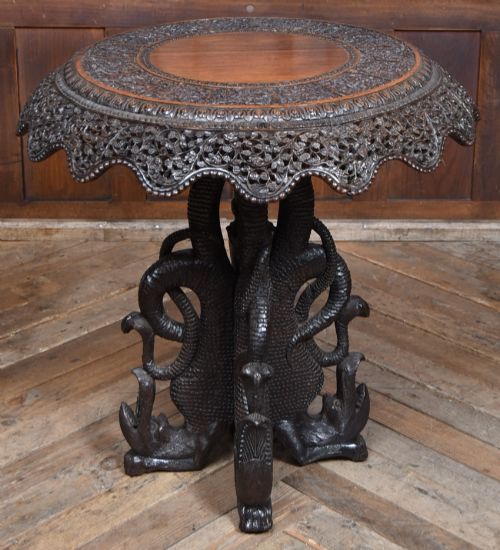
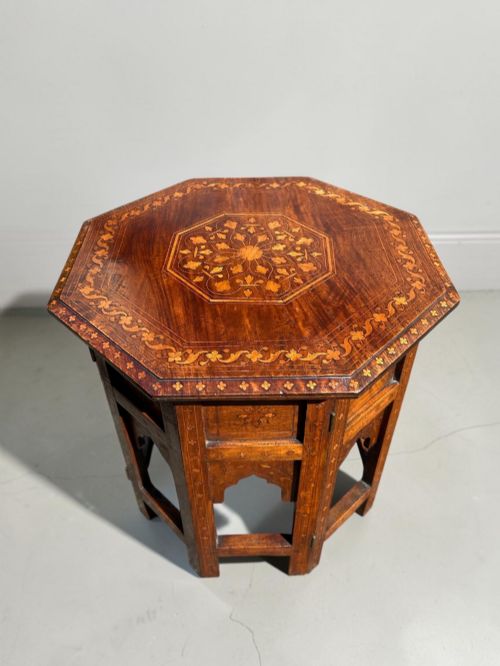
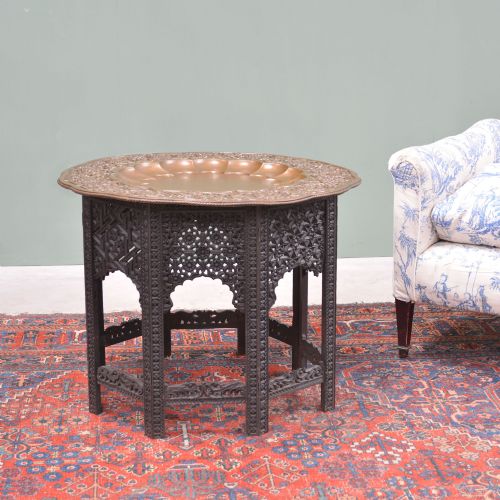
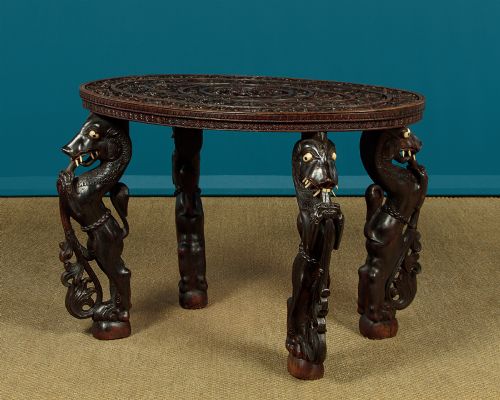
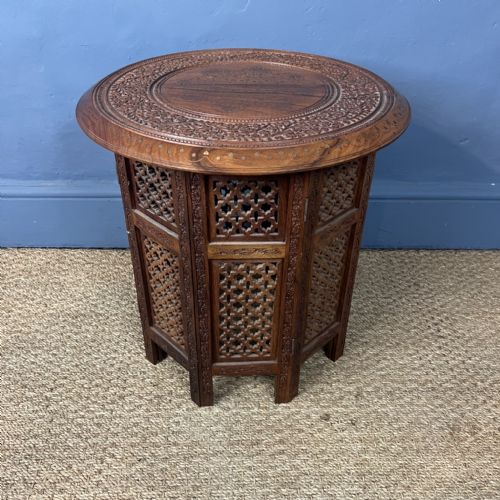
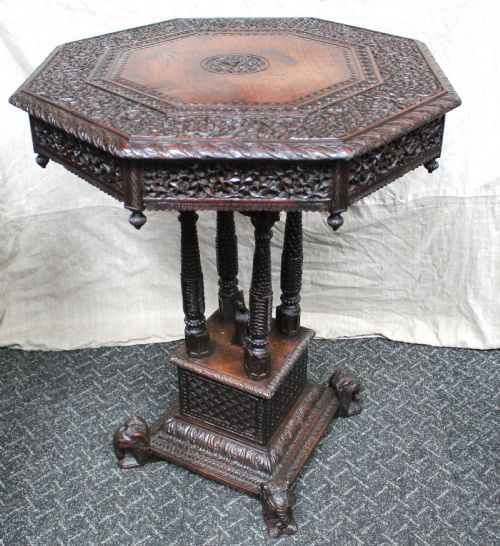
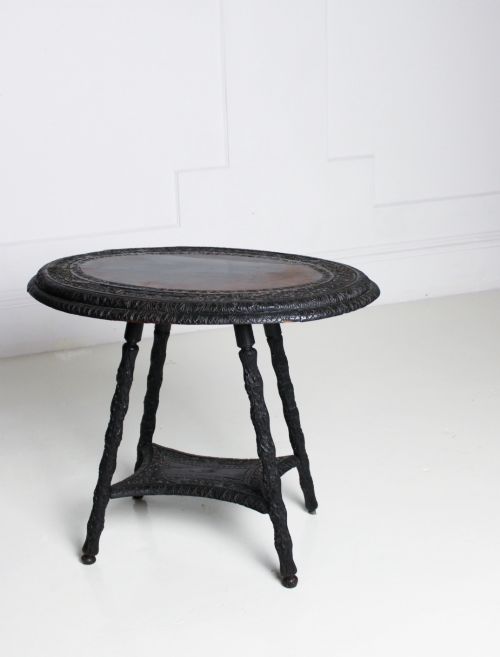
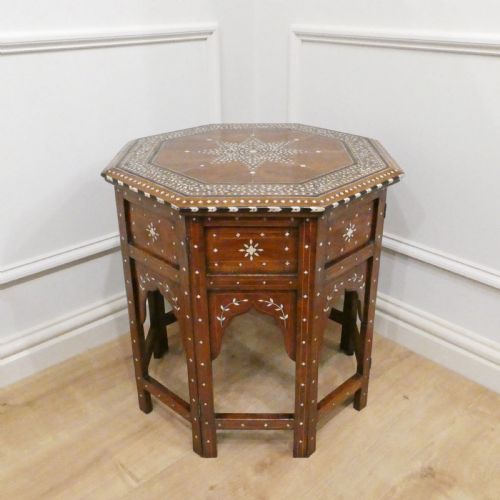
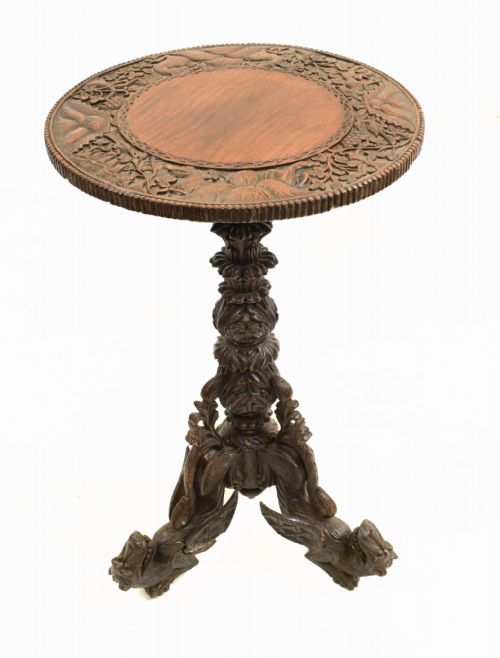
Octagonal folding tables and intricately carved low tables are the most common variants found on this page. Many originate from specific production centres like Hoshiarpur or the Bombay Presidency, often incorporating regional motifs such as elephants or dense foliage.
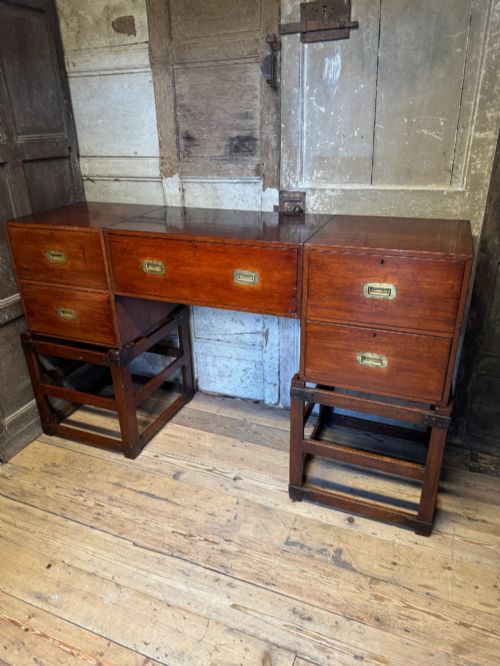
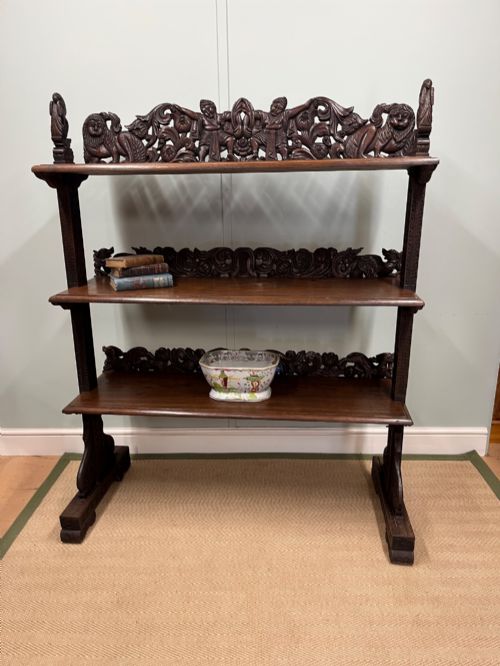
The selection ranges from campaign furniture designed for portability to stationary side tables and multi-tiered buffets. Teak and hardwood form the primary structural basis across these diverse domestic types.
How they were made
Makers utilised dense teak and rosewood, chosen for durability and suitability for deep relief carving. Structural elements frequently employed interlocking folding bases or pegged joints.
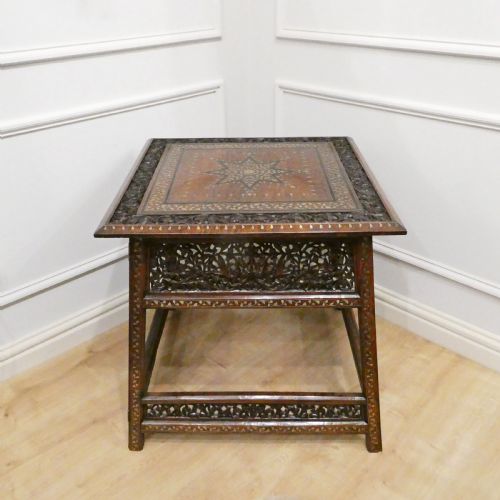
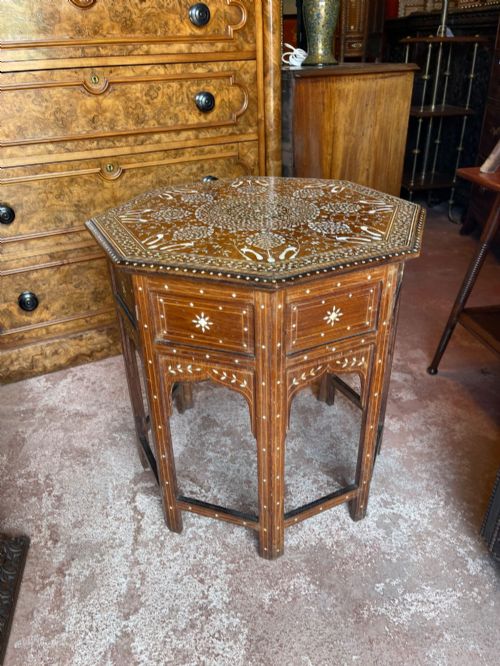
Surface decoration relied heavily on chip carving, piercing, and fretwork. Artisans inlaid contrasting materials such as brass, bone, mother-of-pearl, and copper into the hardwood fields to create geometric and floral patterns.
Several tables rely entirely on carved elephants to hold up the tea.
What varies in quality
The depth and crispness of the hand carving separate standard production from superior examples. Finely executed pieces maintain sharp undercutting and symmetrical geometry across intricate panels.
The precision of the inlay work and the stability of folding hinge mechanisms indicate the original maker's skill. Solid teak construction combined with well-matched grain patterns elevates the standing of an individual piece.
The Anglo Indian Teak Table Glossary
- Hoshiarpur
- A district in Punjab known for specialised woodwork. Pieces from this region frequently feature dense brass and bone inlay on octagonal forms.
- Campaign table
- Portable furniture constructed with folding or removable bases. These items were built for colonial officers on the move.
- Chip carving
- A technique where small chips are removed from a wooden surface to create geometric patterns. It appears frequently on occasional and side tables.
- Tilt-top table
- A table featuring a mechanism that allows the top to pivot to a vertical position when not in use. This design saved space in colonial interiors.
- Pierced work
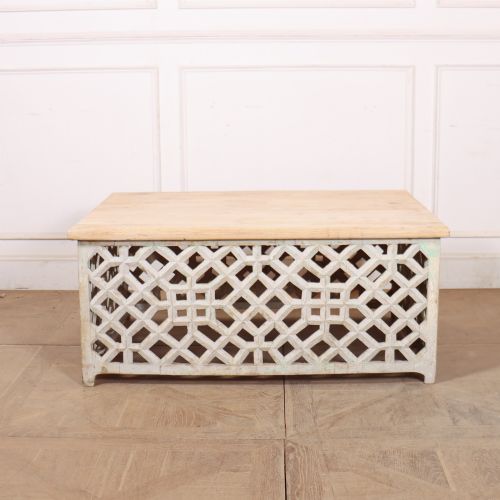
- Woodwork cut completely through to create openwork fretwork patterns. This technique yields light, lace-like borders on trays and tables.
Anglo Indian Teak Table: Frequently Asked Questions
How do I identify a Hoshiarpur table?
Hoshiarpur tables are typically octagonal and heavily decorated with intricate floral or geometric inlay. They utilise materials like brass wire, bone, or white metal pressed into carved teak.
The folding bases and dense overall surface patterning distinguish these pieces from simpler provincial furniture. Workmanship from this region often covers every available surface in carved foliage.
Are these tables sturdy?
Teak is an exceptionally dense and oily timber that provides great structural stability. Even with intricate pierced carving, the underlying wood remains durable for daily use.
Folding versions rely on hinged wooden bases that require careful handling when opening. Properly maintained joints ensure these tables function reliably as side or coffee surfaces.
How do I date an anglo indian table?
Dating relies on stylistic markers combined with construction methods like screw types and joint construction. Mid-nineteenth-century examples often feature heavier proportions and simpler turned legs.
Later Victorian and Edwardian pieces from the 1890s onward frequently showcase more complex chip carving and extensive inlay. Labels or stamps from colonial retailers occasionally provide specific provenance.