





Dark Teak Elephant Table
A dark teak elephant table brings the rich carving of the Anglo-Indian and Anglo-Burmese traditions straight into a room.
Dark Teak Elephant Table
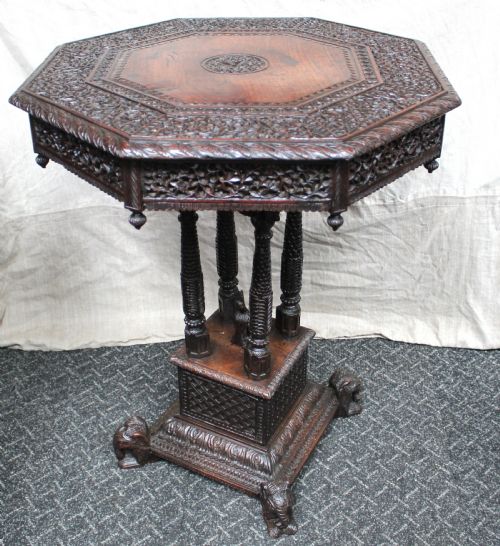
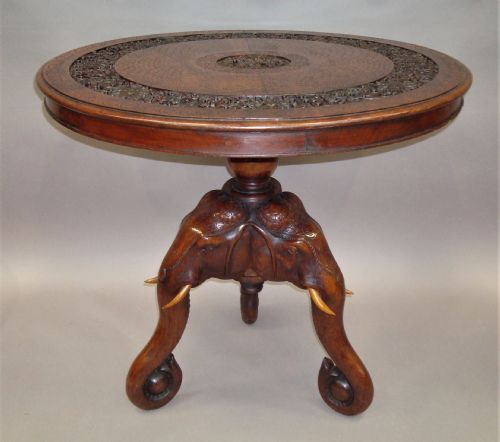
A dark teak elephant table is typically encountered as an occasional table, side table, or coffee table originating from the Victorian period through to the early decades of the twentieth century. These pieces emerge from Anglo-Indian and Anglo-Burmese traditions, often taking octagonal, circular, or rectangular formats supported by carved animal figures.
The selection includes variations such as tripod designs, tables featuring bone or ebony inlay, and related furnishings like hall benches and plant stands. Makers from the Bombay Presidency and Hoshiarpur contributed distinct regional styles to this group of carved furniture.
Materials and construction
Solid teak and rosewood form the primary structural timbers for these carved tables, providing a dense base for intricate handwork. Artisans utilised contrasting materials such as bone and ebony inlay to accentuate geometric patterns and surface details.
Carving techniques range from deep relief work on table legs shaped as elephants to delicate surface decoration seen in Hoshiarpur tripod tables. Brass elements occasionally appear alongside intricate woodwork to complete the construction.
Dark Teak Elephant Table Retail Price Guide 2026
Typical asking prices for dark teak elephant table among the pieces listed under this phrase on Sellingantiques today, from the lower quarter to the upper quarter. They describe what is for sale here now, not the wider market.
The listings span from the Victorian period through 1920, predominantly featuring teak, rosewood, and bone inlay.
Assessing craftsmanship
The integration of bone or ebony inlay requires precise fitting within the dense teak or rosewood surface. Tables that maintain flush, secure inlay work demonstrate a higher standard of regional colonial craftsmanship.
The Dark Teak Elephant Table Glossary
- Anglo-Indian
- A descriptive term for furniture made in India during the British colonial period, combining local timber and carving skills with European forms.
- Hoshiarpur
- A town in Punjab known for intricate woodwork, particularly tables featuring dense geometric inlay in bone and ebony.
- Bombay Presidency
- A major administrative subdivision of British India that produced distinctive carved teak and rosewood tables and occasional furniture.
- Tripod table
- A small freestanding table supported by three legs, frequently utilised for occasional use or as a plant stand.
- Occasional table
- A small, movable table designed for versatile placement within a room rather than a single fixed purpose.
Dark Teak Elephant Table: Frequently Asked Questions
What periods do these tables come from?
These tables largely date from the Victorian era through the late nineteenth and early twentieth centuries, spanning periods like eighteen ninety to nineteen twenty.
Craftsmen working within Anglo-Indian and Anglo-Burmese traditions produced these pieces across several decades of British rule in India.
What woods were used for these tables?
Solid teak and rosewood serve as the primary timbers found in these carved tables, offering a durable foundation for detailed work.
Secondary materials such as bone and ebony frequently appear as decorative inlay across the wooden surfaces.
How do I identify a Hoshiarpur table?
Hoshiarpur tables are recognised by their intricate geometric surface patterns created using contrasting bone or ebony inlay on teak or hardwood.
These pieces often take tripod formats and showcase the specific regional woodworking style of the Punjab area.