
Aneroid Weather Instrument
An aneroid weather instrument records atmospheric pressure without liquid, offering a dependable measure of meteorological change housed in timber and brass.
Aneroid Weather Instrument
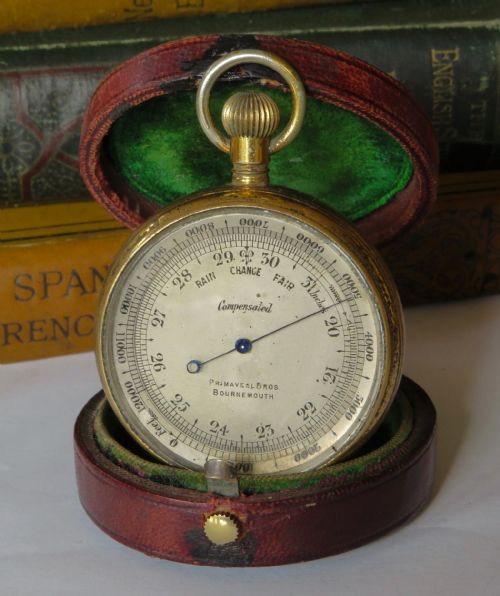
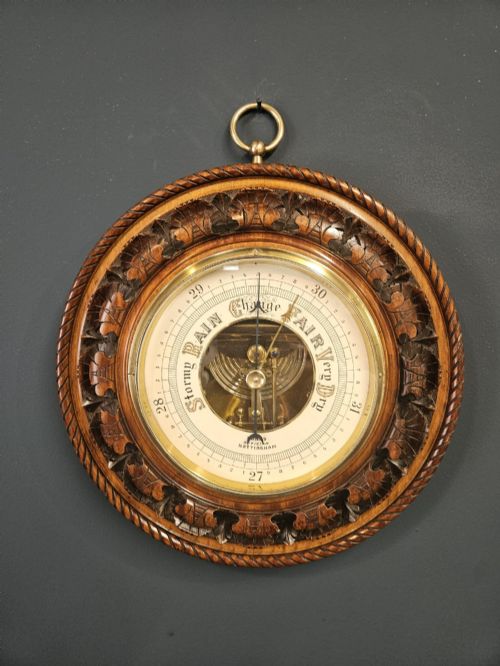
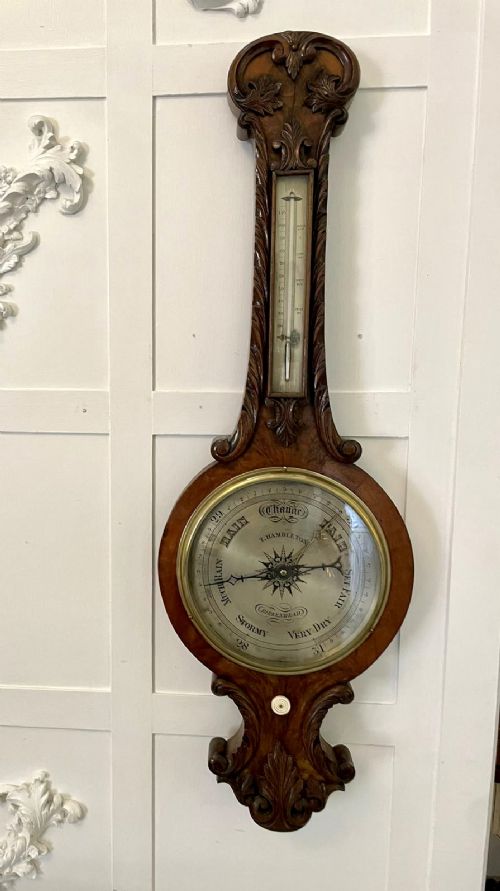
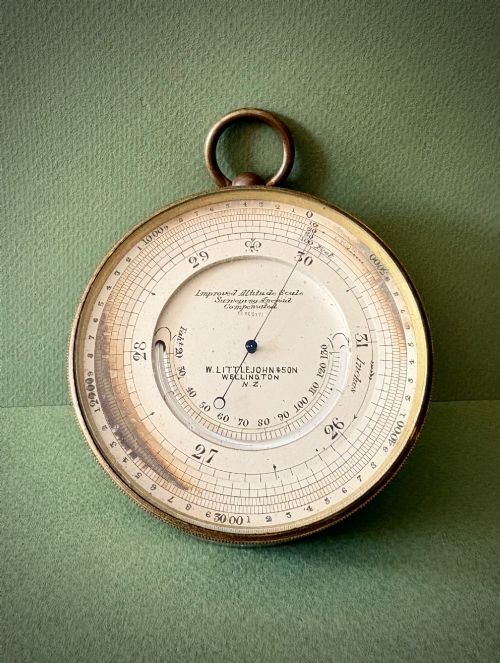
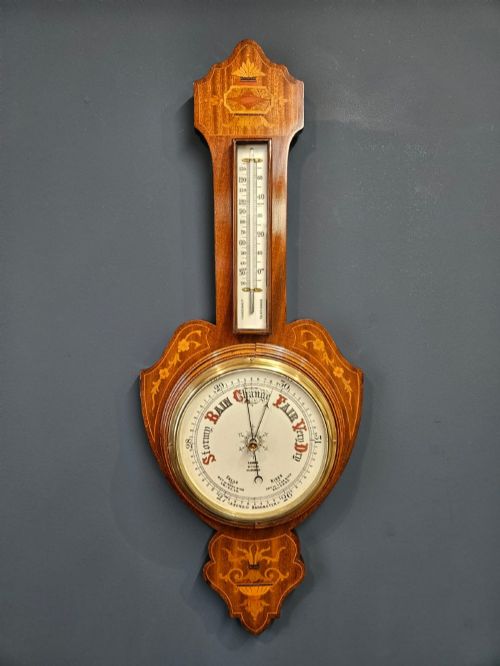
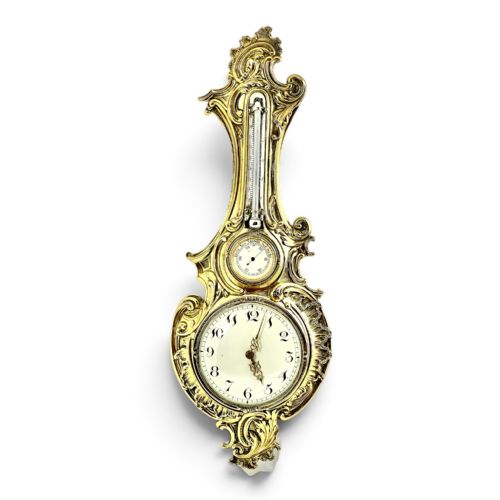
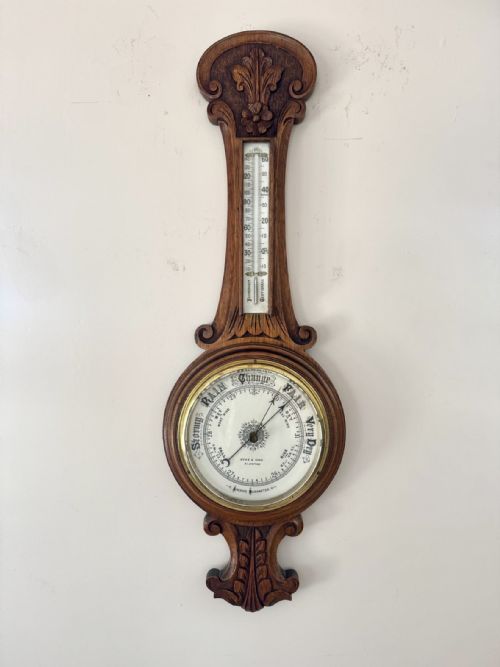
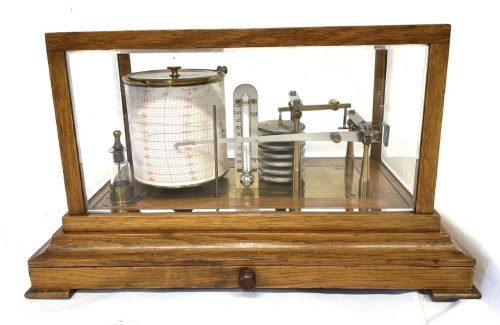
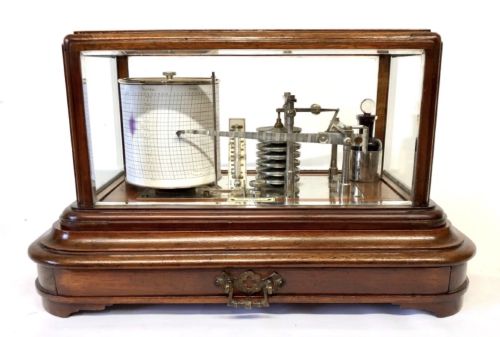
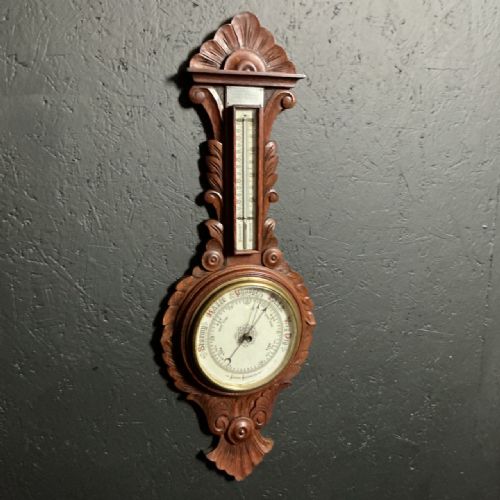
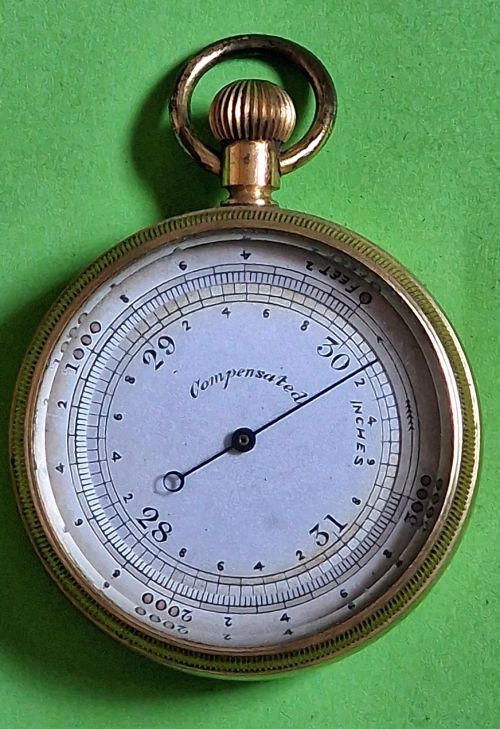
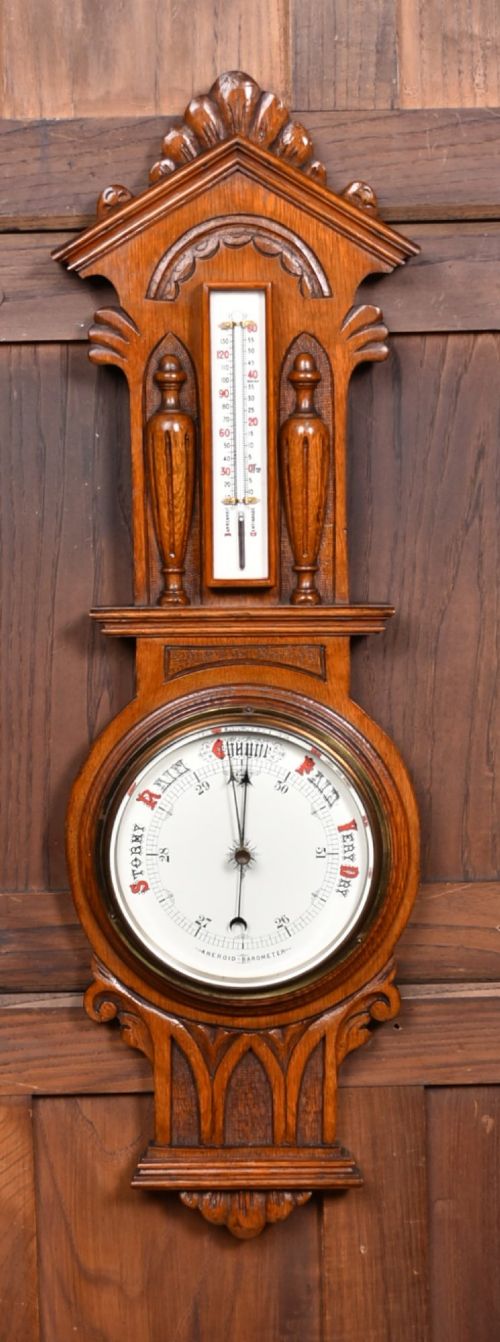
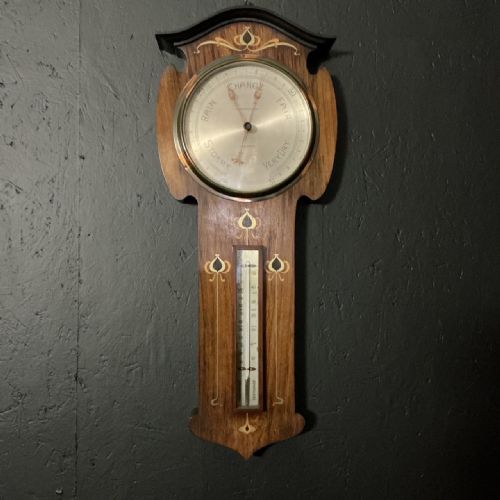
When you search for an aneroid weather instrument, you encounter portable pocket pieces alongside larger wall-mounted barometers and mechanical barographs. The wall-mounted oak and walnut banjo barometer is the version most frequently met on this page.
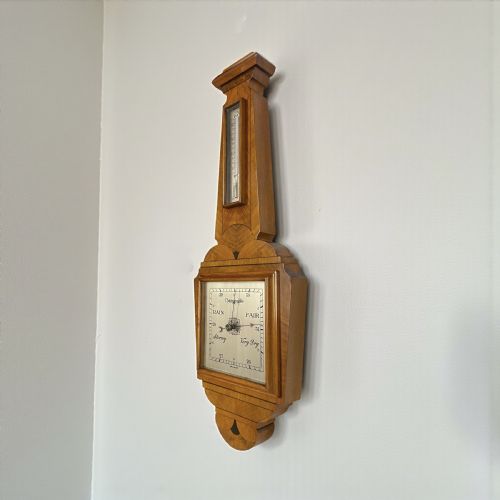
These instruments span the Victorian and Edwardian eras through to the Art Deco period. Domestic interiors accommodated wall barometers and barographs, whilst pocket barometers served travellers and observers.
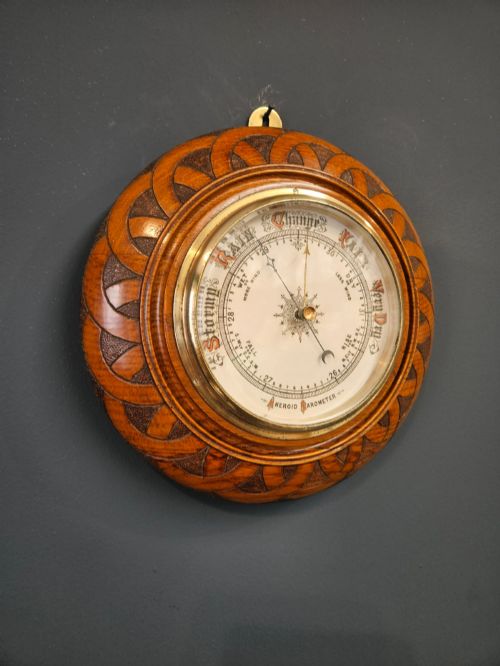
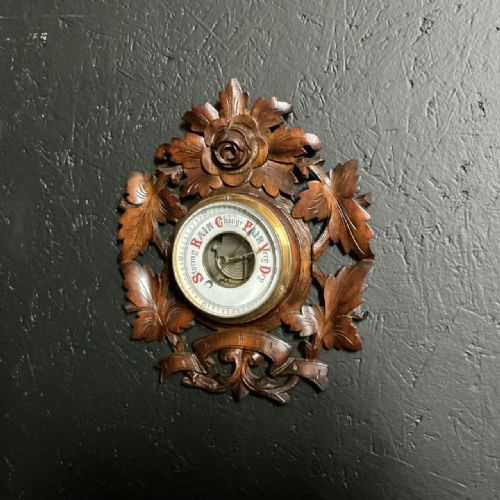
Originating largely from British workshops and retailers, these items combine practical meteorological function with period cabinet-making styles including Black Forest carving and Chinoiserie.
Materials and Construction
Casses utilise dense timbers such as oak, walnut, mahogany, and carved wood, frequently featuring bevelled glass panels protecting the silvered dial and thermometer scales. Brass and steel internal mechanisms drive the pointer via a sealed metallic bellows.
Cabinet makers shaped the timber into banjo frames, rectangular barograph boxes, and intricate Black Forest motifs. Metal components received silver gilt or polished finishes, while dials display etched or engraved calibrations.
Listings feature oak, walnut, and mahogany timbers alongside brass and glass, spanning Victorian to Art Deco periods.
Evaluating Quality
Quality rests in the crispness of the timber carving and the precision of the mechanical movement. Finely executed Black Forest foliage or detailed cabinet inlay elevates a piece above standard production items.
The legibility and engraving quality of the silvered dial, paired with secondary instruments like thermometers or chart drawers, distinguish higher tier aneroid barographs and wall barometers.
Negretti & Zambra·Short & Mason·Elliott Brothers·Hyde & Sons Sleaford·Gaupp & Co
The Aneroid Weather Instrument Glossary
- Aneroid barometer
- An instrument measuring atmospheric pressure by the expansion and contraction of a flexible metal capsule, avoiding liquid mercury. This design enables compact pocket versions and robust wall units.
- Barograph
- A mechanical weather instrument that records barometric pressure continuously onto a paper chart fitted to a rotating drum. These typically reside in polished mahogany or oak cases with glazed covers.
- Altimeter
- A specialised aneroid instrument calibrated to measure altitude above a given level based on atmospheric pressure changes. Examples appear in pocket formats and military observation balloon configurations.
- Banjo barometer
- A wall-mounted weather instrument housed within a vertical wooden case shaped like a banjo. These frequently incorporate a thermometer and a dampness indicator above the main dial.
- Silvered dial
- A metal face treated to produce a matte silver finish upon which graduations and inscriptions are engraved. The contrasting dark markings ensure clear reading of meteorological data.
Aneroid Weather Instrument: Frequently Asked Questions
How do aneroid instruments work?
An internal corrugated metal box expands and contracts as atmospheric pressure shifts. Levers connect this sealed chamber to the indicator needle on the dial.
Because no liquid is involved, the mechanism remains stable and portable, which allowed makers to produce pocket-sized versions for travellers.
What is a barograph?
A barograph is a mechanical weather recording device that plots pressure variations onto paper charts over a weekly period. A clockwork drum rotates while a linked pen tracks the movement.
Housed in glazed timber cases with chart drawers, these instruments offer a continuous historical record of local meteorological trends.
How do I date an aneroid barometer?
Stylistic clues within the timber case and dial typography provide the primary chronological markers. Heavy carved walnut points to the Victorian era, whereas geometric inlays often indicate Edwardian or Art Deco influence.
Maker signatures and patent references engraved on the silvered dials also help narrow down the period of manufacture.
Were pocket barometers used for travel?
Pocket barometers served surveyors, climbers, and travellers who needed to gauge altitude and impending weather changes outdoors. Leather cases often protected these portable scientific instruments during transit.
Some specimens combined altimeter scales with standard barometric pressure readings for navigation purposes.
How should I maintain a wall barometer?
These instruments require stable indoor environments away from direct sunlight and excessive moisture to protect the timber case and glass. Gentle dusting preserves the polished wood and metal surfaces.
Calibration can occasionally be adjusted via a screw on the back to match local barometric pressure readings.