




Air Twist Wine Glass
When you handle an air twist wine glass, you hold the lightweight brilliance of eighteenth-century English lead glass shaped by internal threads of trapped air.
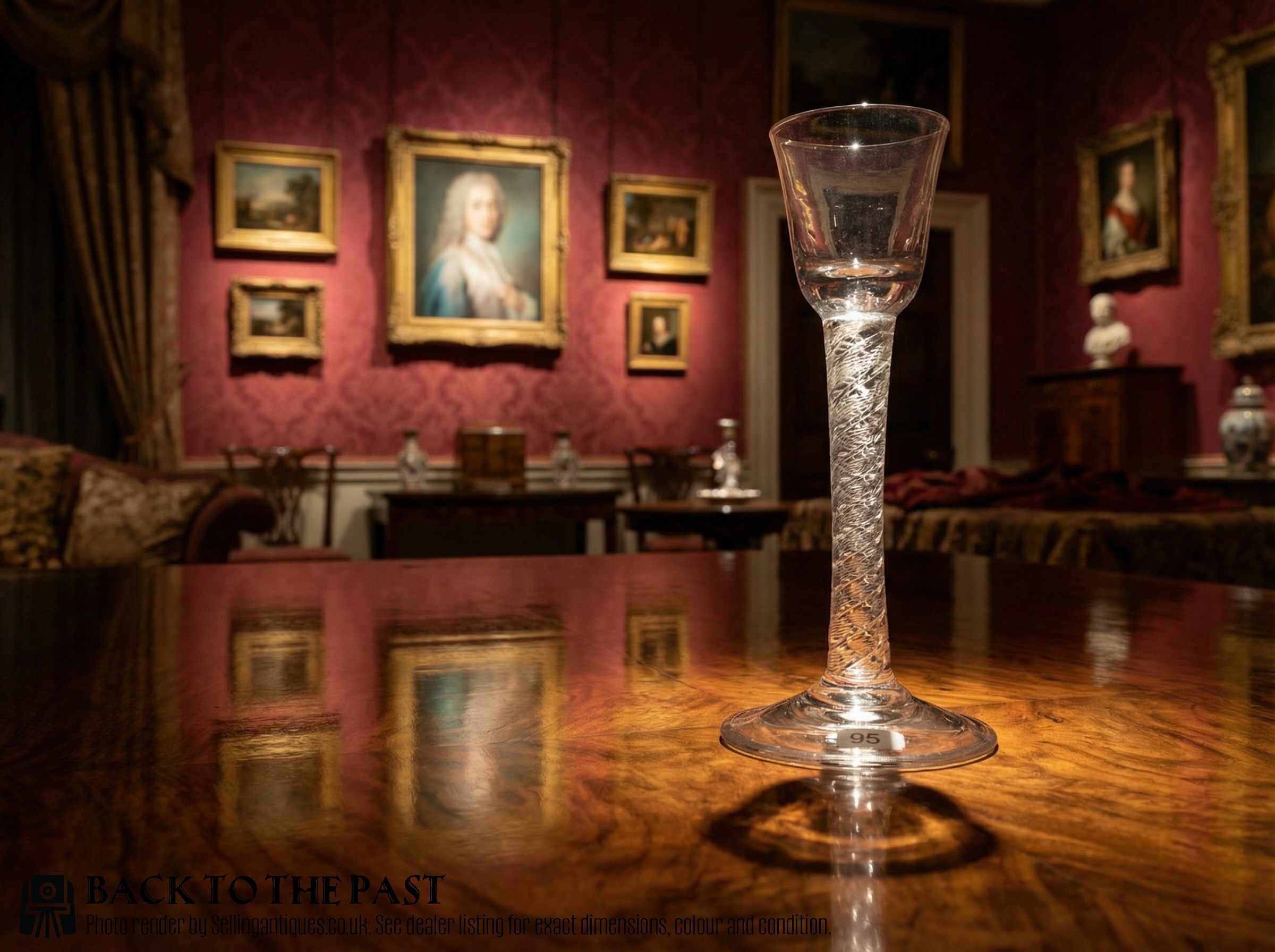
Air Twist Wine Glass
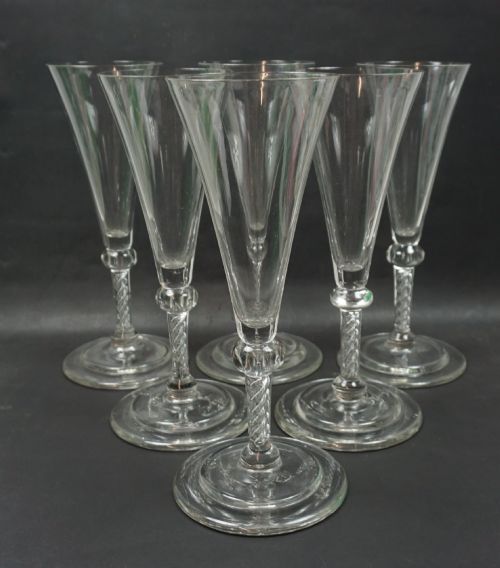
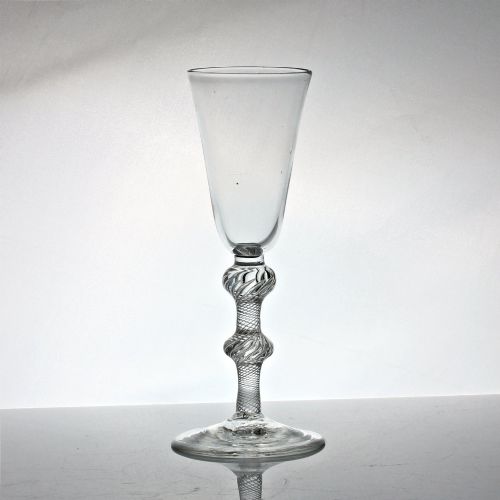
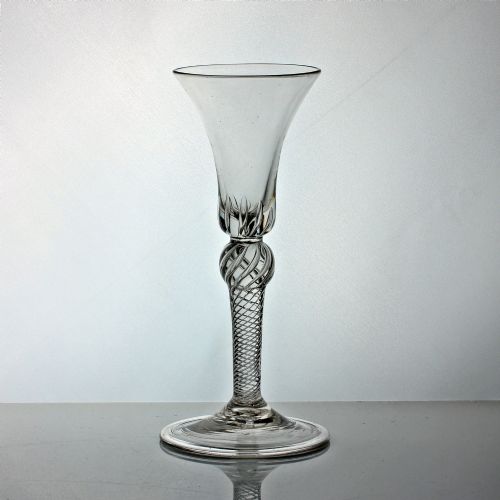
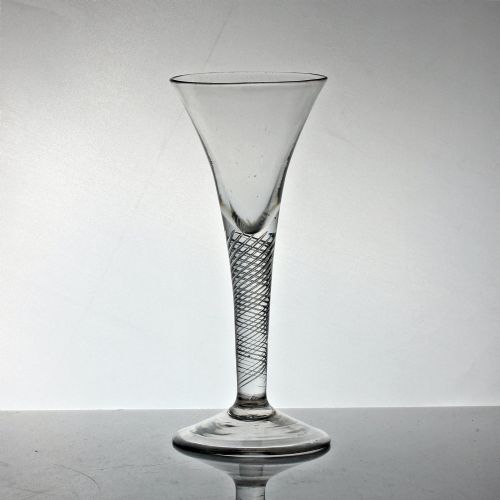
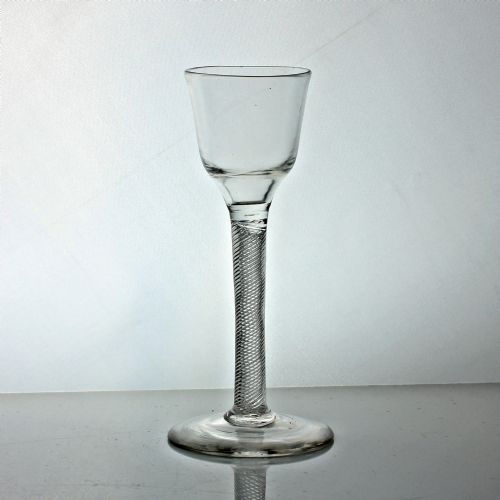
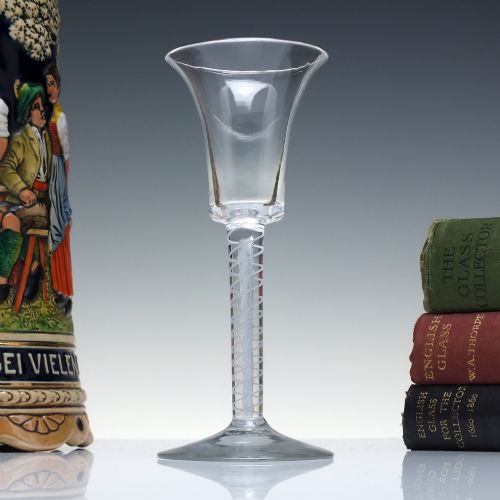
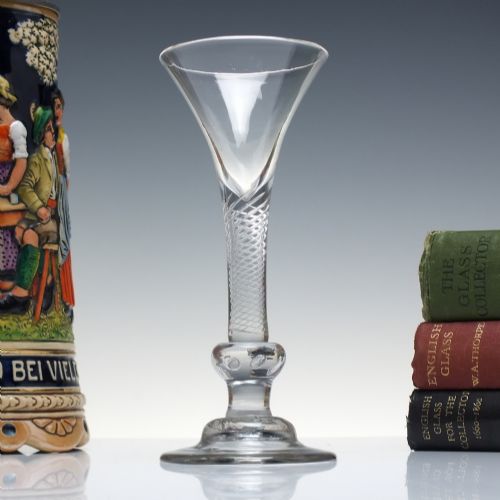
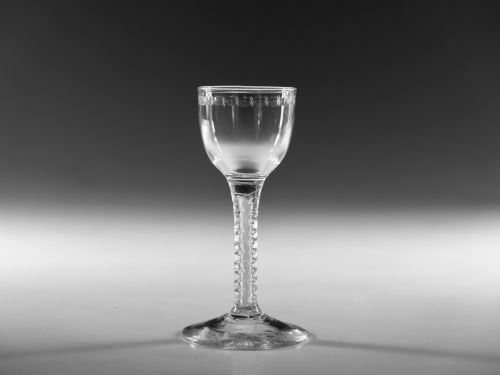
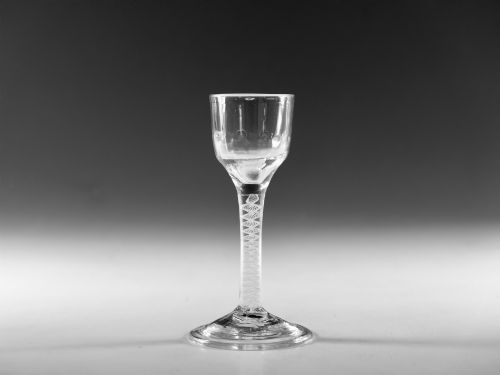
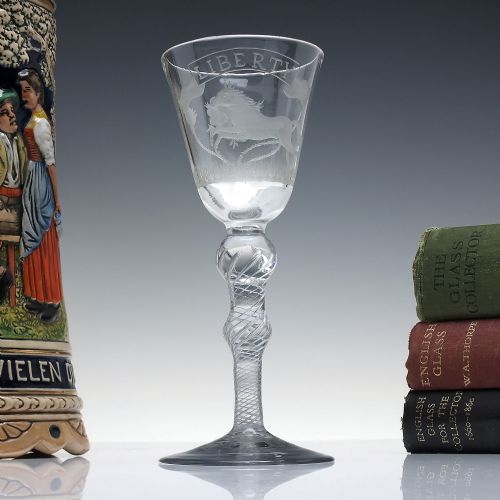
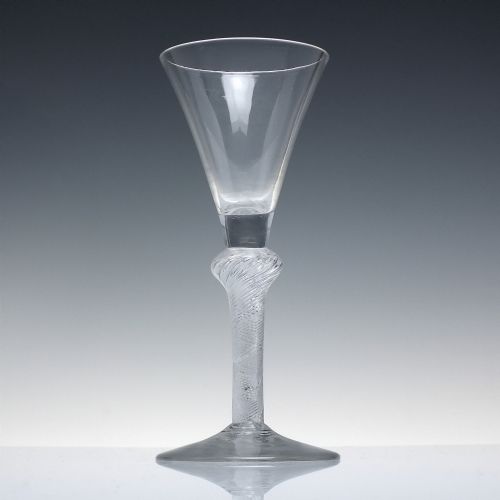
An air twist wine glass is a drinking vessel defined by an elongated stem containing fine spirals or columns of air trapped within the glass material.
Most examples found on this page belong to the Georgian period of the eighteenth century, spanning diverse bowl forms such as bell, ogee, pan top and trumpet.
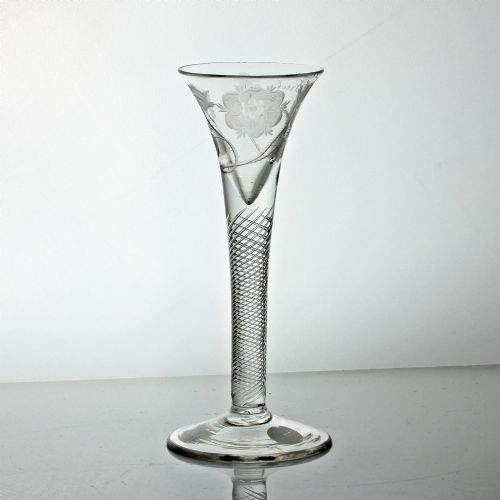
Beyond standard wine glasses, the category includes taller flutes, cordials, ales and goblets, occasionally featuring engraved motifs like Jacobite symbols or hunting scenes.
How they were made
Glassmakers utilised lead glass, flint glass or clear lead crystal, blowing the metal by hand before drawing out the stem.
Air threads were formed by impressing parallel air channels into a hot gather of metal, twisting the mass as it was pulled, and enclosing the voids beneath a clear outer casing.
Feet were often formed with folded rims for stability, while stems incorporated decorative knops, collars or composite formations built from separate segments.
Air Twist Wine Glass Retail Price Guide 2026
Typical asking prices for air twist wine glass among the pieces listed under this phrase on Sellingantiques today, from the lower quarter to the upper quarter. They describe what is for sale here now, not the wider market.
Listings feature lead glass, flint glass and white enamel materials across eighteenth-century Georgian and twentieth-century revivals.
What varies in quality
Quality rests in the optical clarity of the metal and the precise regularity of the internal twist, separating disciplined craftsmanship from hurried production.
Proportion dictates the elegance of the piece, where the visual weight of the bowl balances harmoniously against the height and diameter of the stem and foot.
Engraving depth and execution further divide ordinary vessels from superior examples, particularly when the cutting is crisp and well-integrated into the surface.
The Air Twist Wine Glass Glossary
- Air twist
- A stem containing elongated threads or bubbles of air drawn into spiral configurations during manufacture. This technique produces linear or multi-spiral optical patterns inside the clear glass.
- Opaque twist
- A stem variation where threads of white enamel or opaque white glass replace air channels inside the clear metal. These are sometimes paired with air twists in complex composite stems.
- Knop
- A bulbous swelling or protuberance formed on the stem of a glass for decorative emphasis and grip. Multiple knops can appear in single, double or triple arrangements.
- Folded foot
- A base edge turned underneath during manufacture to create a reinforced double layer of glass around the perimeter. This feature adds weight and protects the rim from chipping.
- Pan top
- A bowl shape with straight, slightly flaring sides resembling an open pan. It provides a distinct profile compared to rounded funnel or bell bowls.
Air Twist Wine Glass: Frequently Asked Questions
How do you spot an air twist?
An air twist is identified by looking closely inside the transparent stem to find delicate, continuous spiral threads of air rather than surface scratches. These internal threads catch the light differently as the glass moves.
Under magnification, the air channels appear as smooth, enclosed tubes sealed entirely within the clear metal substance.
What is a mixed twist?
A mixed twist combines air twist elements with opaque white enamel threads inside the same stem structure. Makers achieved this by twisting different internal components together before drawing the stem to its final length.
These hybrid stems offer a dense, complex visual texture that contrasts with simpler single-series air twists.
Why do some glasses have folded feet?
Folded feet were utilised to provide extra physical weight and structural reinforcement around the base of eighteenth-century drinking vessels. The folded rim helps anchor the tall stem and prevents the thin edge from fracturing during daily use.
This technique is frequently observed on Georgian lead glass specimens requiring additional stability.
What are Jacobite engravings?
Jacobite engravings are covert political symbols etched onto eighteenth-century glassware to express loyalty to the exiled Stuart dynasty. Common motifs include roses, oak leaves and specific hidden portraits or inscriptions.
These detailed historical carvings transform standard drinking vessels into charged artefacts of political allegiance.