





Afghan Baluch Runner Rug
An afghan baluch runner rug brings nomadic tribal artistry into an interior through deeply saturated tones and geometric motifs.
Afghan Baluch Runner Rug
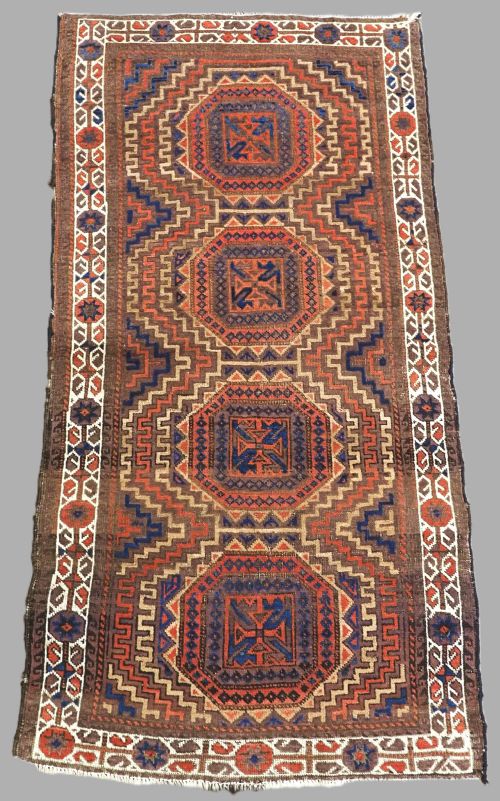
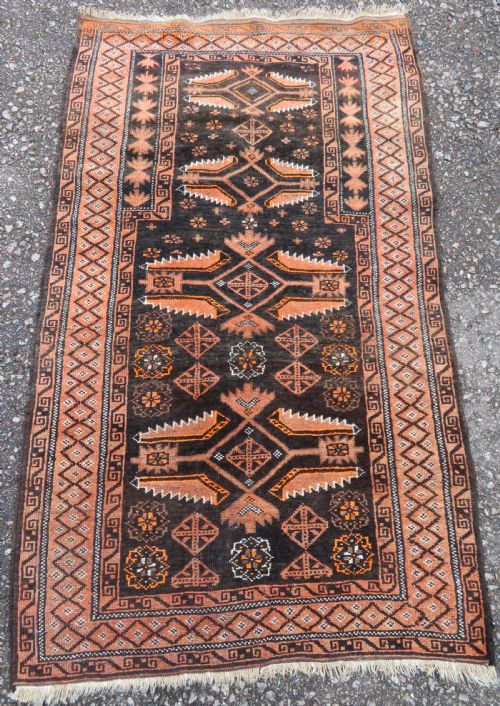
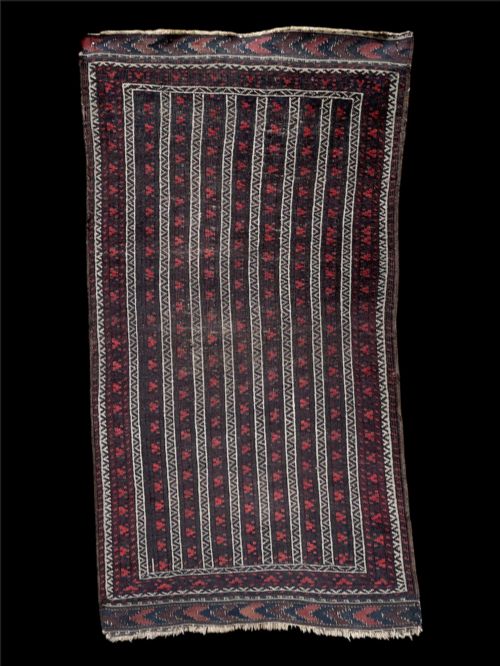
An afghan baluch runner rug represents the traditional weaving heritage of nomadic and semi-nomadic groups working in the borderlands of western Afghanistan and north-east Persia. These narrow format textiles serve functional purposes in tribal dwellings, often produced as long floor coverings or area pieces.
The selections appearing in this inventory span from the nineteenth century into the early twentieth century, encompassing periods around 1880, 1900, 1910, 1920, and 1930. Alongside standard floor runners, related forms emerge such as prayer rugs featuring double or triple mihrabs, kilims with bands of weftwork, and dining sofrehs.
Tribal groupings associated with these formats include the Taimani, Sistan, Timuri, Mushwani, Djhan Beghi, and Salar Khani. Designs frequently incorporate large guls, Kalam Donneh pencil box patterns, and repeat star motifs within octagons.
Materials and construction methods
Weavers utilise wool, hand-spun wool, camel wool, and occasionally goat hair for the pile and structure, sometimes combining these with cotton foundations. Natural dyes supply the deep and rich colour palette characteristic of these nomadic textiles.
Construction techniques include pile weaving alongside flat-woven kilim structures, with some larger examples woven in two parts and joined together. Mixed technique methods appear in specific regional prayer rugs and utility pieces.
Current listings feature pieces dated from 1880 to 1930, utilising wool, camel wool, and natural dyes across runner and prayer rug formats.
Distinctions in quality
Quality depends upon the fineness of the spin in the wool and the precision of the tribal design execution. Tightly packed knots and resilient materials ensure greater structural integrity across the rug surface.
The clarity and depth of natural dye applications contribute significantly to the visual merit of the piece. Well-preserved condition and balanced proportions within the runner format further elevate individual examples.
The Afghan Baluch Runner Rug Glossary
- Gul
- A medallion motif frequently repeated across tribal carpets and rugs. This octagonal or shield-shaped design acts as a primary clan identifier.
- Mihrab
- A arched niche design used primarily on prayer rugs, directing the focus toward Mecca. Double and triple variations incorporate multiple arches.
- Sofreh
- A spreading cloth or dining mat utilised by nomadic communities for sharing meals. These flat-woven or pile pieces often display distinct borderland patterns.
- Kilim
- A flat-woven textile produced without a pile by tightly interweaving warp and weft strands. These function as floor coverings or utility bands.
- Kalam Donneh
- A traditional motif resembling a pencil box or curved almond shape. It appears repeatedly in western Afghan and Timuri weaving traditions.
Afghan Baluch Runner Rug: Frequently Asked Questions
How were these rugs used originally?
Nomadic groups utilised these long formats as floor runners inside tents and dwellings, where narrow spaces required specific rectangular dimensions. Prayer rugs served personal and spiritual functions during daily observances.
Other variants like sofrehs functioned as communal dining cloths for sharing meals on the ground. Their portable nature suited the seasonal migrations of the weaving tribes.
How do I care for an old runner rug?
Vacuum gently using a suction-only attachment without rotating bristle brushes to protect the historic wool pile. Keep the textile away from prolonged direct sunlight to prevent natural dye fading.
Rotate the placement periodically to ensure even wear across high-traffic areas. Professional textile cleaning specialists should handle any deep maintenance.
What defines tribal baluch design?
Tribal baluch design relies heavily on geometric field patterns, repeated guls, and stylized plant motifs. Dark palettes dominated by indigo, madder red, and deep brown set the visual tone.
Asymmetrical layouts and regional variations reflect the independent artistic choices of individual weavers rather than rigid factory cartoons.
How can I tell the period of a rug?
Dating relies on material analysis, structural evidence, and stylistic conventions typical of late nineteenth and early twentieth-century production. Hand-spun wool and early natural dye palettes generally indicate earlier nineteenth-century origins.
Structural stiffness, knot density, and specific regional motifs help narrow the decade of creation between 1880 and 1930.