
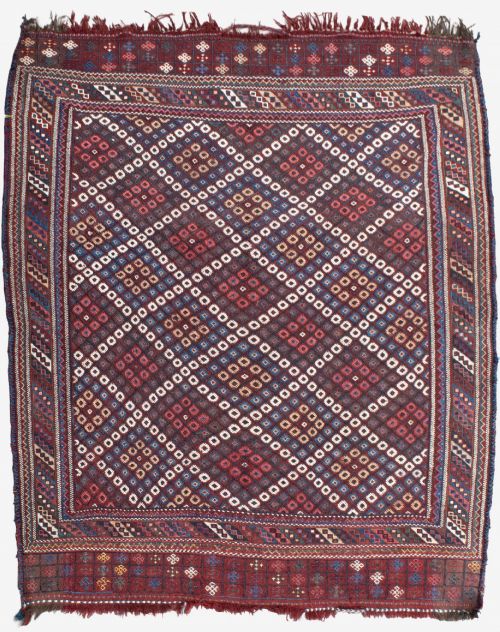


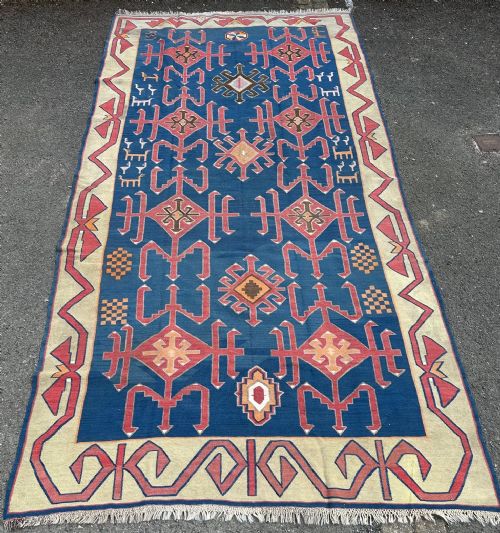


Handwoven Tribal Kilim
These handwoven tribal kilim textiles offer a dense, flat-woven record of nomadic life, prized for geometric patterns and authentic wool textures.
Handwoven Tribal Kilim
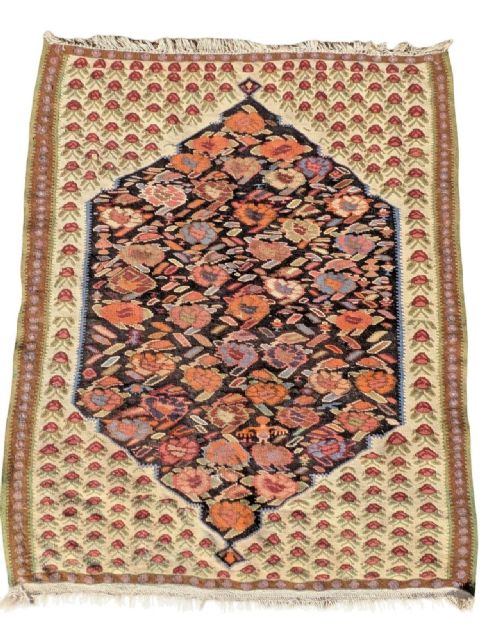
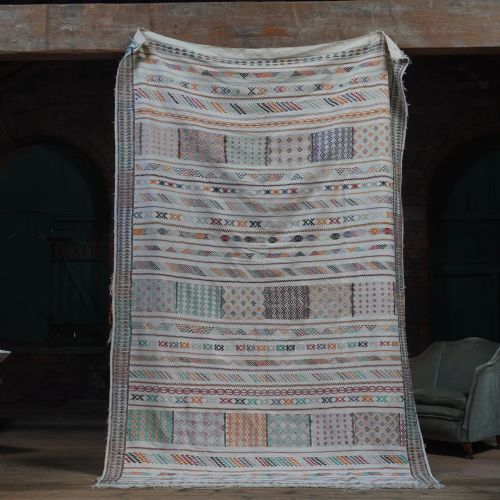
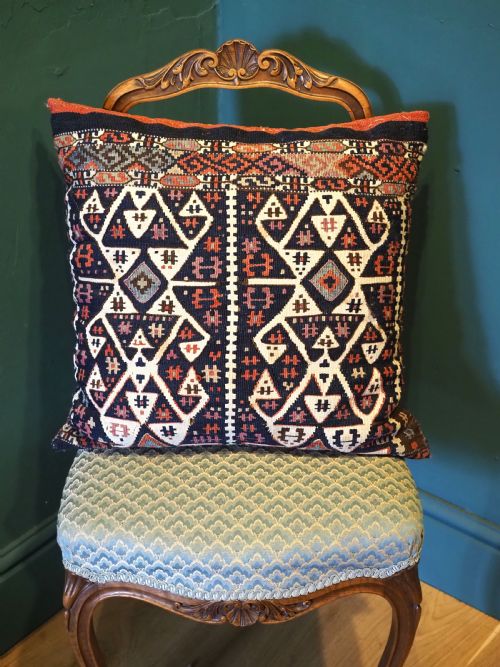
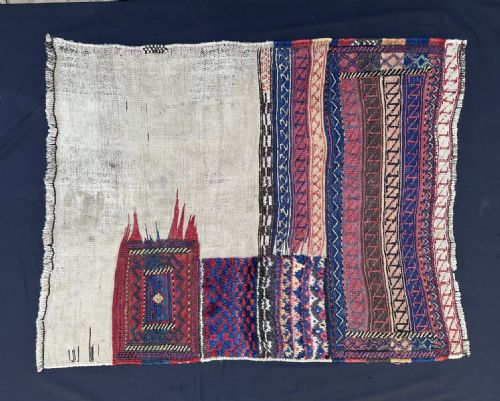
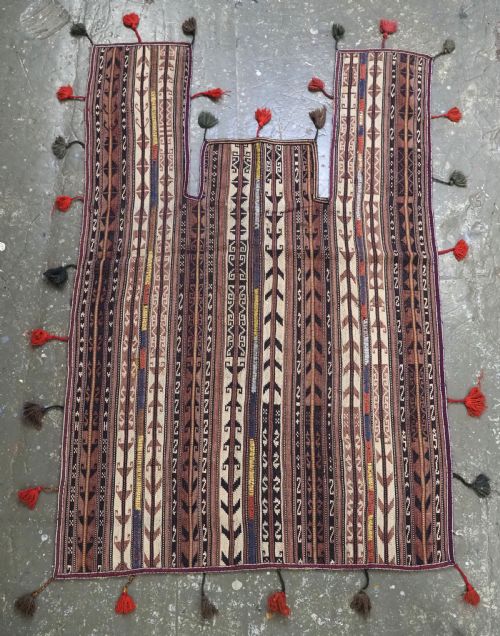
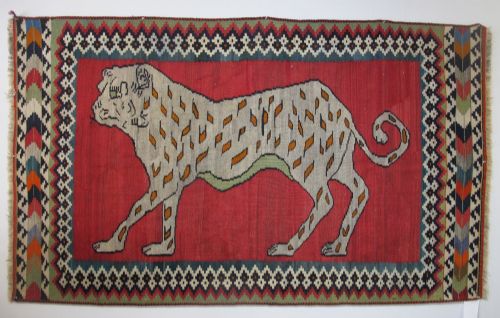
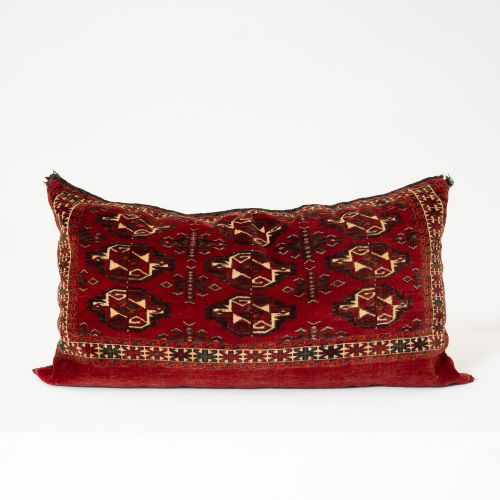
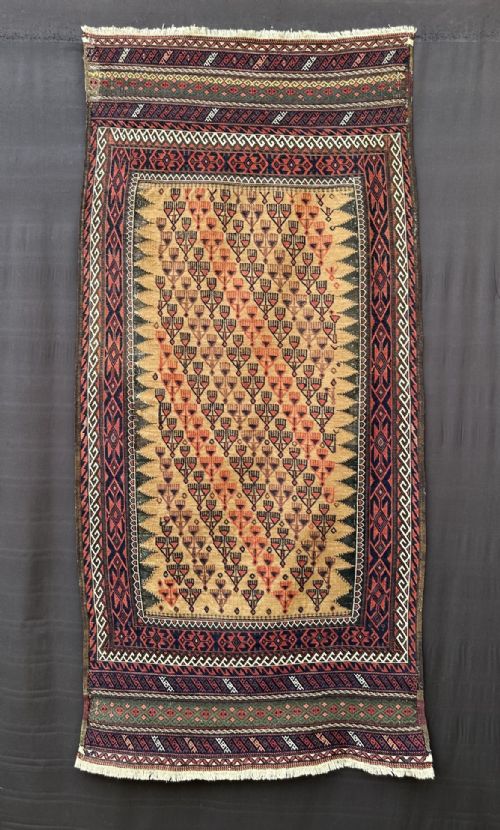
When searching for a handwoven tribal kilim, collectors look at flat-woven rugs, cushions, and utility cloths created by nomadic and village weavers across Persia, Anatolia, the Caucasus, and Central Asia. The pieces appearing here span from the mid-nineteenth century through the early twentieth century, taking forms such as sofreh dining cloths, salt-bags, horse blankets, and runner rugs.
Materials and Construction
Makers relied primarily on hand-spun wool and cotton foundations, occasionally integrating goat hair and sabra cactus silk for structural contrast or surface sheen. Natural dyes provided the deep, organic palette characteristic of nineteenth-century and early twentieth-century village textiles.
The slit-tapery technique permits sharp geometric shifts by leaving gaps where distinct colour blocks meet, defining the crisp graphic quality inherent to these regional weavings.
The inventory includes specialised nomadic forms such as bread sofreh cloths, horse blankets, saddle bags, and mafrash panels.
Factors of Quality
The distinction between ordinary and exceptional examples rests upon the tightness of the weave, the clarity of the tribal motifs, and the depth of the natural dyestuffs. Finer knotting and precise geometric execution demand greater skill from the nomad weaver, elevating the visual power of the textile.
Preservation of original borders, intact kilim ends, and structural integrity without heavy modern restoration set the most desirable nomadic flat-weaves apart from heavily worn utility pieces.
The Handwoven Tribal Kilim Glossary
- Kilim
- A flat-woven carpet or rug produced by tightly interweaving warp and weft strands without a pile. This technique creates a lightweight textile with identical patterns visible on both sides.
- Sofreh
- A utilitarian cloth traditionally utilised for dining, food preparation, or bread storage among nomadic communities. These textiles frequently display bold tribal iconography.
- Soumak
- A supplementary weft-wrapping technique that produces a textured, braided surface on the face of the rug while leaving loose threads floating on the reverse. It adds substantial durability to bags and carpets.
- Mafrash
- A large, rectangular storage bag face or side panel woven by Turkmen and other tribal groups to carry household goods during seasonal migrations.
- Warp
- The stationary vertical threads stretched onto a loom that form the foundational skeleton of the textile. Weft threads are passed horizontally through these structural lines.
Handwoven Tribal Kilim: Frequently Asked Questions
What is a tribal kilim?
A tribal kilim is a flat-woven textile created by nomadic and village weavers for practical domestic use, such as floor coverings, blankets, and storage bags.
These pieces use slit-weave techniques to produce geometric designs that reflect the specific cultural heritage of regions like Persia, the Caucasus, and Anatolia.
How were sofreh cloths used?
Sofreh cloths served as clean surfaces placed on the ground for eating meals, rolling bread dough, or storing flour and salt within nomadic tents.
Because they were central to daily domestic rituals, weavers decorated them with potent protective and tribal symbols.
How do I care for antique flat-weaves?
Antique flat-weaves require gentle treatment, including regular light vacuuming without a rotating brush and professional textile cleaning when necessary.
Keeping them out of direct sunlight prevents natural dyes from fading over time.
How can I tell regional styles apart?
Regional attribution relies on specific colour palettes, wool qualities, and characteristic geometric motifs associated with groups like the Qashqai, Afshar, or Turkmen.
Caucasian weavings often display sharp, highly architectural polygons, whereas Persian nomadic pieces lean towards organic tribal layouts.