
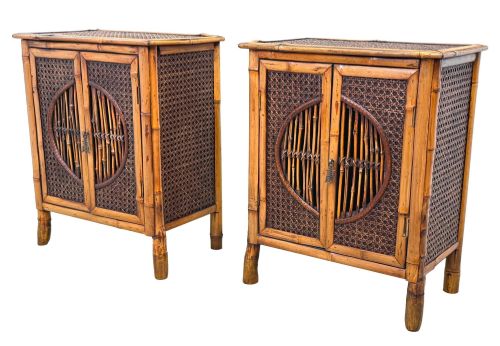
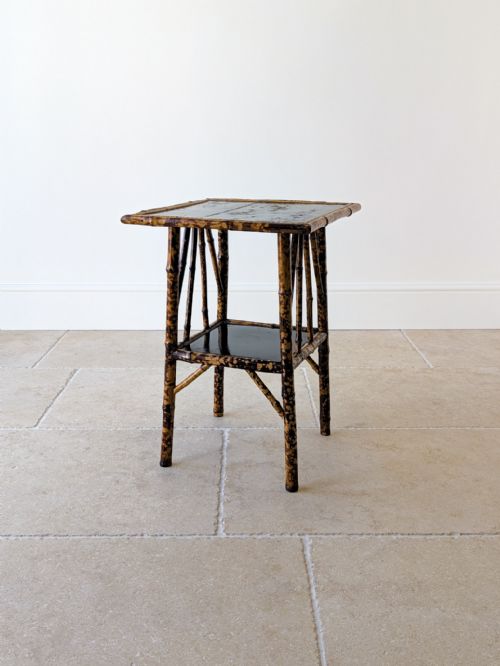
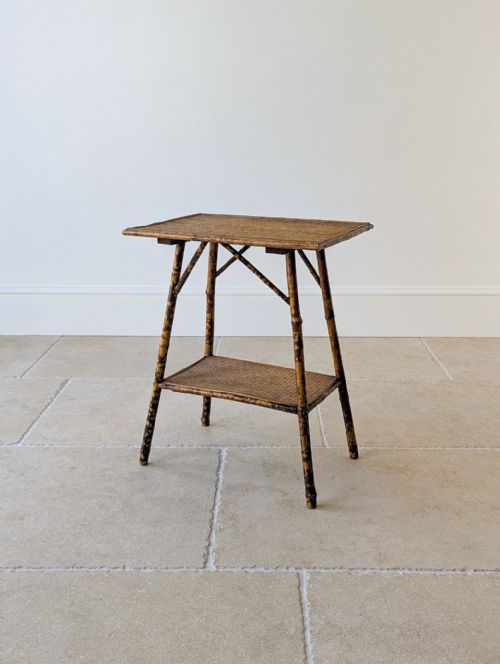
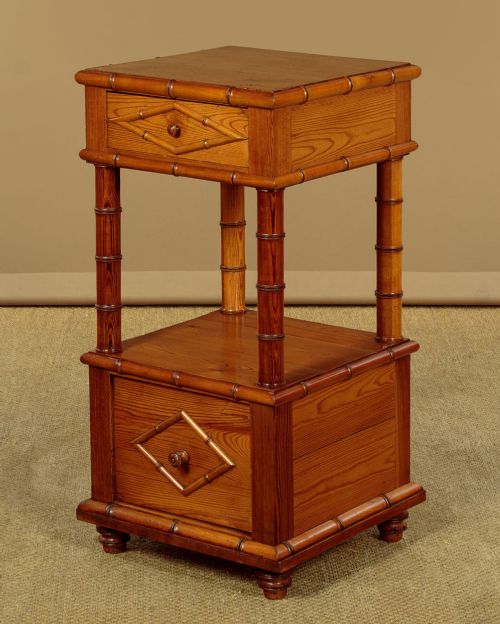
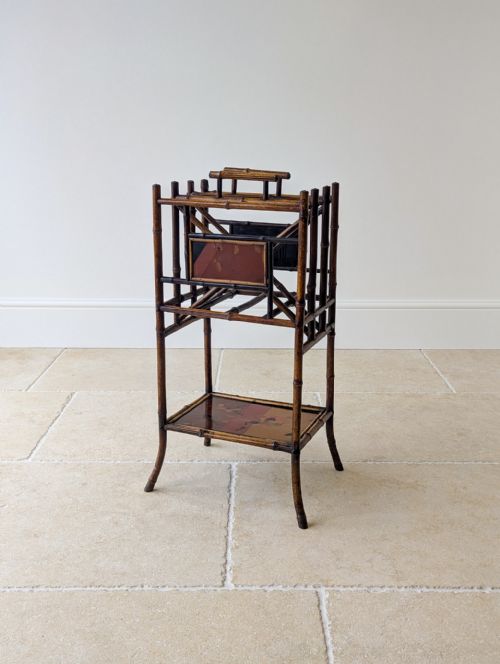
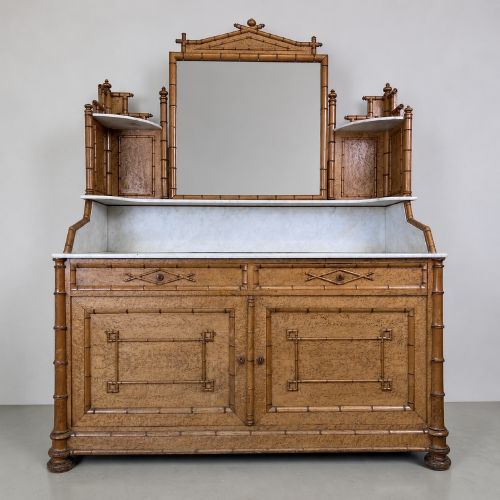
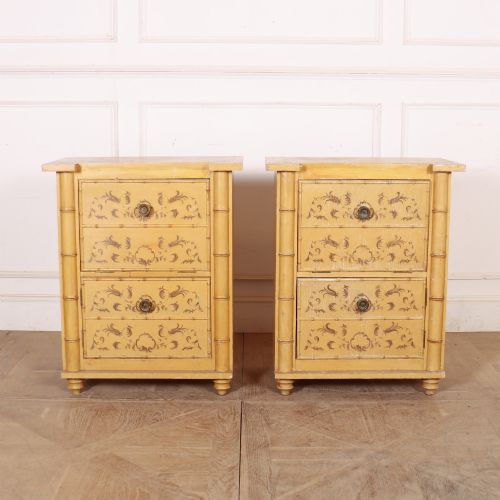
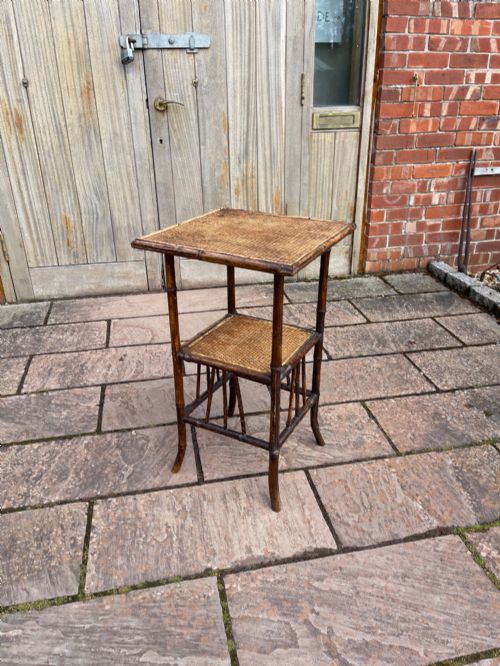


Aesthetic Movement Bamboo Table
An aesthetic movement bamboo table brings the crisp lines of late Victorian design and Anglo-Japanese taste straight into a room.
Aesthetic Movement Bamboo Table
An aesthetic movement bamboo table reflects the late nineteenth century taste for exoticism, simplicity and asymmetric arrangement. Buyers searching this phrase look for occasional furniture, side tables and work tables produced during the Victorian and Edwardian periods.
The most common examples on this page are occasional tables and side tables dating from around eighteen eighty to eighteen ninety. These pieces combine lightweight frames with decorated tops, drawing heavily on Japanese design principles adapted for British homes.
Materials and construction methods
Maker construction relies on natural bamboo and turned wood finished to resemble bamboo, paired with lacquer, cane, rattan and brass fittings. Surfaces often feature hand painted panels, decoupage or inlaid details set within the lightweight wooden framework.
Makers joined structural elements with pinned joints and wrapped bindings, creating sturdy frames without heavy timber mass. Tops frequently incorporate lacquered wood, leather inserts, tile panels or woven reed to contrast with the golden tones of the bamboo.
Dinner gongs mounted on bamboo stands ensured that Victorian households were summoned to meals with an exotic acoustic flourish.
Distinctions in quality and finish
Quality rests upon the crispness of the framing, the integrity of the lacquered or painted decoration on the top surfaces, and the survival of original brass mounts and cane lower shelves. Finer examples display meticulous joinery and firm structural stability despite the inherent lightness of the material.
Makers who supplied retail houses tended to produce more refined details, such as quillwork inlay or intricate hand painted panels, whereas standard utility pieces relied on simpler turned pine frames painted to imitate natural cane.
Liberty & Co.·Liberty of London
The Aesthetic Movement Bamboo Table Glossary
- Anglo-Japanese
- A design style fusing British aesthetic principles with traditional Japanese art forms. This approach heavily influenced late nineteenth century furniture makers.
- Decoupage
- The art of decorating a surface with paper cutouts pasted and varnished in place. Victorian makers applied this technique to tabletop panels.
- Canterbury
- A low multi-section stand designed to hold sheet music or magazines. These pieces often incorporated bamboo frames alongside traditional wood dividers.
- Quillwork
- Decorative patterns formed from small sections of bird quills glued onto a surface. It appears on select Victorian and aesthetic movement pieces.
Aesthetic Movement Bamboo Table: Frequently Asked Questions
How do I clean an aesthetic movement bamboo table?
Dust the frame regularly with a dry cloth and avoid harsh chemical polishes that can damage delicate lacquer or painted surfaces.
Keep the timber away from direct sunlight and damp conditions to protect the natural cane and prevent the joints from loosening over time.
Are these tables sturdy enough for daily use?
These pieces were designed as occasional furniture for holding small decorative items, books or tea services rather than heavy loads.
While the construction is surprisingly resilient, treat them with care to preserve the original bindings, lacquered panels and delicate bamboo poles.
What is the difference between bamboo and faux bamboo?
Genuine bamboo uses natural plant stems joined with pins and wraps, showing characteristic nodes and fibrous textures across the frame.
Faux bamboo consists of solid timber, often pine or mahogany, turned on a lathe to replicate the segmented appearance of real cane before being painted.
How do I date an aesthetic movement bamboo table?
Examine the construction methods, the type of surface decoration, and any associated retail labels from the late Victorian or Edwardian eras.
Most surviving examples date from eighteen eighty to nineteen ten, aligning with the height of the aesthetic movement and Anglo-Japanese interior taste.