



Victorian Bamboo Accent Table
A victorian bamboo accent table brings lightness and exotic pattern into a room, offering clever surfaces with genuine nineteenth century character.
Victorian Bamboo Accent Table
When you search for a victorian bamboo accent table, you find pieces designed to bring exotic textures and lightness into nineteenth century interiors. These surfaces include occasional tables, side tables, nests of four tables, and two tier tea tables dating from the nineteenth century. Most examples belong to the Victorian and Aesthetic Movement styles, often reflecting Chinoiserie tastes or Anglo Indian workshop traditions.
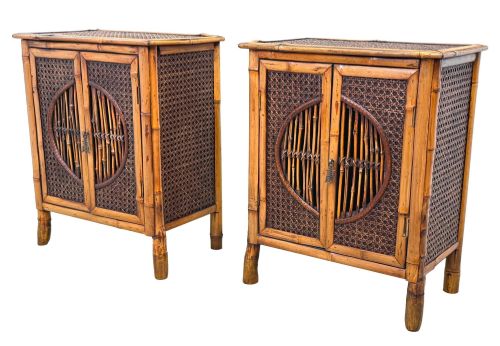
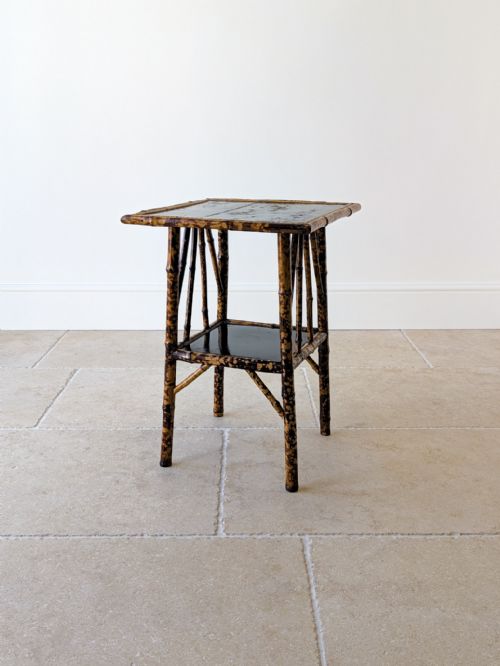
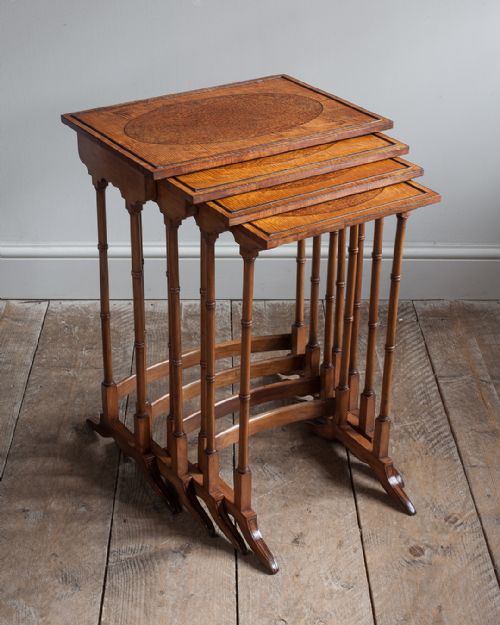
The versions you meet most often on this page feature bamboo frames paired with lacquered panels, woven reed, or cane details. Some pieces incorporate faux bamboo turned wood alongside mahogany or satinwood tops, while others take the form of miniature table top cupboards or gypsy tables. Makers such as John Taylor of Edinburgh produced notable pieces within this tradition during the nineteenth century.
How they were made
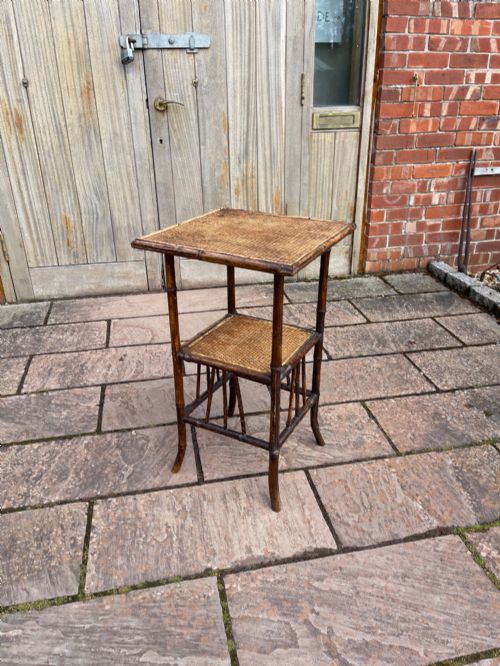
These pieces rely on natural bamboo and ebonised bamboo frames assembled with metal or wooden fixings to create sturdy yet lightweight furniture. Makers combined the distinctive segmented cane with woven reed, cane lower shelves, and turned wood elements.
Surfaces frequently feature lacquer work, decoupage, or hand painted Chinoiserie panels set within wood or bamboo borders. Some variations utilise mahogany, satinwood, or papier mache for the table tops, finished with brass details or drop leaf mechanisms.
The listings here feature nineteenth century periods alongside materials such as bamboo, lacquer, mahogany, cane, and brass.
What varies in quality
The refinement of the lacquer panels and the crispness of the hand painted Chinoiserie details set finer examples apart from simpler utility items. Superior construction shows in tight joints where bamboo stalks meet, alongside well preserved woven reed shelves and sturdy framing.
Original surfaces with intact finishes and genuine period materials hold greater distinction than later replacements. The inclusion of named maker signatures or specific regional workshop origins adds notable interest to a piece.
John Taylor Edinburgh
The Victorian Bamboo Accent Table Glossary
- Aesthetic Movement
- A late nineteenth century design style focused on art for art's sake, drawing inspiration from Japanese and Chinese decorative arts. This movement heavily influenced the makers of bamboo furniture.
- Chinoiserie
- European interpretations of Chinese artistic traditions, often seen in painted lacquer panels and decorative motifs on furniture. It provides the visual storytelling found on many nineteenth century table tops.
- Gypsy Table
- A small three legged occasional table with a draped fabric fringe or lightweight top, popular during the Victorian era. These pieces offered portable convenience and eclectic charm.
- Faux bamboo
- Wood that has been turned, carved, or painted to imitate the segmented stalks of natural bamboo. This technique allowed cabinetmakers to achieve an exotic look using domestic timbers like mahogany or satinwood.
Victorian Bamboo Accent Table: Frequently Asked Questions
What is a victorian bamboo accent table?
A victorian bamboo accent table is a lightweight nineteenth century furnishing constructed from bamboo or ebonised wood, often incorporating lacquered panels or woven reed shelves. These small tables served as occasional, side, or tea tables during the Aesthetic Movement.
They bring an exotic, decorative element to interiors, reflecting the period fascination with Japanese and Chinese design motifs.
How were these tables used originally?
In nineteenth century homes, these tables functioned primarily as movable occasional surfaces for serving tea, displaying ornaments, or holding reading materials. Their lightweight construction allowed servants or residents to reposition them easily around a parlour or drawing room.
Two tier versions provided extra display space for ceramics and books without taking up a larger footprint on the floor.
How do I date a bamboo table?
Dating relies on examining the construction methods, joinery, and accompanying materials such as lacquered panels, brass hardware, or woven reed. Pieces associated with the Aesthetic Movement typically date from the late nineteenth century around the 1880s to 1900.
Comparing the style of the painted decoration and the finish against documented Victorian pieces helps narrow down the decade of manufacture.
How do I live with a bamboo table?
Living with these tables involves placing them in low traffic areas where their lightweight bamboo frames and lacquered surfaces remain protected from heavy knocks. Keeping them away from direct sunlight and excessive moisture preserves the delicate painted panels and natural cane.
They pair well with both period rooms and modern eclectic interiors as functional display surfaces.