



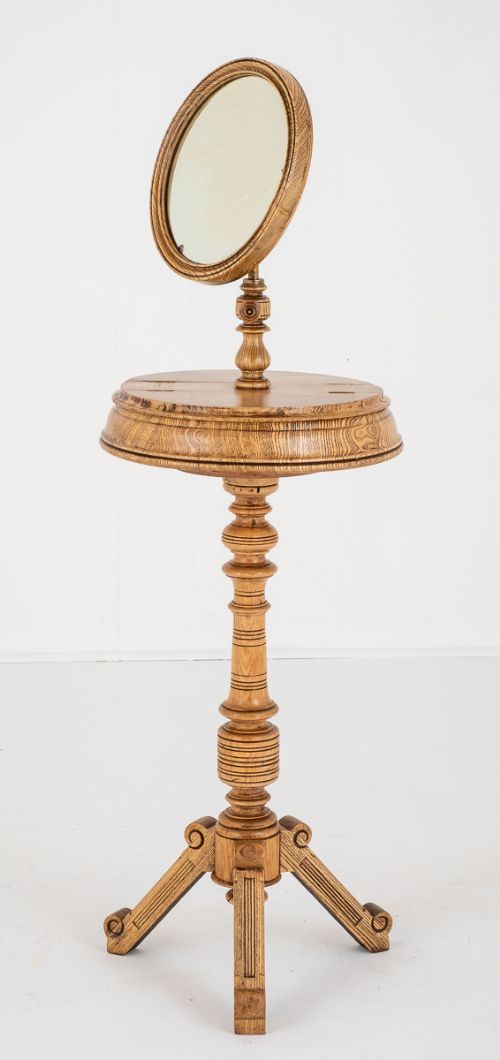


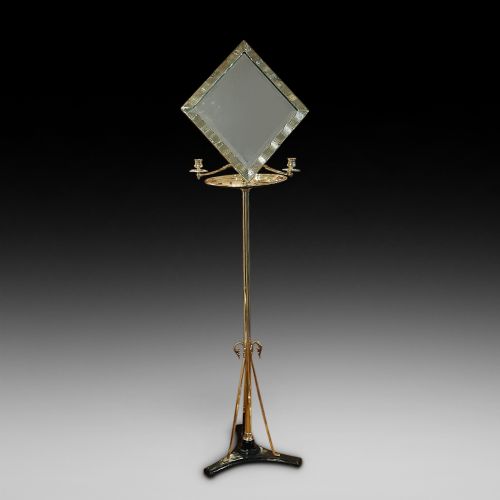

Adjustable Shaving Stand
An adjustable shaving stand offers practical utility and period charm, bringing adaptable height and tilting glass to your daily grooming routine.
Adjustable Shaving Stand
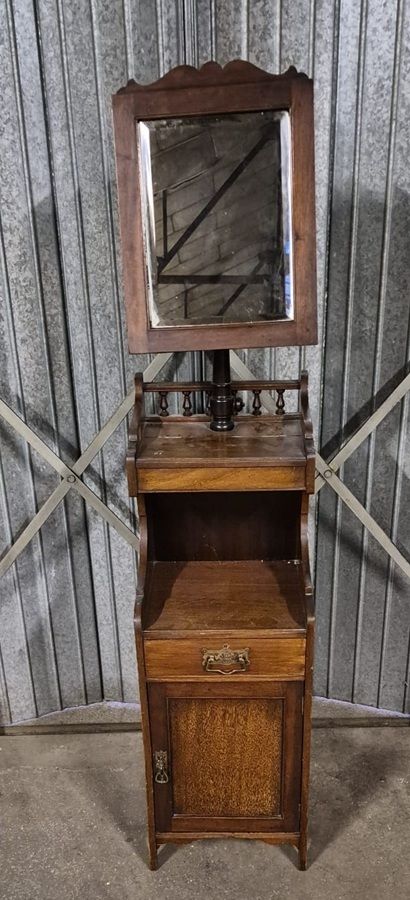
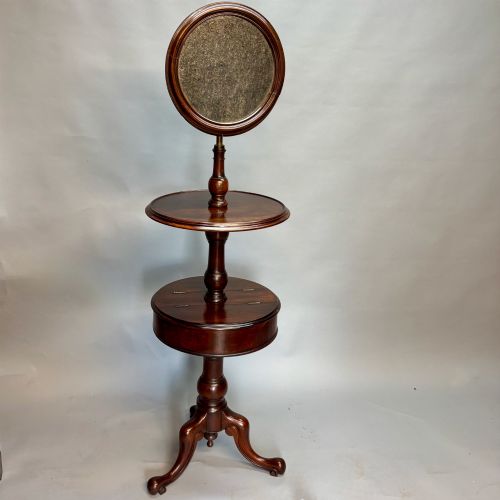
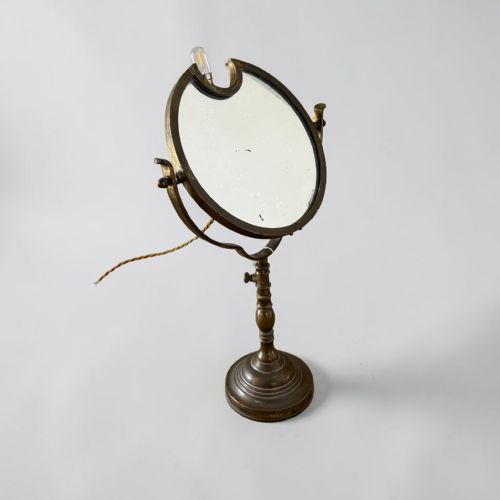
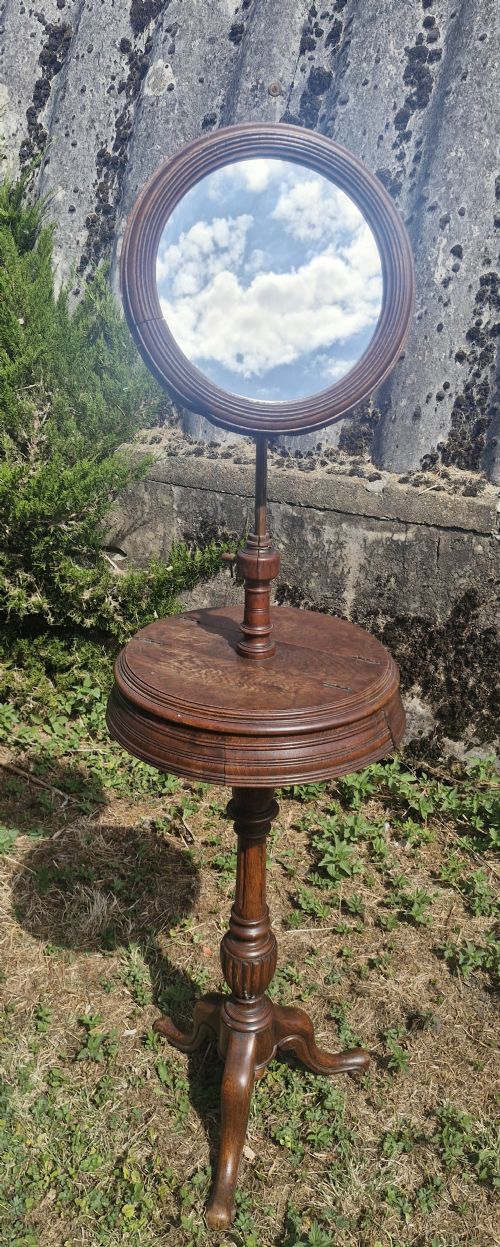
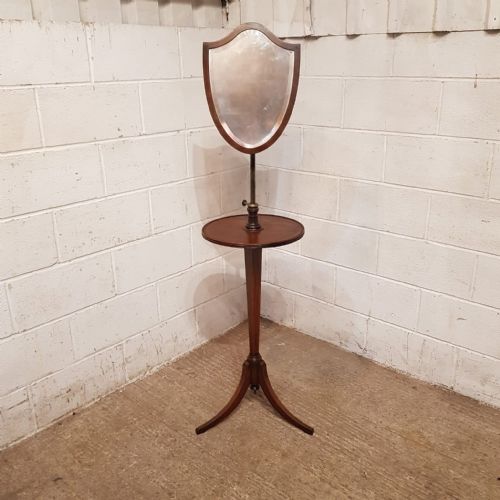
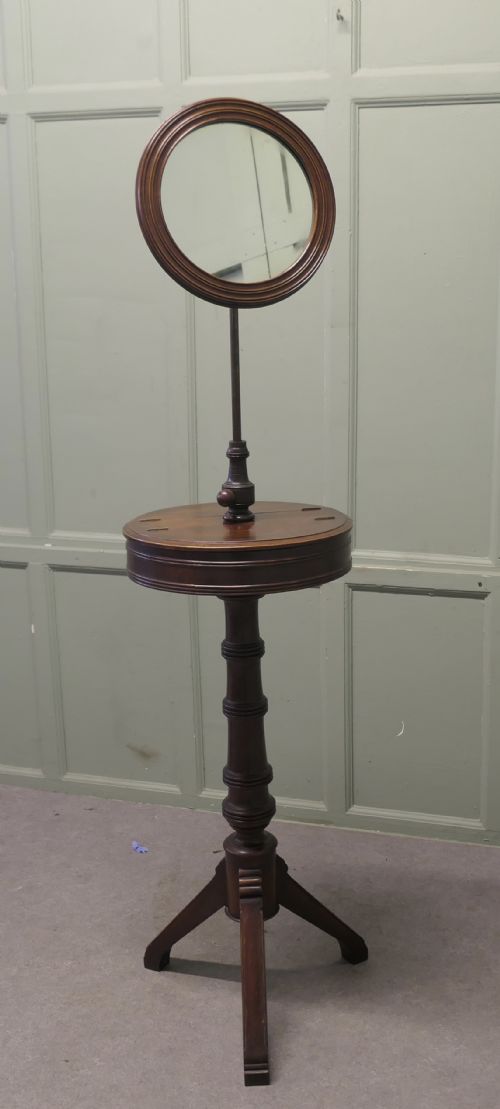
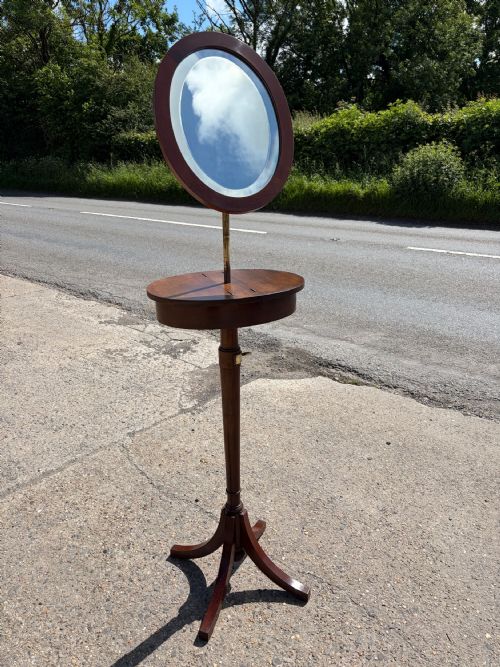
An adjustable shaving stand combines a pivoting mirror with a dedicated support structure designed for morning grooming and personal care. These pieces span the Victorian and Edwardian eras through to the early twentieth century, appearing in forms from simple telescopic brass columns to elaborate mahogany cabinets with tripod bases.
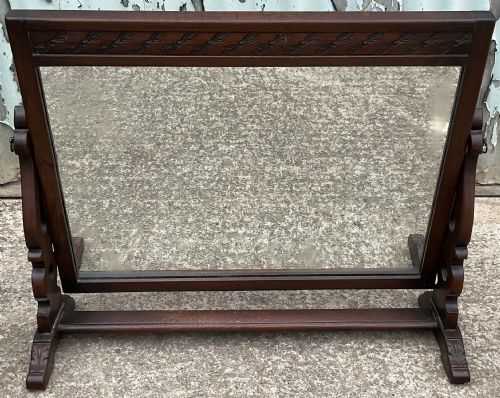
Buyers meet variants ranging from compact tabletop mirrors mounted on stands to full-height floor models featuring integrated cupboards and shaving cups. Mahogany, walnut, and oak dominate the surviving examples, often housing circular or rectangular bevelled glass plates that tilt to suit the user.
Materials and construction
Cabinetmakers utilised dense hardwoods like mahogany, walnut, oak, and ash for the primary frames, frequently incorporating brass mechanisms for the telescopic height adjustments. The metal components allow the mirror plates to slide vertically and tilt on hinges, securing firmly at the desired angle.
Later twentieth-century iterations introduced chrome and painted metal alongside mirror glass, reflecting shifting industrial methods. Joinery methods relied on sturdy turnings, tripod supports, and fitted drawers, balancing the weight of the heavy glass above.
Adjustable Shaving Stand Retail Price Guide 2026
Typical asking prices for adjustable shaving stand among the pieces listed under this phrase on Sellingantiques today, from the lower quarter to the upper quarter. They describe what is for sale here now, not the wider market.
Assessing quality and execution
Superior examples distinguish themselves through the precision of their brass adjusting mechanisms and the weight of their timber frames. A well-balanced tripod base or heavy columnar support ensures the pivoting mirror remains stable at any height without slipping.
Finishing touches separate standard workshop output from finer pieces. Thoughtful wood grain selection, clean dovetailing in small drawers, and accurately bevelled mirror glass indicate higher craftsmanship during the nineteenth and early twentieth centuries.
J. Shoolbred·Waring & Gillow
The Adjustable Shaving Stand Glossary
- Telescopic
- A descriptor for a stand fitted with a sliding vertical shaft that allows the mirror height to be raised or lowered. This mechanical element is typical of nineteenth-century brass and timber examples.
- Bevelled glass
- Mirror plate featuring an angled, polished perimeter edge that catches the light. This treatment adds a decorative finish to Victorian and Edwardian dressing mirrors.
- Tripod base
- A three-legged support structure providing stability for tall, slender stands. It prevents tipping when the mirror is angled outward.
- Shaving cupboard
- An enclosed cabinet base incorporating a mirror, offering storage for grooming equipment. These functional pieces combine surface utility with concealed compartments.
Adjustable Shaving Stand: Frequently Asked Questions
How do you adjust the height on these stands?
Many period pieces utilise a brass thumbscrew or a sliding telescopic rod located on the central column. Loosening the fitting allows the upper shaft to rise or drop before securing it at the preferred eye level.
Heavier floor-standing models rely on internal friction or collar stops to hold the mirror steady. Gentle handling ensures the original nineteenth-century brass mechanisms remain intact.
Where were these stands used in a period home?
Victorian and Edwardian households placed these pieces in dressing rooms, bedrooms, or washrooms where natural light was most favourable. Their movable nature allowed them to be positioned near windows for morning routines.
Today, they function well on dressing tables, chests of drawers, or as freestanding floor pieces in modern bathrooms and bedrooms.
How do I date a wooden shaving stand?
Dating relies on observing timber choices, hardware styles, and construction methods. Solid mahogany and walnut with hand-cut dovetails typically point to the Victorian era, while lighter oak and satinwood often indicate the Arts and Crafts period or Edwardian decades.
Makers' stamps, stamped registration marks, or the presence of later chrome and painted metal help narrow down the manufacturing era further.
Can the original mirror glass be replaced safely?
Original mirror glass often exhibits light foxing and ageing, which many collectors prefer to retain for authenticity. If replacement is necessary, a restorer can fit new mirrored glass into the existing timber frame without altering the historic structure.
Care should be taken with bevelled edges to match the profile of the original plate.