





Academic Art Bronze Figure
These academic art bronze figure works combine rigorous nineteenth-century foundry skill with classical subjects, offering collectors solid casting quality and historical foundry patination.
Academic Art Bronze Figure
An academic art bronze figure represents nineteenth-century foundry output, spanning classical subjects, mythological figures and allegorical studies executed with strict sculptural training. These works originate predominantly from French foundries and sculptors working in styles such as Neoclassical, Orientalist, Beaux-Arts and French Art Nouveau.
The pieces on this page appear as freestanding sculptures, portrait busts, figural lamp bases and mythological representations. Dates cluster across the Victorian era, specifically through the eighteen-seventies, eighties and nineties, capturing the peak of European foundry production.
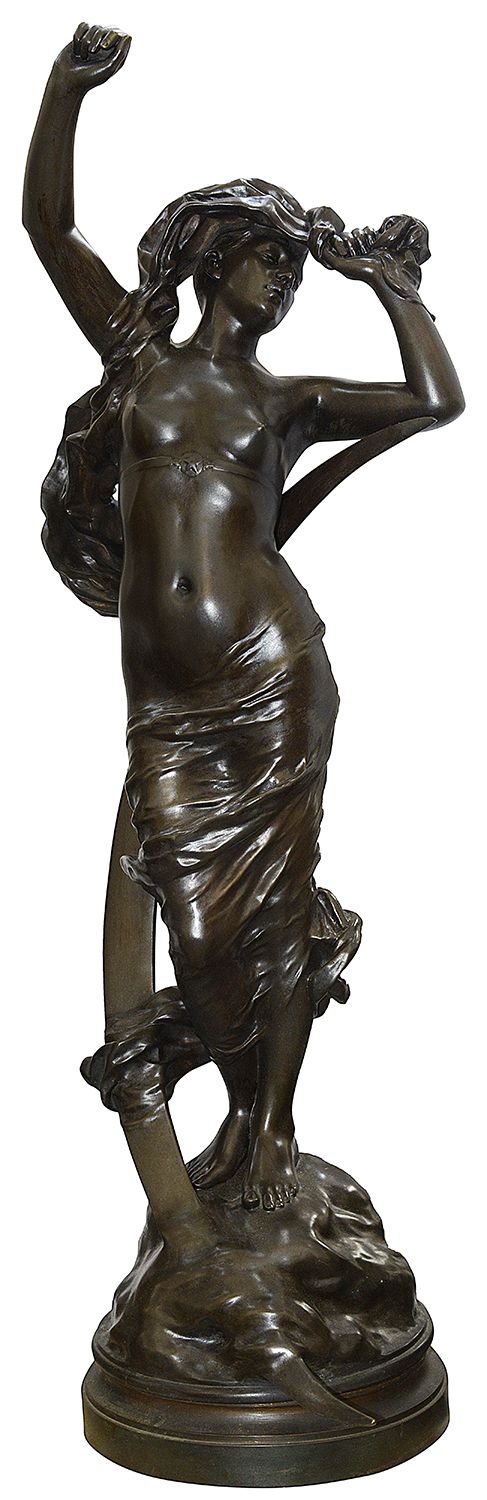
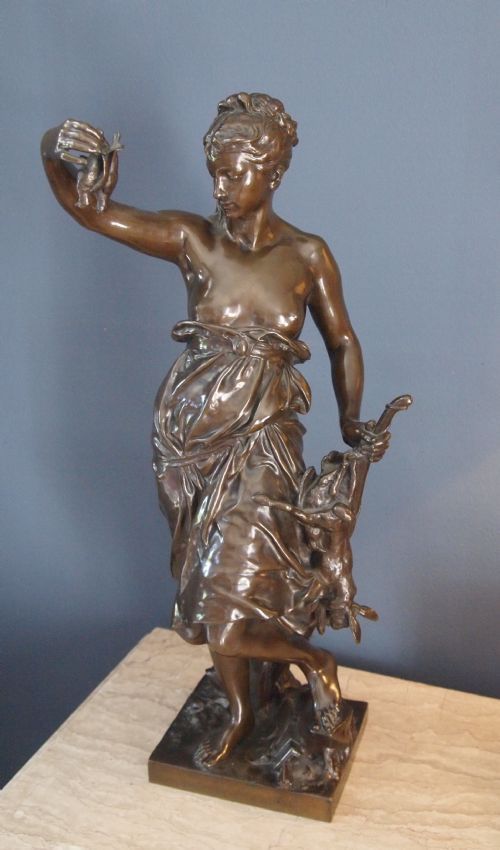
Buyers encounter subjects like David, Diana the Huntress, Aurora and Orientalist snake charmers cast in substantial weight. The modelling reflects rigorous academic standards taught in European academies, prioritising anatomical precision and dramatic narrative poses.
Materials and casting methods
Foundries utilised traditional lost-wax casting and sand-casting methods to produce these sculptures, capturing intricate details in the metalwork. The primary material is bronze, frequently finished with deliberate patination ranging from deep brown tones to warm golden hues.
Sculptures often incorporate secondary materials such as marble for integral bases, providing stability and visual contrast to the metal. Signatures, foundry marks and title plaques are frequently chased directly into the bronze surface after casting.
Aurora drives her chariot across the nineteenth century while a goat carver and a snake charmer watch from the pedestal.
Quality factors in nineteenth-century bronze
The distinction between tiers rests upon the crispness of the chasing work performed after the casting process. Superior examples retain sharp facial expressions, refined drapery folds and clearly defined musculature without smoothing or softening.
Foundry reputation and the presence of artist signatures strongly influence the standing of a piece. Works bearing the marks of documented nineteenth-century sculptors exhibit superior proportion, balanced composition and sophisticated patination compared to unsigned commercial castings.
Julien Lorieux·Justo de Gandarias·Charles Arthur Bourgeois·Antonin Mercié·Houdebine·Adrien Gaudez·Aug Moreau·Henri Plé·J C De Blezer·Louis Ernest Barrias
The Academic Art Bronze Figure Glossary
- Patina
- The surface coloration applied to bronze through chemical treatment or natural ageing. It protects the metal and defines the visual mood of the sculpture.
- Chasing
- The meticulous hand-finishing of a raw bronze casting using chisels and punches. This process restores lost detail and sharpens contours before patination.
- Lost-wax casting
- A historic method of creating metal sculptures from an original wax model. It allows for complex undercuts and extreme fidelity to the sculptor's design.
- Beaux-Arts
- An architectural and sculptural style characterised by formal symmetry, classical proportions and exuberant ornamentation. It dominated French academic art in the late nineteenth century.
Academic Art Bronze Figure: Frequently Asked Questions
How do I identify a nineteenth-century bronze casting?
Examine the underside and surface for casting seams, chisel marks from hand-chasing, and the weight of the metal. Nineteenth-century pieces typically show traditional foundry patination and signature engraving rather than modern manufacturing stamps.
Check for period-appropriate patination and foundry cachets that correspond to documented European workshops active during the Victorian era.
Where should I display a bronze figure?
Position these sculptures on stable furniture away from direct heat sources and strong sunlight, which can alter the chemical patina over time. A sturdy console table or dedicated pedestal allows the multi-angular composition to be viewed clearly.
Ensure the supporting surface can bear the considerable weight of bronze and its marble base.
How do I clean an antique bronze figure?
Dust the surface regularly with a soft, dry lint-free cloth to prevent particulate accumulation. Avoid using water, commercial polishes or chemical cleaners, which strip the historic patina.
Professional conservation is recommended if oxidation or heavy grime requires intervention.
What subjects are typical for academic bronzes?
Popular themes draw from classical mythology, historical narratives, allegorical figures and Orientalist genre scenes. Sculptors frequently depicted figures such as Diana, David and allegories of day and night.
These subjects reflected the rigorous educational curriculum of nineteenth-century European art academies.