



Art Nouveau Bronze Maiden
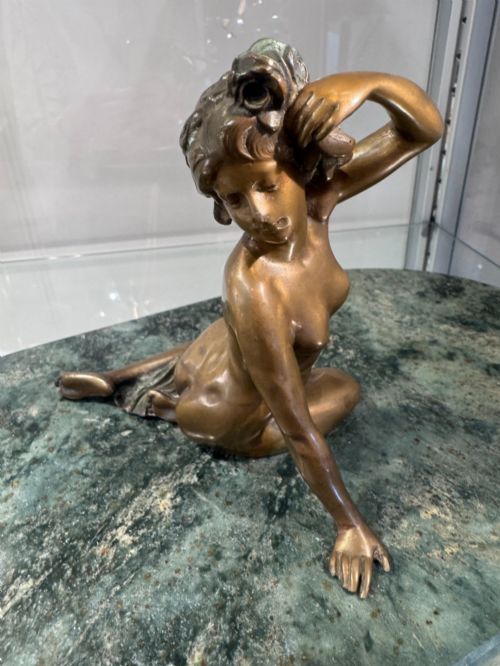
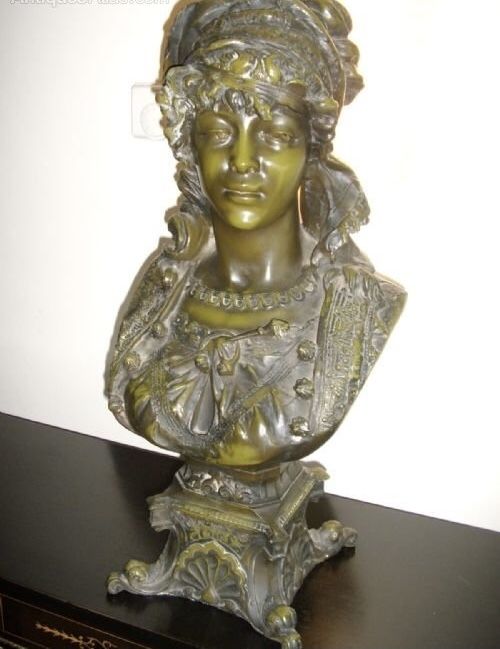
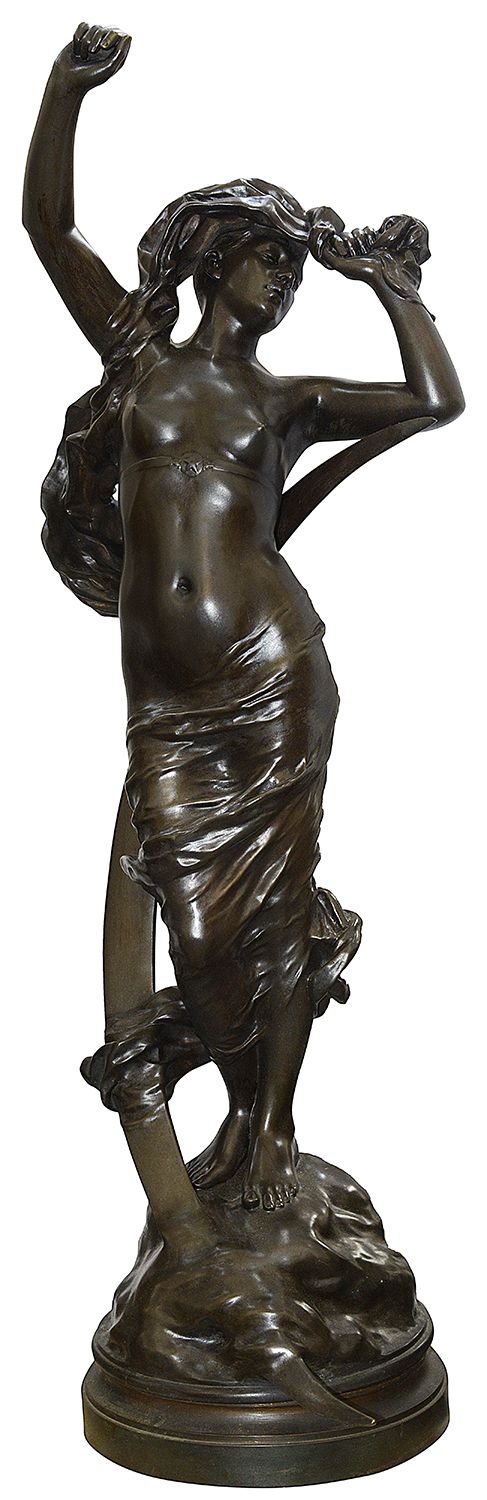
An art nouveau bronze maiden is a sculptural study of the female form set in fluid natural lines, brought home for the dramatic sweep of her hair and drapery.
Art Nouveau Bronze Maiden
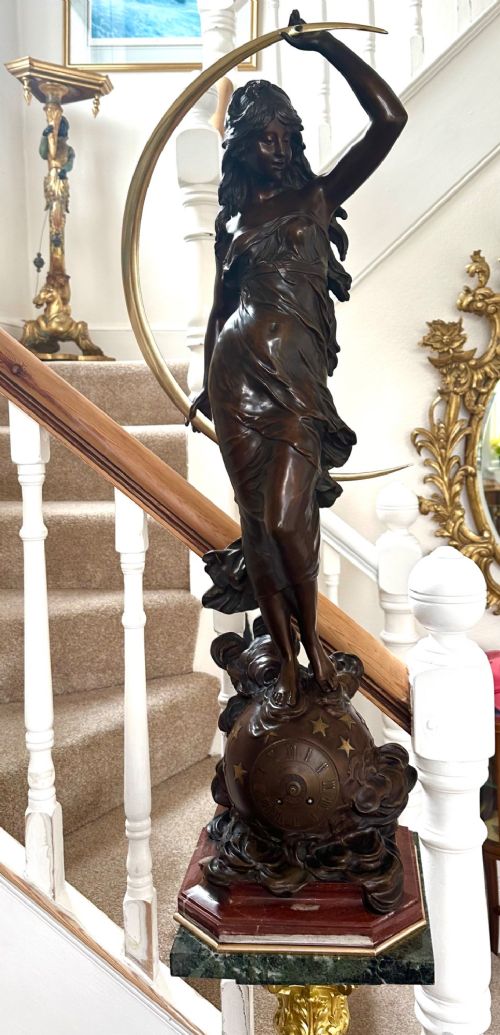
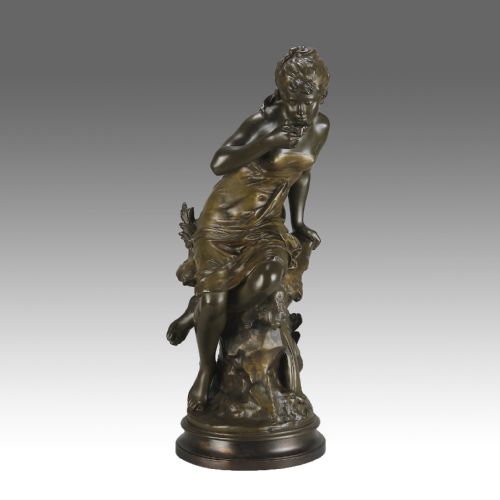
An art nouveau bronze maiden captures the flowing hair, floral motifs and organic drapery typical of the turn of the twentieth century. These pieces emerge predominantly from French workshops operating through the Victorian era and into the nineteen-twenties.
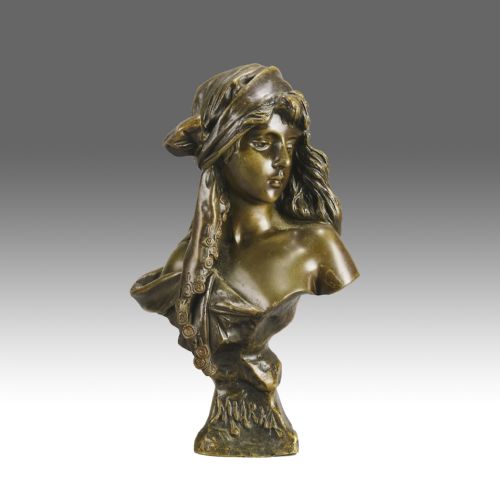
Buyers encounter a variety of physical formats ranging from full-figure seated bronzes and dancing maidens to wall reliefs and table lamps. Busts representing allegorical figures or named characters remain especially common across the selection.
Makers utilised alternative media alongside cast metal, pairing metal figures with marble bases or offering terracotta and spelter alternatives. This variety reflects the broader commercial output of nineteenth-century European sculpture found in the archive.
Distinguishing quality in period figures
The crispness of the chasing and the depth of the patination dictate the visual success of a cast. Finer examples retain delicate facial expressions, sharp fingernails and clear definition in the strands of hair, whereas secondary casts soften these fine details.
The integration of the figure with its mounting reveals the care taken during production. Superior pieces feature custom-fitted marble plinths and secure bronze attachments that align with the sculptural sweep of the drapery.
Listings feature works spanning the late nineteenth century through to the nineteen-twenties, incorporating bronze, terracotta, spelter and marble elements.
Moreau Family·Mathurin Moreau·Emmanuel Villanis·Hans Müller·Charles Korschann·Georges Van Der Straeten·Maurice Bouval·Houdebine·Charlotte Monginot·Henri Honore Ple·Goldscheider
The Art Nouveau Bronze Maiden Glossary
- Patinated bronze
- Metal treated with chemical solutions to produce a specific surface colour and tone. This finish protects the alloy and enhances the modelling of the drapery.
- Spelter
- A zinc alloy commonly utilised as a cost-effective substitute for bronze during the period. It accepts metallic paints and patinas to mimic solid bronze casts.
- Terracotta
- Fired unglazed clay shaped into sculptural reliefs and figures. It provides a warm, matte surface texture favoured by continental potteries.
- Chasing
- The process of hand-finishing a metal cast with chisels and punches to refine the surface details. Skilled chasing separates high-grade foundry work from mass production.
- Allegory
- The representation of abstract ideas such as seasons or virtues through human form. Many maidens depict summer, dawn or classical concepts.
Art Nouveau Bronze Maiden: Frequently Asked Questions
How do I clean an antique bronze maiden?
Dust the surface gently with a soft, dry brush to remove settled particles without disturbing the underlying patina.
Avoid using water, chemical cleaners or abrasive cloths, as these treatments strip the historic finish from the metal.
Are spelter figures worth collecting?
Spelter offers an accessible entry point into period sculpture while displaying the same fluid designs as solid bronze.
These pieces require careful handling due to the softer nature of the zinc alloy compared to traditional bronze.
How can I tell bronze from spelter?
Bronze exhibits greater weight, a resonant sound when tapped lightly, and resists magnetic pull entirely.
Spelter feels lighter, feels cooler to the touch initially, and occasionally reveals a greyish metal beneath worn paint.
Where should I display these sculptures?
Position figures on stable horizontal surfaces away from direct sunlight and sources of damp heat.
Ensure marble bases rest on protective pads to prevent scratching wooden furniture surfaces during placement.