
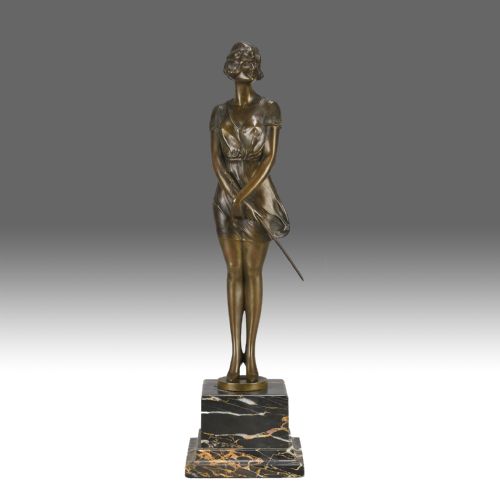
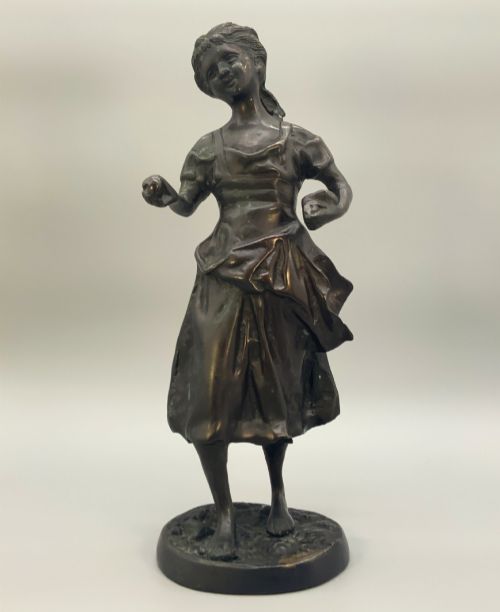
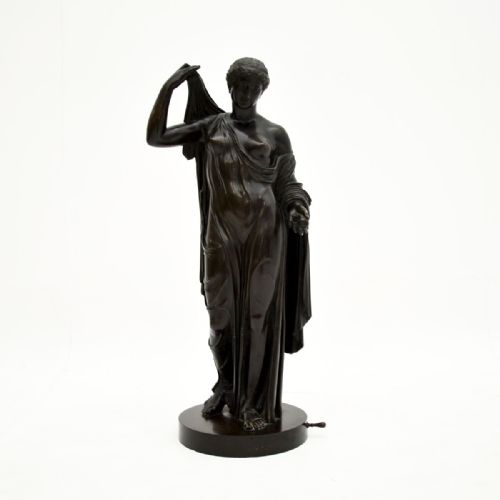
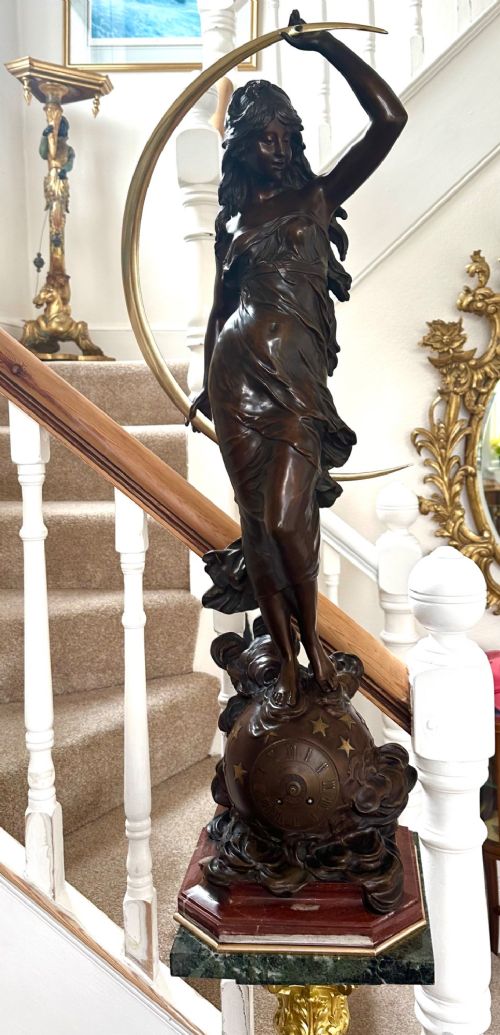
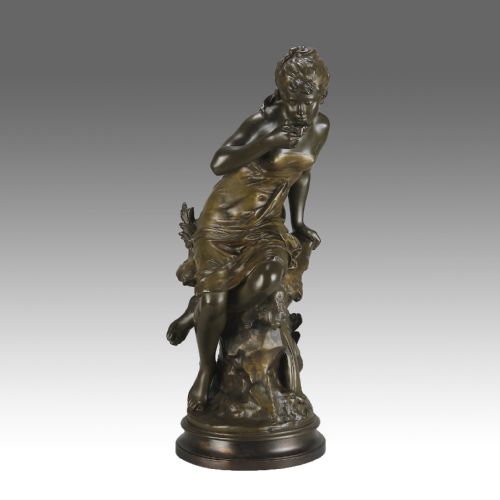
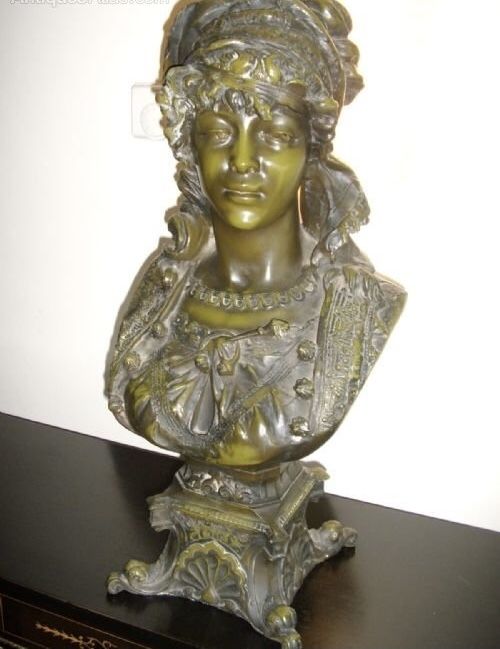
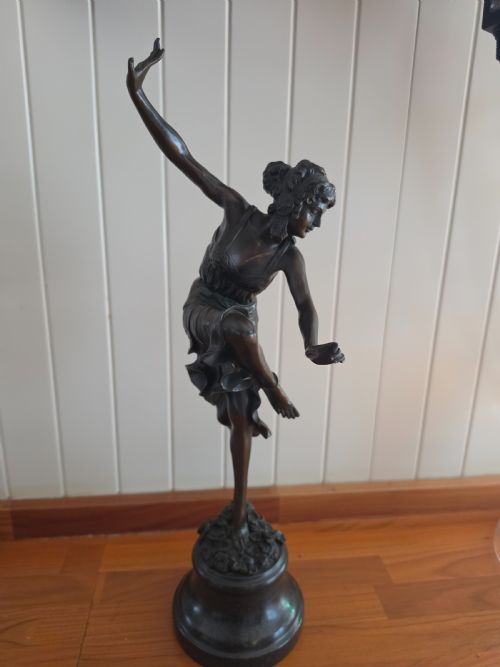


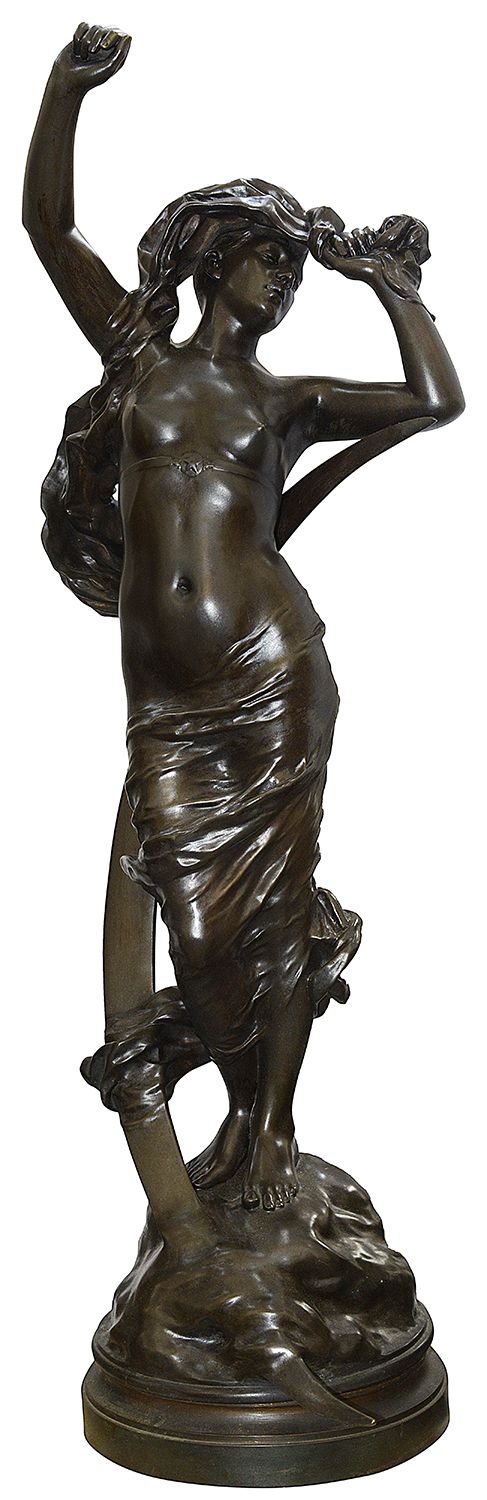
Dark Bronze Maiden Sculpture
These dark bronze maiden sculpture pieces capture classical and naturalistic female forms in patinated metal, offering collectors characterful figures for display.
Dark Bronze Maiden Sculpture
A dark bronze maiden sculpture depicts female figures ranging from classical robed ladies and mythological subjects to Art Nouveau dancers and allegorical maidens. These pieces appear primarily as standalone sculptures and statues, alongside figural vases and table lamps.
The selections span the nineteenth century through the Art Deco era, with French foundries and ateliers providing a large share of the examples. Buyers frequently encounter nineteenth century French interpretations alongside 1920s Art Deco studies.
Forms vary from full-length dancing girls and water carriers to busts and multi-figure groups involving putti or bacchus. The physical stance of the maiden often dictates whether the piece fits a mantelpiece, a tabletop or a dedicated pedestal.
How They Were Made
Foundries utilised bronze and patinated metal to cast these figures, frequently applying chemical treatments to achieve dark brown or verdigris patinas. Gilded bronze and gilt highlights occasionally accent the primary dark surfaces.
Many works incorporate secondary materials such as marble bases to support heavier compositions or wood elements for plinths and lamp structures. Fabric appears primarily in functional elements such as lamp shades associated with figural lighting.
Listings feature works spanning the nineteenth century through the 1930s, executed in bronze, patinated metal and marble.
What Varies in Quality
The sharpness of the metal casting and the precision of the chased surface details separate standard foundry output from masterworks. Finer pieces retain crisp definition in drapery folds, hair strands and facial expressions without softening from worn moulds.
The nuance and depth of the patination contribute significantly to the visual success of the bronze surface. Skilled patination brings out subtle tonal variations across the maiden's form, whereas inferior surfaces appear flat and uniform.
Bruno Zach·Moreau Family·August Moreau·Mathurin Moreau·Henry Wissen Senior·C J R Colinet·Villanis·S Kinsburger·Clodion·Claudius Marioton·Charles Korschann·Maurice Bouval·H Moreau·Houdebine Paris·C Neuhaus·Devaulx·Hans Schork·A Gaudez·Henri Ple·Leon Pilet
The Dark Bronze Maiden Sculpture Glossary
- Patinated Bronze
- Bronze treated with chemicals to produce a specific surface colour, most commonly dark brown, green or black. This finish protects the metal and defines the sculptural contours.
- Neoclassical
- A style drawing inspiration from the classical art and culture of ancient Greece and Rome. Figures from this tradition typically feature restrained poses and classical drapery.
- Art Nouveau
- An international style of art and architecture prevalent around 1900, characterised by intricate linear designs and flowing organic motifs. Maiden sculptures in this style often incorporate whipping hair and floral elements.
- Grand Tour
- The nineteenth-century custom of a traditional trip through Europe undertaken by upper-class young European men of means. Sculptures acquired on these journeys often depicted classical antiquities.
- Lost-Wax Casting
- A metal casting method in which a molten metal is poured into a mould that has been created by means of a wax model. This technique allows for intricate and fine details on complex figural statues.
Dark Bronze Maiden Sculpture: Frequently Asked Questions
What periods do these sculptures date from?
The pieces span from the nineteenth century through the early twentieth century, encompassing Victorian productions as well as later Art Nouveau and Art Deco designs.
French classical and neoclassical revivals form a substantial portion of the timeline, alongside works produced around 1900 and into the 1920s and 1930s.
How were these maiden figures used?
These sculptures served primarily as decorative table pieces, mantel ornaments and architectural enhancements in period interiors.
Some iterations doubled as functional objects, appearing as figural vases for floral displays or incorporated into table lamps with fabric shades.
How do I identify an Art Nouveau sculpture?
Art Nouveau examples typically exhibit flowing, organic lines, asymmetrical compositions and motifs inspired by nature such as long swirling hair and floral drapery.
These pieces frequently date from around the turn of the twentieth century and reflect a distinct departure from rigid classical symmetry.
What is patinated bronze?
Patinated bronze refers to metal that has undergone a chemical treatment to alter its surface colour, creating deep brown, black or greenish tones.
This process protects the underlying bronze while accentuating the contours and textures of the maiden's form.