


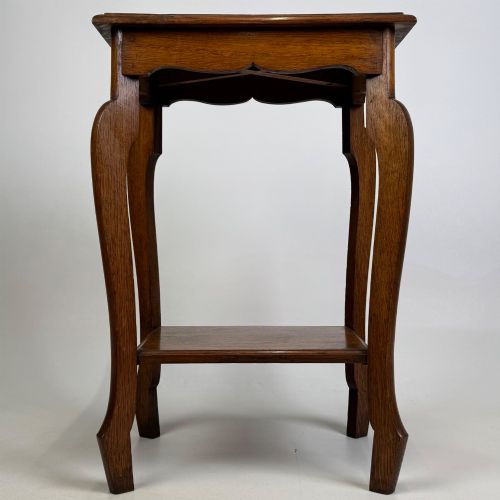
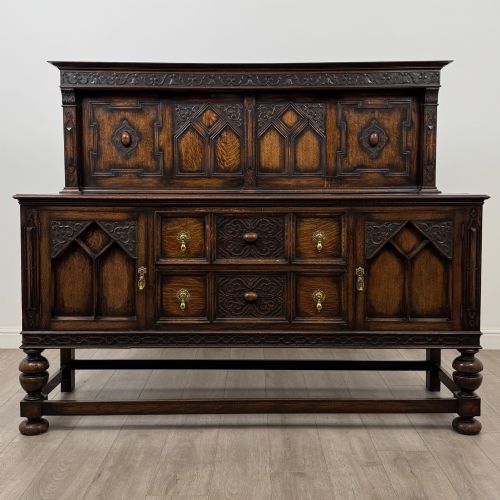
20th Century Oak Furniture
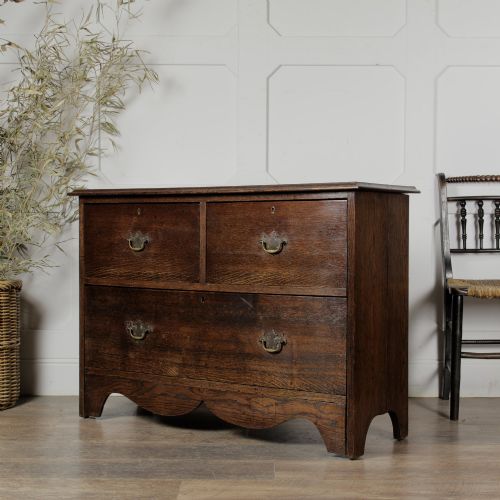
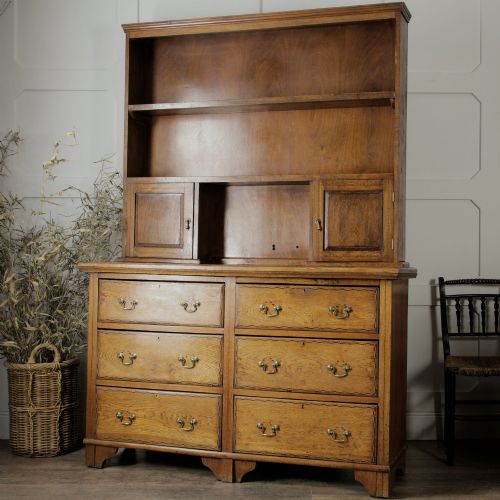
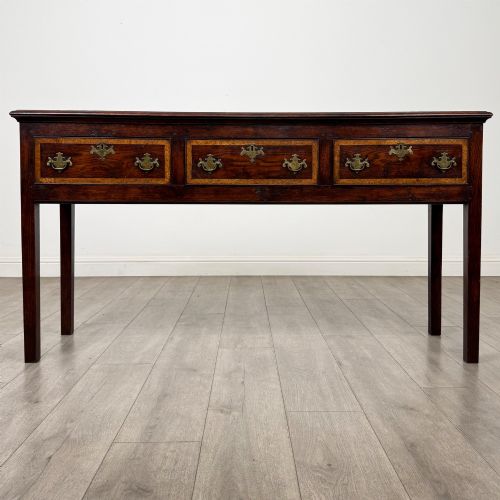
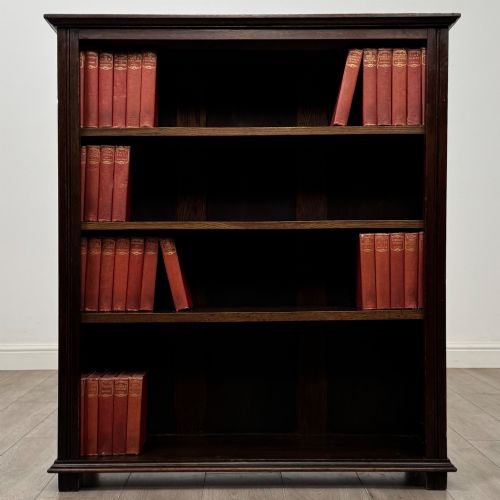
These pieces of 20th century oak furniture bring honest grain and sturdy utility into a modern room, offering robust storage built to last.
What 20th century oak furniture is
This search phrase covers practical storage and display items shaped by Edwardian tastes and later twentieth-century styles. The selection leans heavily towards Edwardian pieces alongside occasional items from 1910 and 1930.
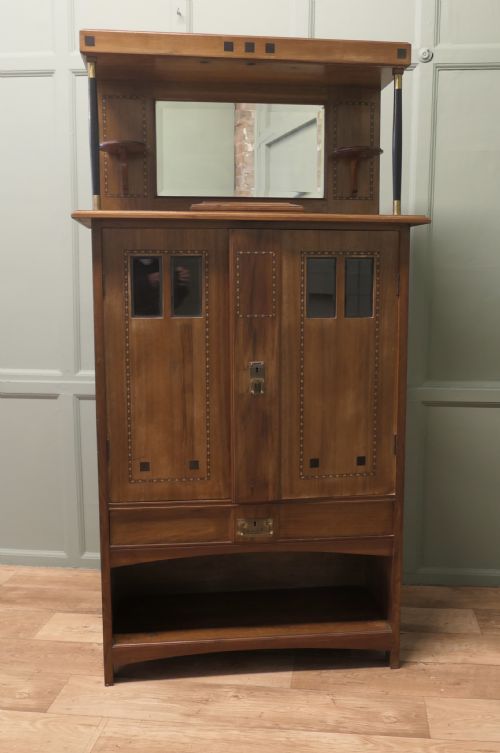
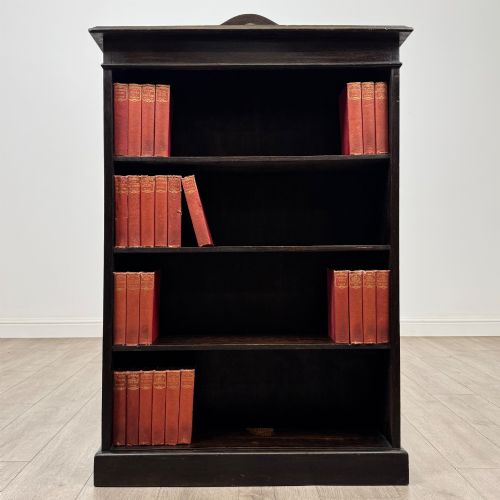
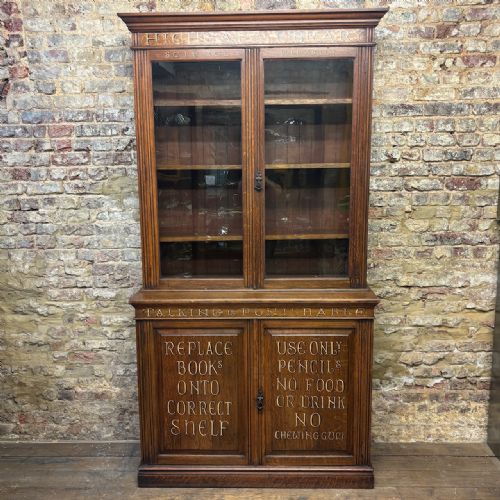
Buyers encounter forms such as kitchen dressers, sideboards and credenzas, display cabinets, corner cabinets and general cupboards. These utilitarian yet decorative items served dining rooms, hallways and kitchens across Britain.
The aesthetic travels through English Country, Gothic Revival, Tudor Revival and Mid-Century Modern interpretations. Solid oak remains the constant structural choice across these diverse design movements.
Materials and construction
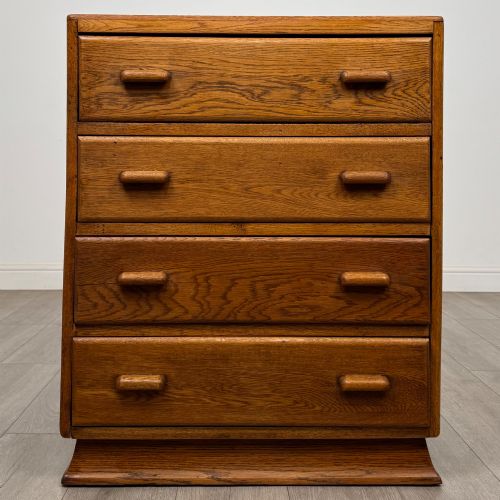
Makers utilised solid oak, often described in honey or golden tones, as the primary structural material. Secondary elements incorporated brass for hardware, glass for display doors, lead, fabric and iron.
Retail Price Guide 2026
Typical UK retail prices for 20th century oak furniture, calculated from the Sellingantiques database of over a million retail prices indexed since 2003. This retail price guide relies exclusively on Sellingantiques data; no external sources or auction records are used, so the figures do not describe the wider market.
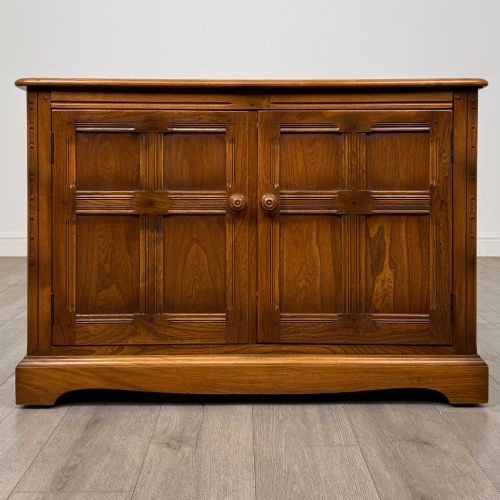
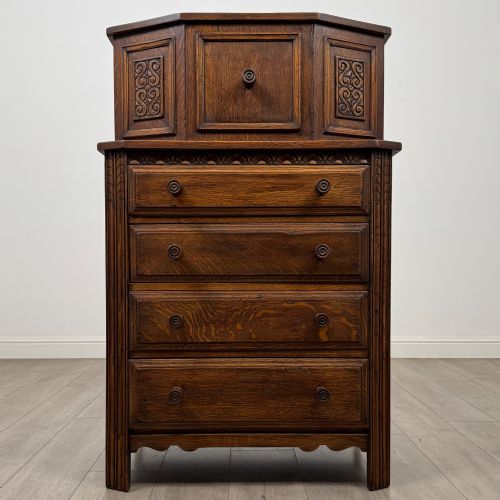
Linenfold panels on these cupboards quietly trick the eye into seeing folded cloth carved out of solid tree trunks.
Distinguishing quality
The tier of quality rests on the selection of solid timber versus lesser veneers, alongside the crispness of decorative details like linenfold panels. Substantial construction and well-fitted brass hardware distinguish superior examples from simpler utilitarian pieces.
Proportion and the integrity of original glazing in display cabinets set finer pieces apart. Well-preserved golden or honey oak surfaces reflect careful finishing by period workshops.
The 20th Century Oak Furniture Glossary
- Linenfold
- A style of wood carving resembling folded linen or parchment, frequently used on Tudor Revival cupboard doors. It provides a tactile, textured surface to flat wooden panels.
- Dresser
- A kitchen or dining room piece combining lower cupboards or drawers with upper shelving for display. These items formed the backbone of twentieth-century domestic storage.
- Credenza
- A sideboard or buffet cabinet designed for dining rooms to store serving dishes and cutlery. The form bridges decorative display and practical storage.
- Gothic Revival
- An architectural and decorative style drawing inspiration from medieval forms, featuring pointed arches and heavy timber. This aesthetic occasionally surfaces in early twentieth-century cupboards.
- Edwardian
- The period spanning the reign of King Edward VII, characterised by lighter proportions and revivals of earlier English styles. Furniture from this era often retains traditional craftsmanship.
Frequently Asked Questions
What rooms suit 20th century oak furniture?
These robust pieces fit naturally into dining rooms, kitchens and hallways where sturdy storage is required. Their honest timber grain warms both traditional and contemporary interiors.
Larger items like dressers anchor a kitchen wall, while corner cupboards utilise neglected space effectively.
How do I identify Edwardian oak?
Edwardian oak pieces often feature lighter honey or golden tones compared to heavy Victorian furniture. Look for transitional styles that blend traditional craftsmanship with slightly cleaner Edwardian lines.
Original brass hardware and linenfold carving details help confirm the period origins.
Are these cabinets solid oak?
The listings here feature solid oak construction combined with functional secondary materials like glass, brass, lead and iron. Timber selection prioritised durability for everyday domestic use.
Solid honey and golden oak surfaces take on a rich patina over decades of care.
How do I care for antique oak?
Maintain the timber by keeping pieces away from direct heat sources and sudden humidity changes. Regular dusting with a soft, dry cloth preserves the natural finish without building up heavy wax residues.
Feeding the grain occasionally with a suitable beeswax polish maintains the warm golden or honey tone.