

19th Century Wooden Casket
A 19th century wooden casket brings tactile warmth and period craftsmanship to a desk, holding letters, jewellery or keepsakes with enduring utility.
19th Century Wooden Casket
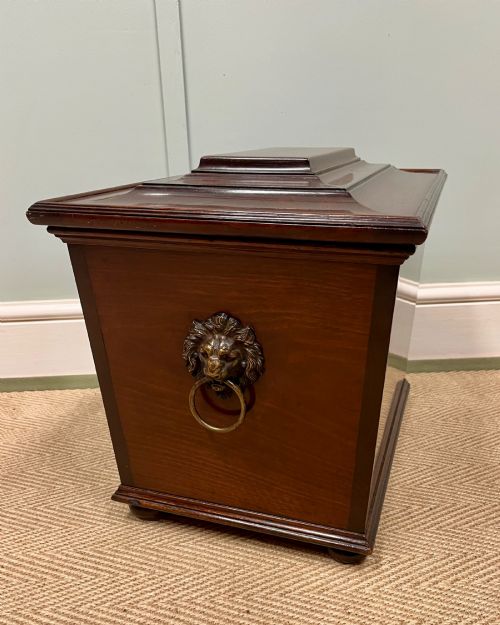
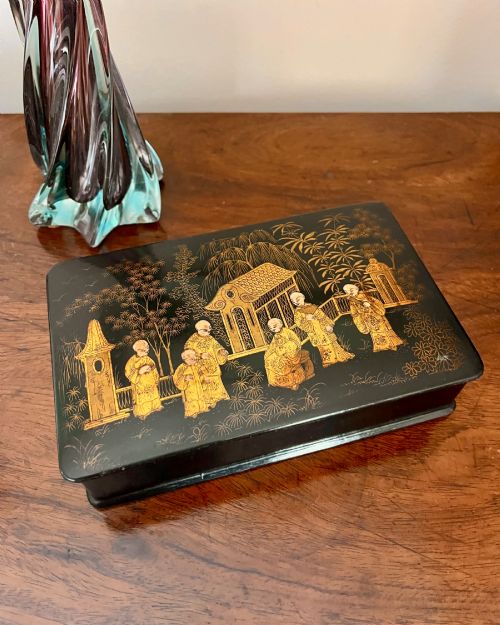
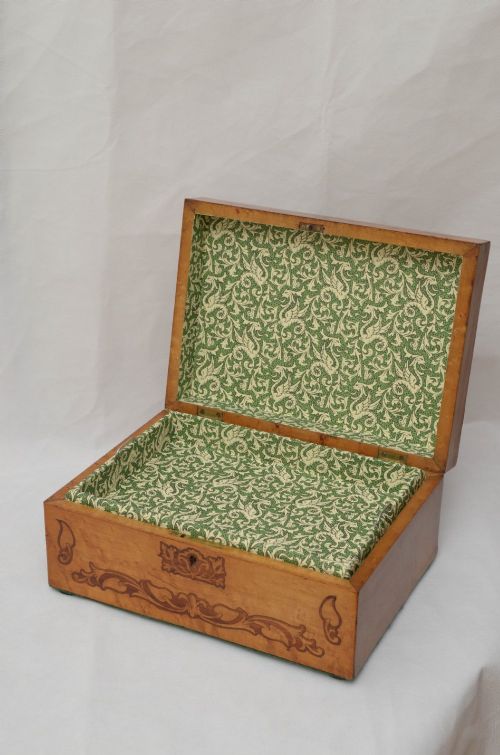
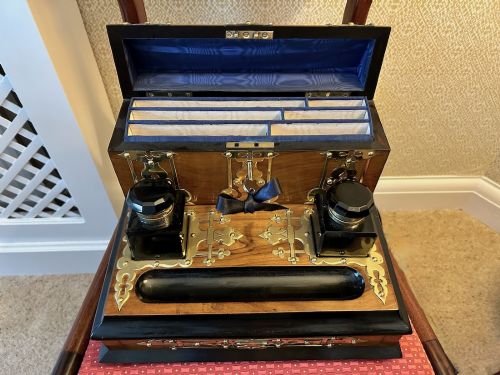
A 19th century wooden casket encompasses domestic containers fashioned to house valuables, tea, documents or sewing implements during the Georgian, Regency and Victorian eras. These boxes frequently emerge in domestic forms such as jewellery boxes, tea caddies, stationery boxes and sewing boxes.
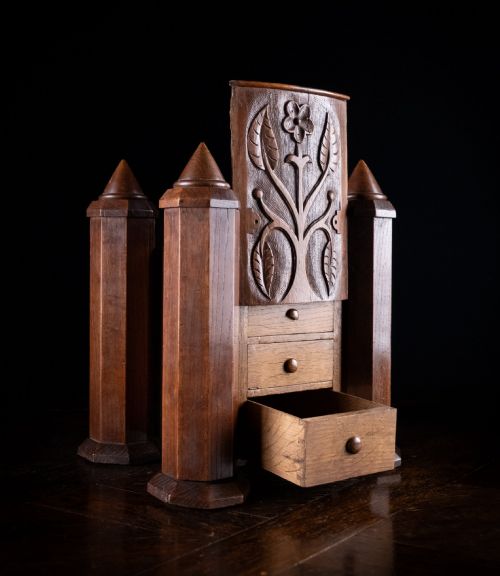
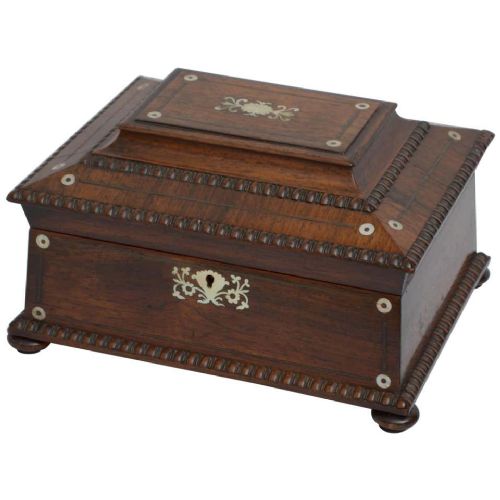
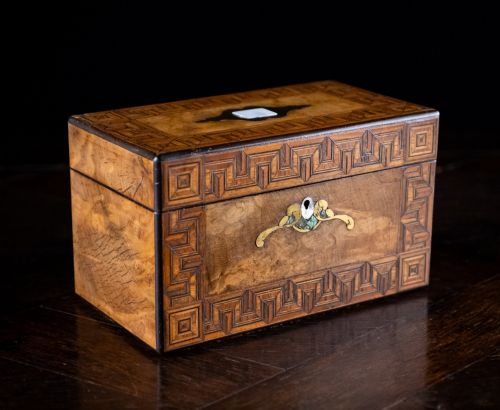
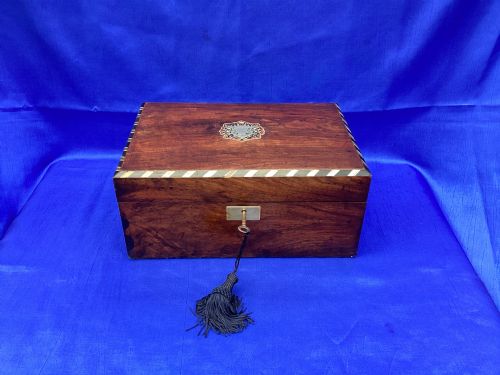
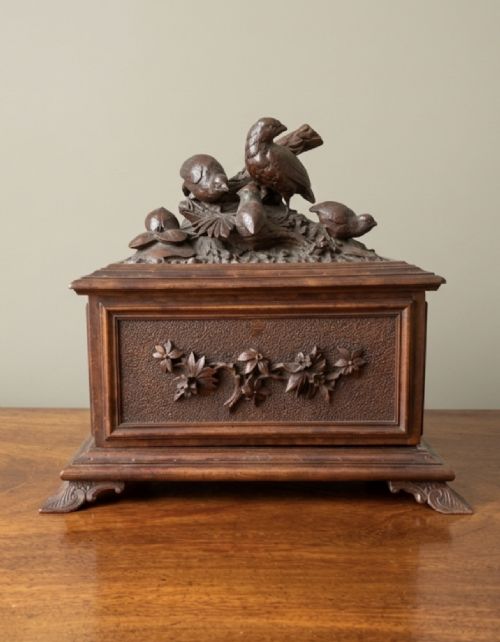
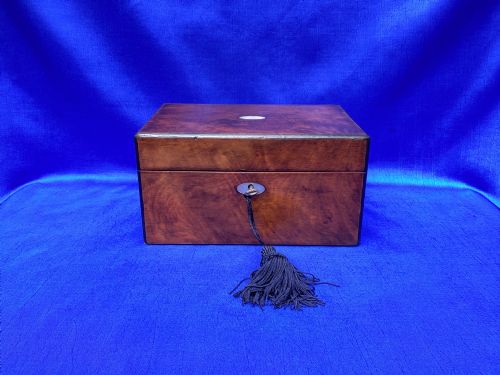
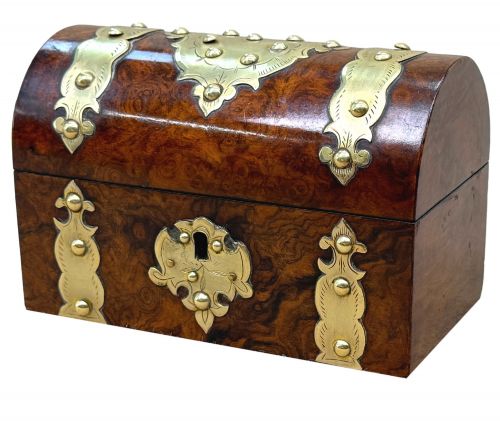
The versions most commonly met on this page span rosewood, walnut and mahogany timbers, often enhanced by brass mounts or mother-of-pearl inlay. They reflect the varied design movements of the nineteenth century, ranging from restrained Regency brass-bound document boxes to ornate Victorian Tunbridge Ware and carved Black Forest pieces.
Makers utilised dense exotic woods alongside native timbers, shaping boxes designed to sit securely on library desks, dressing tables and drawing room sideboards. Each piece served a distinct domestic function, organising personal correspondence, loose tea leaves or precious ornaments.
How They Were Made
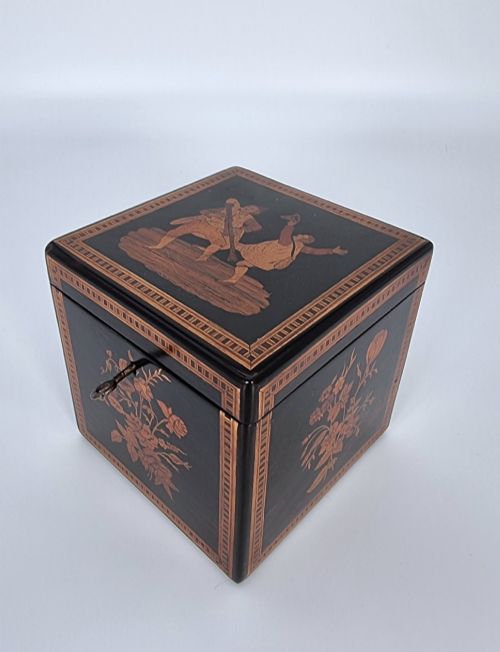
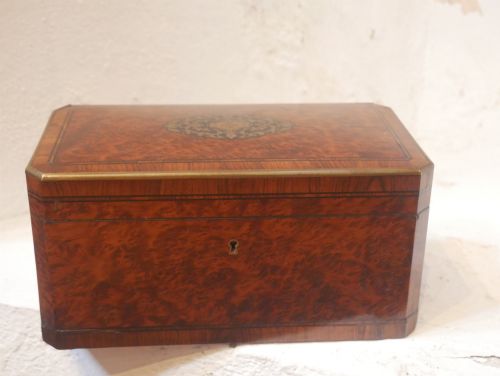
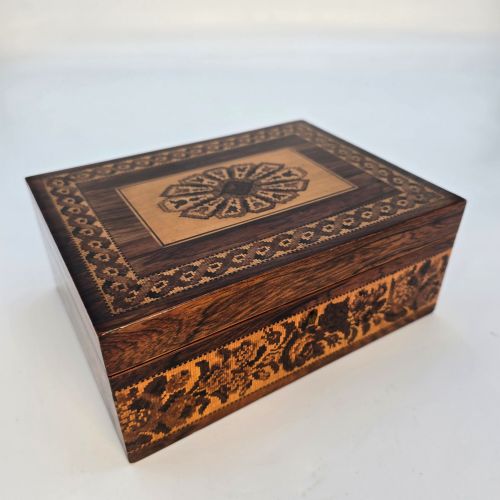
Cabinet makers constructed these caskets using solid timbers and decorative veneers such as burr walnut, amboyna, coromandel and bird's eye maple over sturdy foundation woods. Surfaces frequently display meticulous parquetry, marquetry or pictorial wood mosaic work, particularly in Tunbridge Ware examples.
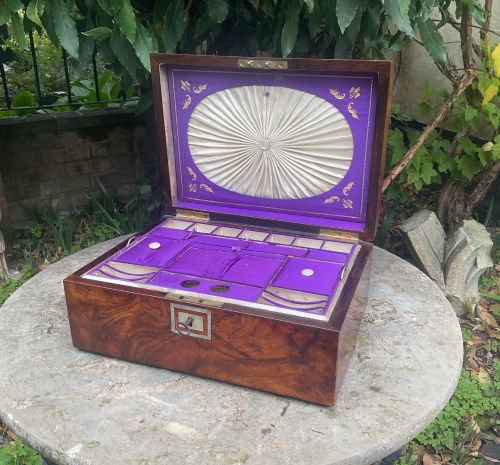
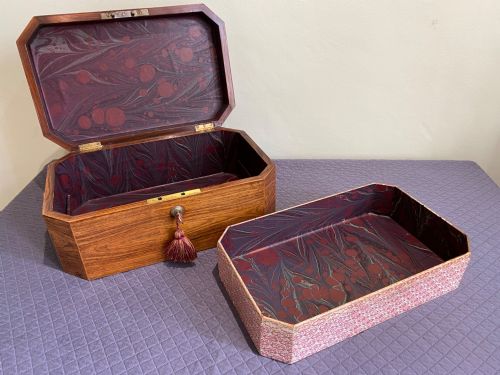
Metalwork played a structural and decorative role, with brass banding, campaign-style corner brackets, escutcheons and inlaid mother-of-pearl or cut steel accents fitted flush into the timber. Interiors typically reveal silk or leather linings, fitted compartments for bottles or writing equipment, and occasionally concealed secret drawers.
19th Century Wooden Casket Retail Price Guide 2026
Typical asking prices for 19th century wooden casket among the pieces listed under this phrase on Sellingantiques today, from the lower quarter to the upper quarter. They describe what is for sale here now, not the wider market.
Current listings demonstrate a strong presence of Victorian and Regency pieces, with rosewood, walnut and mother-of-pearl recurring across jewellery boxes and tea caddies.
What Varies In Quality
Quality rests upon the selection of timber veneers, the precision of the marquetry or parquetry, and the integration of brass mounts and locking mechanisms. Finer examples display harmonious grain matching across all sides and lid surfaces, alongside intricate interior fittings complete with original mirrors or glass scent bottles.
The execution of decorative elements distinguishes standard production boxes from exceptional commissions. Hand-carved details, such as those found on Black Forest humidors or Italian pietra dura mounts, demonstrate superior artisan skill compared to simpler turned or plain timber constructions.
Tahan Paris·Edmund Nye
The 19th Century Wooden Casket Glossary
- Tunbridge Ware
- A type of British woodwork originating from Tunbridge Wells, characterised by small mosaic tiles assembled from different coloured woods to form geometric or pictorial motifs. It appeared frequently on Victorian trinket and sewing boxes.
- Pietra Dura
- An inlay technique using cut and fitted polished coloured stones to create pictorial designs on a wooden base. It appears on select 19th century Italian boxes.
- Cellarette
- A lockable container originally designed to store bottles of wine or spirits within a dining room. Georgian and Victorian iterations often featured robust timber construction and secure metal locks.
- Parquetry
- A geometric mosaic of wood pieces used for decorative surfacing on floors and box lids. It creates patterned visual depth across the exterior of tea caddies and work boxes.
- Escutcheon
- A flat protective brass plate surrounding a keyhole on a box lid or front panel. It strengthens the wood surrounding the lock while adding a decorative metallic accent.
19th Century Wooden Casket: Frequently Asked Questions
What were 19th century wooden caskets used for?
These caskets served practical domestic purposes for storing high-value or private items such as letters, jewellery, sewing tools and tea.
Owners kept them in reception rooms or private chambers, where their decorated exteriors complemented the surrounding interior furnishings while keeping contents secure.
How do I tell a Regency box from a Victorian one?
Regency boxes often favour clean architectural lines, rosewood or mahogany timbers, and functional brass binding reminiscent of campaign furniture.
Victorian pieces frequently display heavier ornamentation, including burr walnut veneers, elaborate mother-of-pearl inlay, or specialised internal trays designed for dressing accessories.
How should I care for an antique wooden box?
Keep wooden caskets away from direct sunlight and sudden humidity changes to prevent the timber veneers and internal silk linings from drying out or cracking.
Apply a microcrystalline wax sparingly to nourish the polished wood surface without building up excessive residue over the grain or brass mounts.
Are the locks and keys usually original?
Many surviving boxes retain their original working brass lever locks, though replacement keys are common due to centuries of domestic use.
Specialist antique locksmiths can often supply or adjust keys to fit the original mechanism safely if a box is missing its working key.