


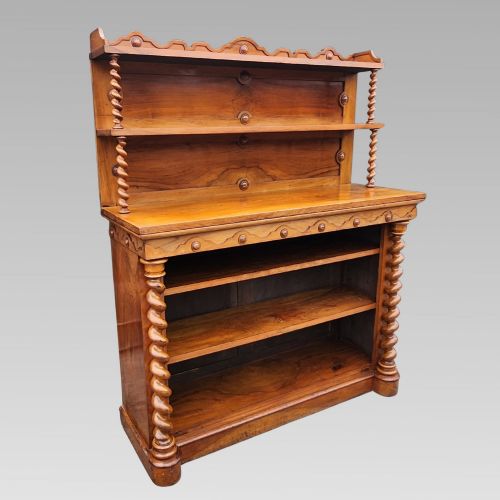


19th Century Walnut Buffet
These pieces of a 19th century walnut buffet provide both practical dining room storage and a distinguished display surface for domestic interiors.
19th Century Walnut Buffet
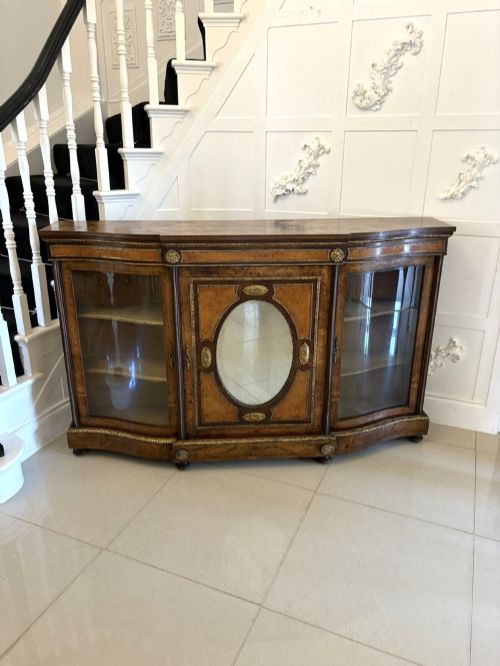
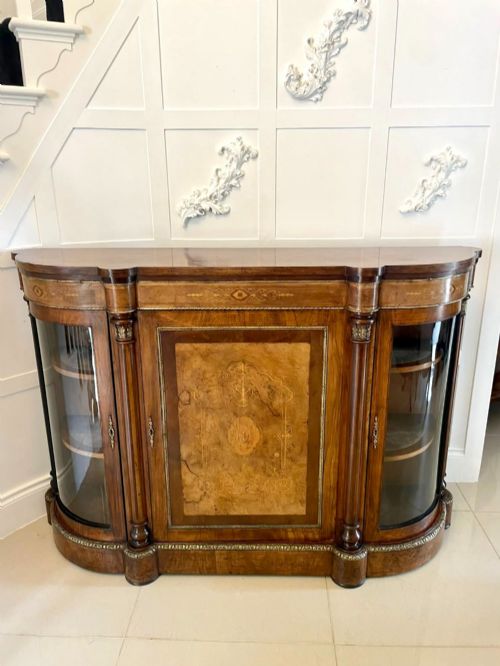
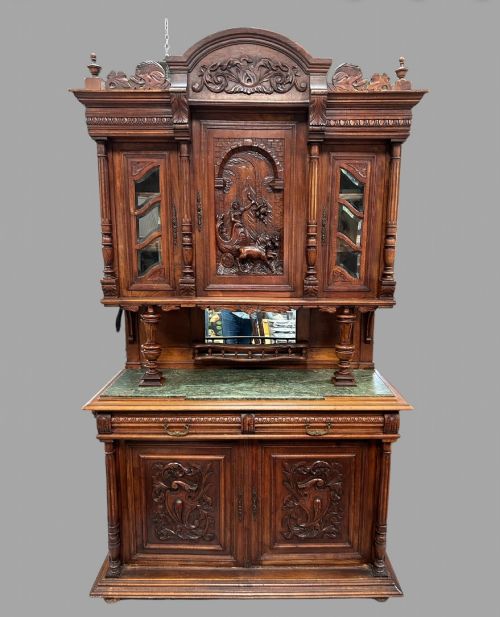
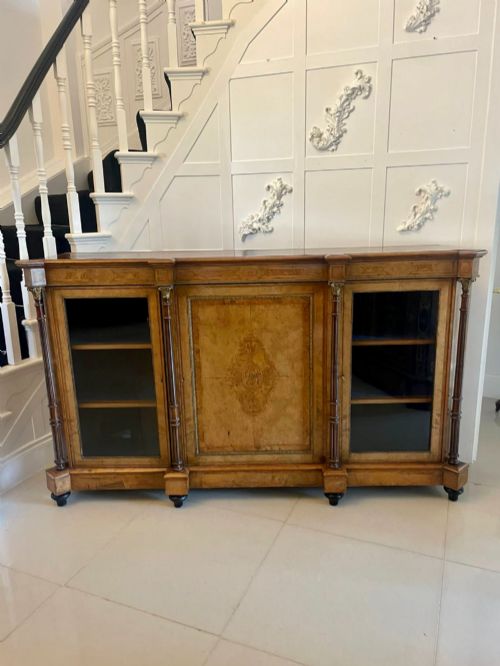
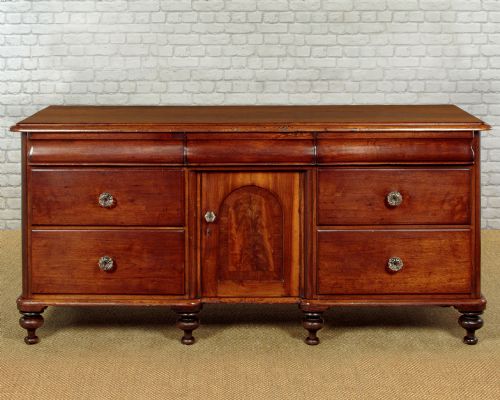
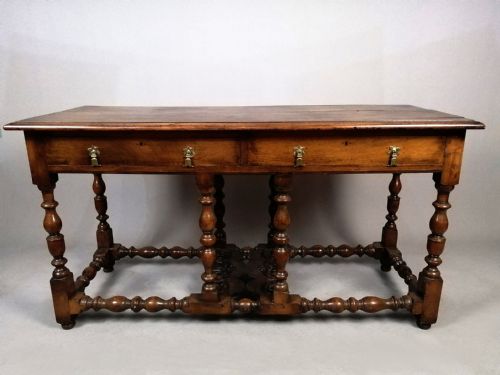
A 19th century walnut buffet encompasses a variety of substantial storage furniture designed for dining rooms and drawing rooms, including credenzas, sideboards, and dressers. The pieces recorded here span English Victorian workshop production and French provincial cabinet-making.
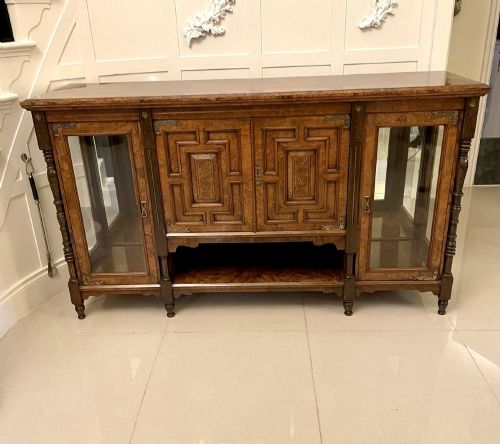
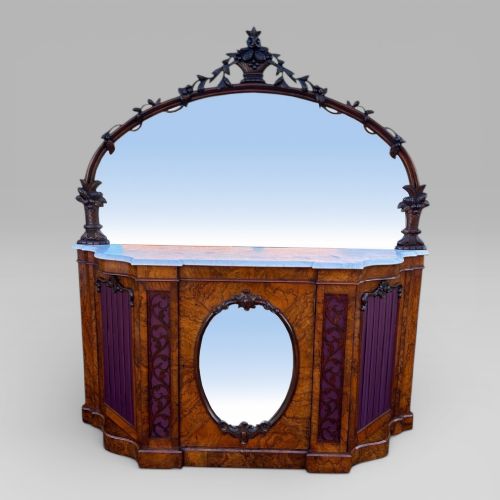
Credenzas and mirrored sideboard combinations dominate the selection, often featuring enclosed cabinet space flanked by curving or straight display sections. Buyers will also encounter two-part dressers and open buffet forms originating from French and English traditions.
The objects serve multiple interior functions, functioning as serving surfaces, display cabinets for porcelain and glass, and primary storage for dining linen and silver. Their architectural presence anchors a room, drawing the eye to rich timber grains and decorative mounts.
What Varies in Quality
Excellence in a 19th century walnut buffet rests on the selection of the timber veneer and the precision of its application across the carcase. Matched burr walnut figures and tightly executed marquetry distinguish superior pieces from standard workshop output.
The integration of secondary materials dictates the tier of the piece. Fine examples incorporate heavy fire-gilt ormolu mounts, heavy Carrara marble tops, and hand-carved relief work rather than cast resin or machine-stamped decoration.
Materials span solid walnut, figured burr walnut veneer, inset marble, ormolu mounts, and Sevres porcelain plaques.
Gillow·Gabriel Viardot
The 19th Century Walnut Buffet Glossary
- Burr walnut
- A highly figured timber harvested from walnut tree growths, prized for its swirling knot patterns and rich colour. It is sliced into fine veneers for cabinet doors and panels.
- Credenza
- A low dining room or drawing room cabinet, typically featuring a central cupboard flanked by curved glass doors. Victorian iterations often stand on plinth bases with extensive ormolu mounts.
- Ormolu
- Gilded bronze mounts applied to furniture edges and panels for decorative effect. The technique involves mercury amalgamation, creating a durable golden finish.
- Marquetry
- The art of forming decorative patterns using thin veneers of different coloured woods and organic materials. Craftsmen assemble these pieces like puzzles before gluing them to the carcase.
- Serpentine
- A furniture front or top shaped with a convex centre flanked by concave curves. This profile requires advanced carpentry skills to execute cleanly in solid timber.
19th Century Walnut Buffet: Frequently Asked Questions
What is a credenza?
A credenza is a low-profile cabinet designed for storage and display, commonly featuring a central door and glazed side compartments.
These pieces sit low to the ground and frequently include marble tops or ormolu mounts.
How do I identify burr walnut?
Burr walnut exhibits distinctive swirling knot formations and circular patterns across the timber surface.
Cabinet-makers slice this prized wood into thin veneers to cover large panels.
Where were these buffets made?
The pieces originate from English Victorian workshops and French provincial centres of furniture production.
Regional styles range from ornate revival designs to restrained country dressers.
How do I clean marble tops?
Marble surfaces require gentle wiping with a damp cloth and mild, non-acidic soap.
Avoid abrasive cleaners or harsh chemicals that etch the polished stone.