
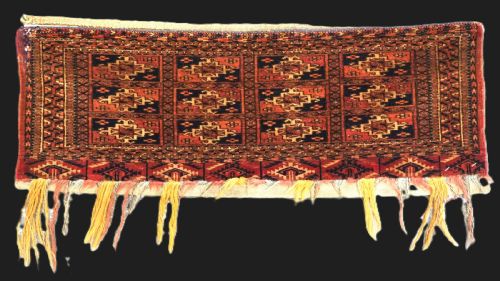


19th Century Turkmen
When searching for 19th century turkmen, collectors encounter tribal wool rugs, torba bag faces and ceremonial coats woven across Central Asia.
19th Century Turkmen
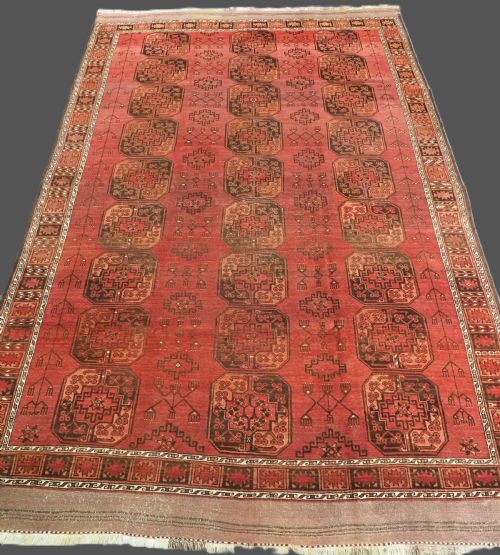
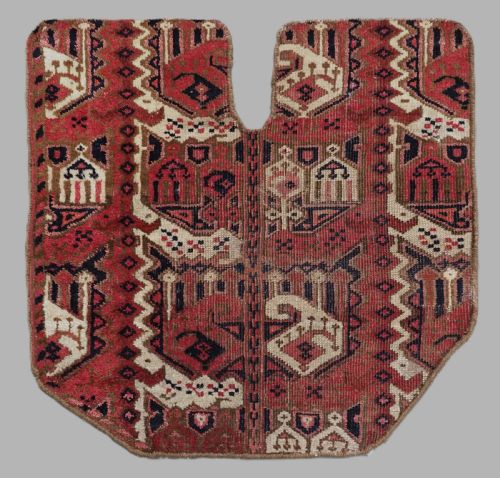
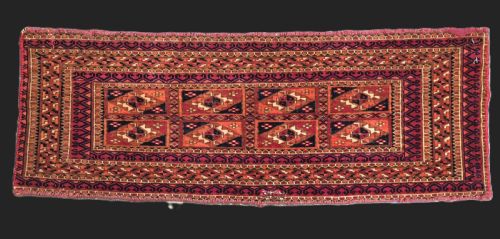
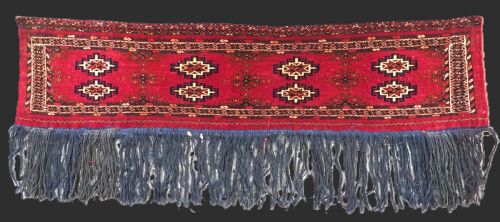
The objects gathered under 19th century turkmen comprise tribal textiles, rugs, area rugs and ceremonial garments originating from nomadic and semi-nomadic groups in Central Asia. These pieces include large main carpets, smaller torba and chuval bag faces, saddle rugs, tent pole bags and embroidered coats.
Tribal weaving groups such as the Tekke, Ersari, Yomut, Saryk and Chodor produced these textiles for domestic use, dowries and ceremonial occasions during the 1850s, 1860s, 1870s, 1880s, 1890s and into the early 1900s. The commonest survivors on this page are torba faces and chuvals displaying traditional tribal guls and geometric motifs.
Many items served specific domestic functions within the nomad tent, operating as storage bags, tent bands or door rugs known as ensis. Ceremonial coats worked in silk embroidery also appear alongside utilitarian horse covers and utilitarian saddle bags.
Materials and Techniques
Weavers relied principally on wool, hand-spun wool and cotton, sometimes supported by goat hair or horsehair foundations in heavier carpets. Silk appears frequently in embroidered ceremonial coats and occasionally in finer weaving details.
Natural dyes provided the rich palette characteristic of these tribal textiles, applied to hand-spun materials woven into fine knots or worked in silk embroidery. Structural elements often incorporate hanging loops or complete original backs made of plain weave or sturdy animal hair.
Materials documented in the inventory include hand-spun wool, cotton, silk, goat hair and horsehair paired with natural dyes.
What Varies in Quality
Quality rests upon the fineness of the weave, the clarity of the drawing and the saturation of the natural dyes used across the field. Pieces with exceptionally tight knotting and precise geometric layout distinguish themselves from standard utilitarian weaving.
The preservation of original structural components, such as intact backs, hanging loops or complete borders, elevates an example. Depth of colour and crispness in repeating gul motifs further separate masterworks from ordinary workshop production.
The 19th Century Turkmen Glossary
- Gul
- A repeating medallion or principal design motif characteristic of Central Asian tribal carpets and bag faces. Different tribes utilised distinct gul forms to signal identity and heritage.
- Torba
- A small storage bag produced by nomadic weavers, usually wider than it is tall, used inside the tent for domestic possessions. Surviving examples are frequently collected as flat bag faces.
- Chuval
- A large tent storage bag used for bedding and household goods, traditionally woven by nomadic women as part of a bride's dowry. They often feature multiple rows of guls.
- Ensi
- A tribal door rug hung at the entrance of a nomad tent, distinguished by a layout featuring a candelabra or cross design dividing the field into panels.
- Chyrpy
- A ladies ceremonial coat heavily embroidered in silk, featuring distinctive vestigial sleeves and worn by Turkmen women during formal village occasions.
19th Century Turkmen: Frequently Asked Questions
What is a torba used for?
A torba served as a practical storage bag inside the traditional nomadic tent, holding household goods or personal belongings. They were frequently woven as part of a bride's dowry.
Over time, many surviving torbas have lost their plain wool backs, leaving only the decorative face to be mounted or displayed as a textile fragment.
How do I tell different tribal designs apart?
Different tribal groups such as the Tekke, Yomut and Ersari utilised distinct primary motifs known as guls, alongside characteristic border patterns and colour palettes. Examining the geometry and arrangement of these guls provides the primary key to tribal attribution.
Structural details like wool preparation and side-cord construction also assist in separating one regional weaving tradition from another.
What is an ensi rug?
An ensi is a specialised tribal rug designed to hang across the wooden lattice doorway of a nomadic yurt or tent. They typically display a characteristic four-part panel design separated by a central candelabra motif.
These rugs welcomed visitors and protected the interior from drafts while displaying the weaver's technical skill and tribal affiliations.
Are these textiles made with natural dyes?
The listings demonstrate a reliance on natural dyes derived from plants and minerals, which produced the deep madder reds, oranges and browns seen in nineteenth-century examples. These colorants aged gracefully over decades, developing subtle tonal shifts across the wool pile.
Hand-spun wool took up these natural dyes unevenly in places, creating the abrash effect prized by collectors of tribal weaving.