


19th Century Transferware Bowl
A 19th century transferware bowl brings printed depth to a table, offering rich cobalt scenes fixed beneath a glossy ceramic surface.
19th Century Transferware Bowl
A 19th century transferware bowl encompasses glazed ceramic vessels decorated with printed motifs transferred from engraved copper plates. These pieces emerge in forms ranging from sugar bowls and tea bowls to large footed bowls spanning Georgian, Regency, and Victorian periods.
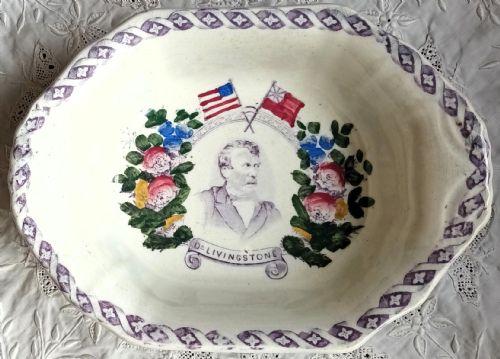
Buyers most frequently meet blue and white transfer printed wares alongside flow blue and mulberry variants. The listings show forms including footed pottery bowls, commemorative dishes, chestnut baskets, and covered sugar bowls originating from English and Scottish makers.
How they were made
Potters shaped earthenware and ceramic bodies before applying metallic oxide glazes, predominantly utilising cobalt oxide to achieve deep blue tones. The printed design transferred from a paper pull onto the biscuit fired clay prior to glazing and final kiln firing.
The technique allowed intricate patterns such as river scenes and architectural motifs to repeat with precision across functional tableware and decorative vessels.
The listings span the 19th century, incorporating Georgian, Regency, and Victorian styles executed in earthenware and glazed ceramic.
What varies in quality
Quality rests upon the crispness of the transfer print and the clarity of the underlying glaze. Subtle alignment during the application of the paper pull separates sharper impressions from blurred or smudged patterns.
The refinement of the ceramic body and the depth of the metallic oxide pigmentation distinguish standard utility wares from pieces carrying named maker attributions or complex moulded details such as lion mask handles.
Minton·Ridgway·Sewell·J. and R. Clews·Copeland and Garrett
The 19th Century Transferware Bowl Glossary
- Transferware
- Earthenware decorated by printing a design from an engraved copper plate onto tissue paper and transferring it to the ceramic body before glazing. This method enabled mass production of detailed pictorial scenes.
- Flow Blue
- A style of cobalt transferware where the blue colour intentionally bleeds into the surrounding white glaze during firing. This creates a hazy, atmospheric effect popular in mid Victorian ceramics.
- Biscuit
- Unglazed ceramic fired once in the kiln to prepare it for absorbing colour and glaze. Transfer papers are typically applied directly to this absorbent surface.
- Metallic Oxide
- Mineral compound used to colour ceramic glazes and prints, with cobalt oxide producing the characteristic blues. Other oxides created mulberry and brown tones.
19th Century Transferware Bowl: Frequently Asked Questions
How do I date a transferware bowl?
Dating relies on stylistic markers, potting weight, and recorded potters' marks stamped or printed on the base. Georgian and Regency pieces often feature lighter earthenware bodies and distinct blue and white border motifs.
Victorian examples frequently introduce richer purple mulberry tones or intentional colour bleeding seen in flow blue ceramics. Comparing the printed scene to known historical patterns helps narrow the decade of production.
What is flow blue pottery?
Flow blue refers to transferware where the cobalt oxide pigment spreads into the surrounding white glaze during the kiln firing. Potters achieved this by introducing volatile elements or extra steam into the kiln atmosphere.
The resulting hazy outline gives the printed landscape or floral motif a soft, painterly depth distinct from sharp early 19th century blue and white prints.
Can I use these bowls for food?
Many 19th century bowls served practical dining functions such as sugar storage, tea service, or serving food at the table. Modern use depends on the condition of the glaze and potential wear accumulated over the centuries.
Many collectors choose to display these glazed earthenware pieces rather than subject them to daily culinary use and modern detergents.
How are different transfer colours created?
Different metallic oxides mixed with oil yielded varying transfer colours when pressed onto the ceramic body. Cobalt oxide produced the iconic blues, while other mineral formulations created mulberry, brown, and black prints.
The printed biscuit was then dipped in a transparent glaze and fired again to seal the metallic pigment permanently beneath the glossy surface.