



Antique Floral Ceramic Centerpiece
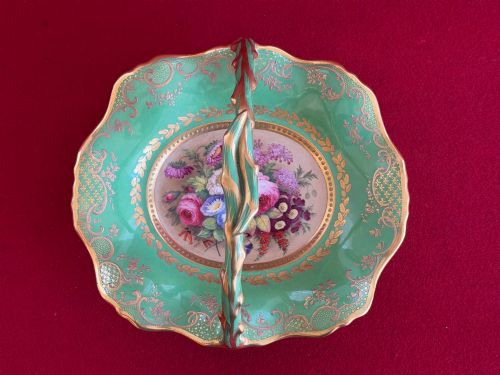
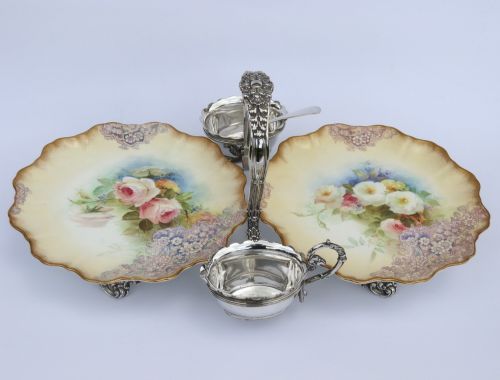
An antique floral ceramic centrepiece brings painted botanicals and sculpted petals right onto the dining table, offering a striking focal point for any room.
Antique Floral Ceramic Centerpiece
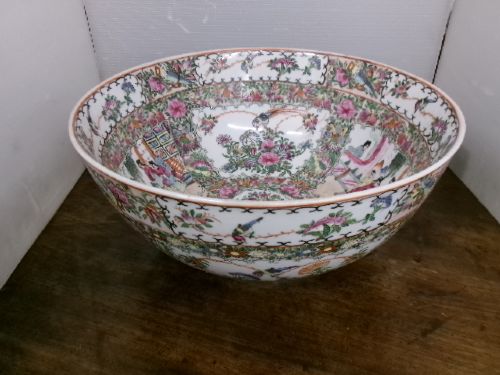
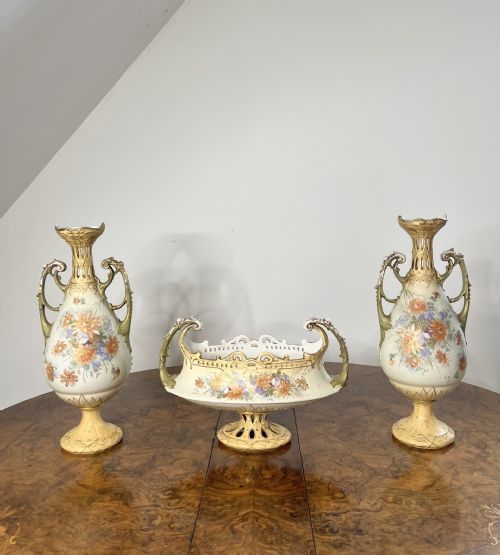
An antique floral ceramic centrepiece encompasses decorative bowls, open baskets, footed comports, and figural arrangements designed to command attention in the middle of a table or sideboard.
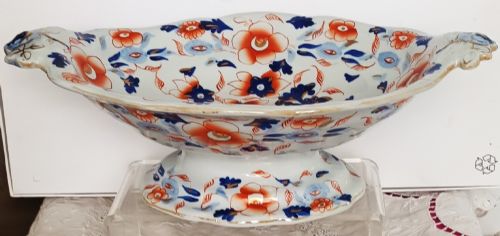
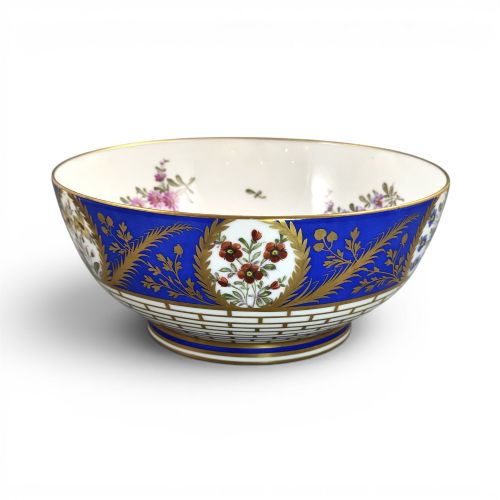
The versions most commonly met here span from the eighteenth century through the Edwardian era, taking the form of porcelain and ironstone vessels adorned with hand-painted blooms, applied ceramic roses, or transfer-printed foliage.
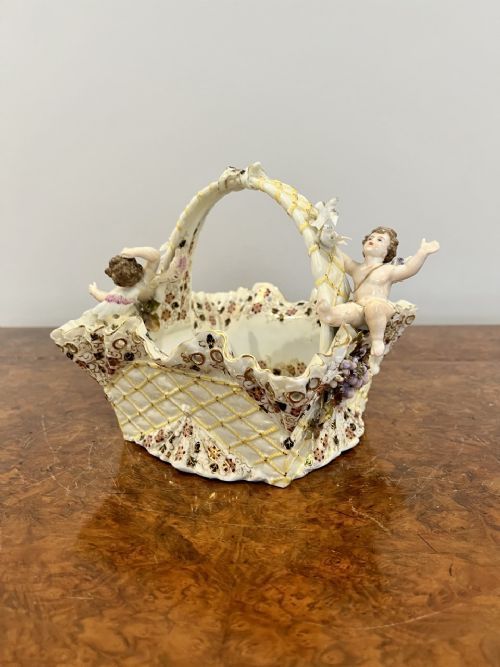
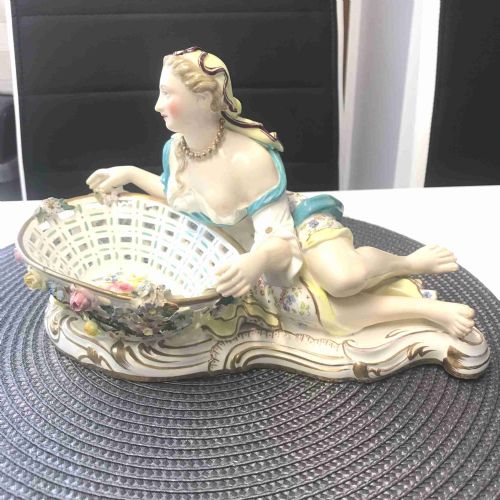
Originating across English, continental European, and Asian workshops, these pieces function as grand fruit bowls, sweetmeat baskets, or elaborate sculptural centrepieces framed by cherubs and gilt edges.
Materials and construction
Makers utilised fine porcelain, earthenware, and ironstone as the primary bodies, shaping them through moulding, throwing, or intricate hand-building.
Surface decoration relies on hand-painted enamel colours, transfer printing in blue and white, and rich gold leaf or gilt edge applications.
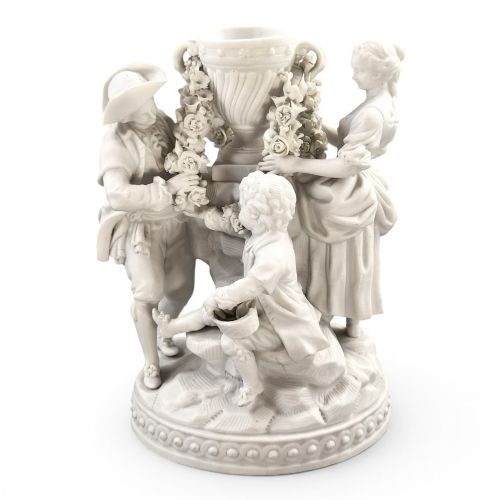
Many elaborate continental examples incorporate delicate applied ceramic roses and sculptural putti modelled separately before attachment to the main body.
The listings show pieces spanning from the 18th century to the 1930s, utilising porcelain, earthenware, ironstone, and enamel.
Distinctions in quality
Quality rests heavily on the crispness of the modelling in applied floral garlands and figural elements, where sharper relief and finer detail separate superior output from heavier, simpler moulding.
The precision and artistry of the hand-painted enamel work dictate the upper tiers of the range, distinguishing spontaneous brushwork from mechanical transfer or flat application.
The integrity of the body itself, whether translucent porcelain or dense ironstone, combined with the preservation of delicate gilt edges and delicate pierced galleries, defines the standing of each piece.
Derby Porcelain·Limoges·Meissen·Royal Vienna·Samson Paris·Doulton Burslem·Kozan·Royal Worcester·Ryuzan·Ulisse Cantagalli·Schierholz·Maling·Ridgway·Sitzendorf
The Antique Floral Ceramic Centerpiece Glossary
- Comport
- A footed dish or bowl elevated above the table surface, often used for serving fruit or dessert. These pieces provide height and presence to a table setting.
- Putti
- Plump, winged infant figures frequently sculpted in porcelain and applied to the sides or bases of nineteenth-century centrepieces. They often appear interacting with floral garlands.
- Ironstone
- A dense, durable type of earthenware patented in the nineteenth century to imitate Chinese porcelain. It withstands heavy use while accepting vibrant patterns.
- Imari
- A style of Japanese export porcelain decorated in underglaze blue, iron red, and gold. These ceramics gained immense popularity in European interiors.
- Biscuit
- Unglazed porcelain fired once to a porous, matte finish with a texture resembling marble. It is frequently employed for sculptural figures and decorative groups.
Antique Floral Ceramic Centerpiece: Frequently Asked Questions
What were antique centrepieces used for?
These large vessels served as ornamental focal points on dining tables, often holding fresh fruit, sweetmeats, or elaborate floral arrangements during formal meals.
Over time, they transitioned into purely decorative display pieces meant for sideboards, mantels, and central tables in wealthy homes.
How do I care for an antique ceramic bowl?
Clean these pieces gently using a soft, dry cloth to remove dust, avoiding harsh chemical cleaners that can damage delicate enamel and gilt edges.
Keep them away from direct sunlight and areas prone to sudden temperature shifts to protect the ceramic body and any applied elements.
How do I distinguish Meiji period Japanese pieces?
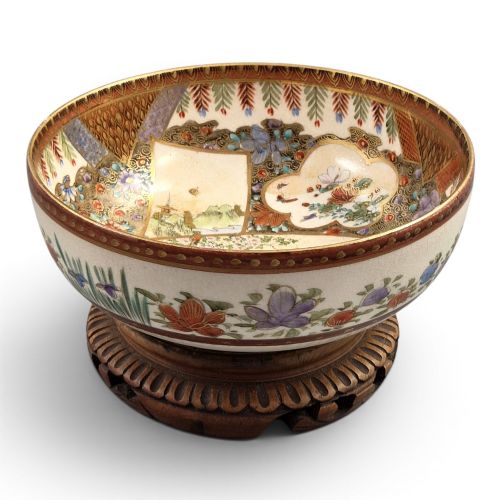
Meiji period items often feature dense Japanese Imari patterns in iron red and blue or intricate Satsuma earthenware with fine gilt work.
Many bear signature marks on the base associated with specific master artists and workshops active during this era.
What marks should I look for?
Look for painted or impressed factory marks on the underside of the base, such as those from Meissen, Royal Worcester, or Schierholz.
These stamps and signatures help identify the period and workshop of origin, though many fine pieces carry attribution marks or retailer details.