


19th Century Sewing Basket
A 19th century sewing basket brings together fine cabinetmaking and domestic utility in rosewood, mahogany, and papier-mâché.
19th Century Sewing Basket
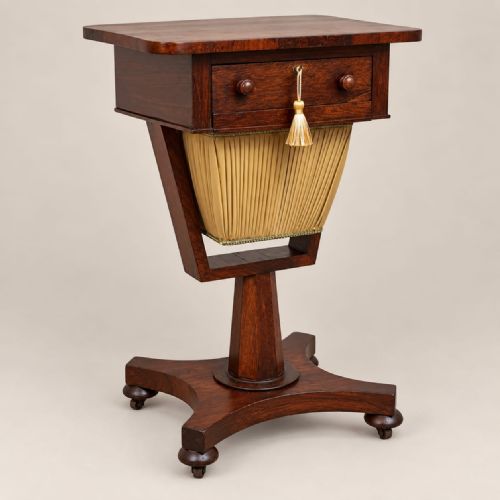
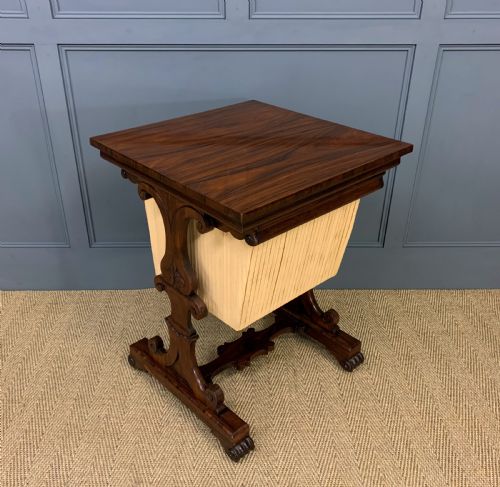
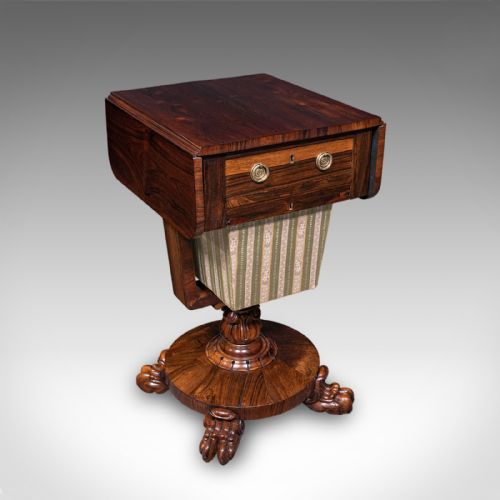
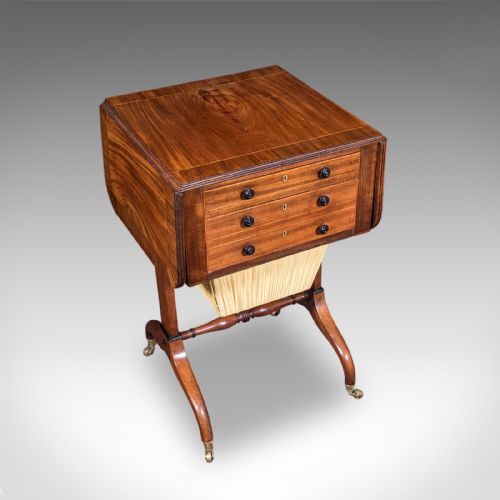
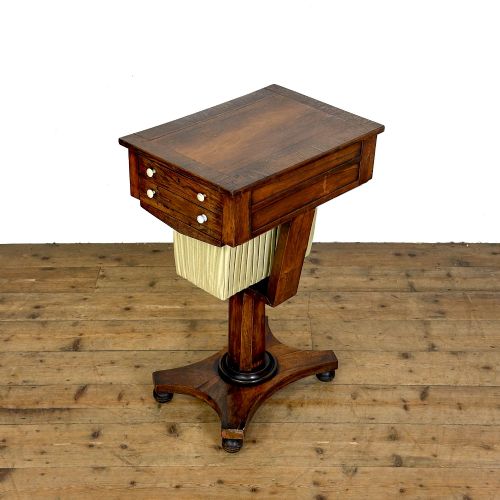
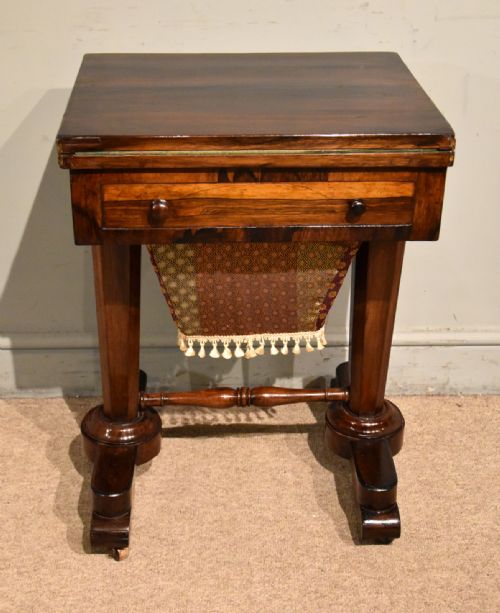
When you examine a 19th century sewing basket or work table, you encounter diverse forms ranging from table-standing caskets to substantial drop-leaf occasional stands. The pieces span periods from the Georgian era through the Regency, William IV, and Victorian phases.
You meet occasional tables, side tables, games tables, and specialised work tables configured with internal compartments for needlework. Rosewood and mahogany dominate the selection, often accompanied by brass inlay, boxwood strings, and silk-lined interiors.
The objects served elite parlours and drawing rooms as dual-purpose furniture for leisure and craft. Drop leaves, fold-over tops, and fitted caskets provide the functional hallmark of these domestic pieces.
Materials and Construction
Cabinetmakers utilised dense timbers such as rosewood, mahogany, pollard oak, and burr walnut for the primary carcases. These woods take a high polish and provide stable surfaces for intricate brass inlay, boxwood stringing, and penwork decoration.
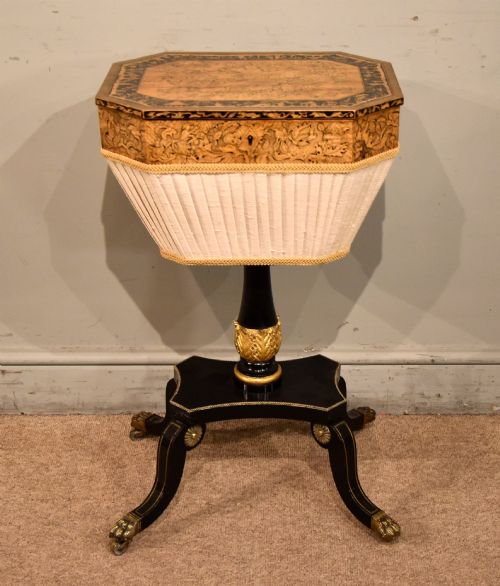
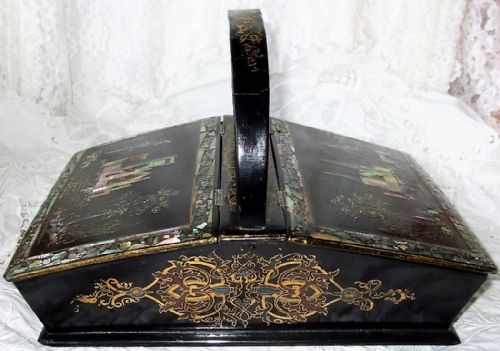
Smaller caskets employ papier-mâché and painted wooden structures, whilst larger work tables integrate drop leaves and folding tops supported on pillar bases. Silk linings and fitted internal trays organise the compartments intended for needles, threads, and implements.
Current listings feature rosewood, mahogany, burr walnut, pollard oak, boxwood, brass, silk, lacquer, and papier-mâché.
Judging Quality
The standard of timber selection and figure sets superior examples apart from standard workshop production. Highly figured rosewood, burr walnut, and pollard oak denote cabinetwork intended for high-status interiors.
The precision of secondary treatments like penwork, brass stringing, and Tunbridge Ware mosaic work dictates the tier of craftsmanship. Sophisticated mechanisms for fold-over games tops and metamorphic interiors also elevate a piece.
Gillows of Lancaster
The 19th Century Sewing Basket Glossary
- Work table
- A multi-functional piece of furniture designed for sewing, needlework, and writing, usually featuring internal compartments and a suspended bag or box.
- Penwork
- A decorative technique utilising fine ink drawings on wood, often finished with varnish to resemble more costly inlay.
- Tunbridge Ware
- A type of decorative woodwork characterised by mosaic patterns formed from tiny wood blocks of various natural colours.
- Papier-mâché
- A composite material made from paper pulp or layers of paper bound with glue, moulded and lacquered for decorative caskets.
- Drop leaf
- A hinged flap on a table that can be raised to extend the surface or lowered when space is restricted.
19th Century Sewing Basket: Frequently Asked Questions
How were 19th century sewing baskets used?
These pieces served ladies in the parlour for needlework, embroidery, and correspondence. The fitted compartments held threads, pins, and tools close to hand during social hours.
Many designs doubled as games or writing tables, featuring fold-over tops for chess or cards. This versatility made them central furnishings in fashionable drawing rooms.
What woods are common in these sewing tables?
Rosewood and mahogany form the vast majority of the carcases, valued for their deep grain and durability. Cabinetmakers also utilised pollard oak, boxwood, and burr walnut.
Finer examples incorporate contrasting stringing or brass inlay to highlight the structural lines. Papier-mâché appears in independent caskets and small boxes.
How do I identify a Regency period piece?
Regency examples often display classical proportions, brass inlay, and rosewood veneers characteristic of the early decades of the century. Look for formal restraint combined with rich materials.
Elements like penwork decoration and tapered pillar supports also point toward the Regency and George IV eras. Construction methods reflect traditional British cabinetmaking of that epoch.
What is a metamorphic sewing table?
A metamorphic table transforms its function through mechanical actions, shifting from a writing or sewing desk into a games surface. These pieces conceal drawers and compartments beneath folding lids.
Makers engineered these clever mechanisms to maximise utility in elegant drawing rooms. They represent the highest tier of nineteenth-century furniture design.