


Victorian Lacquered Box
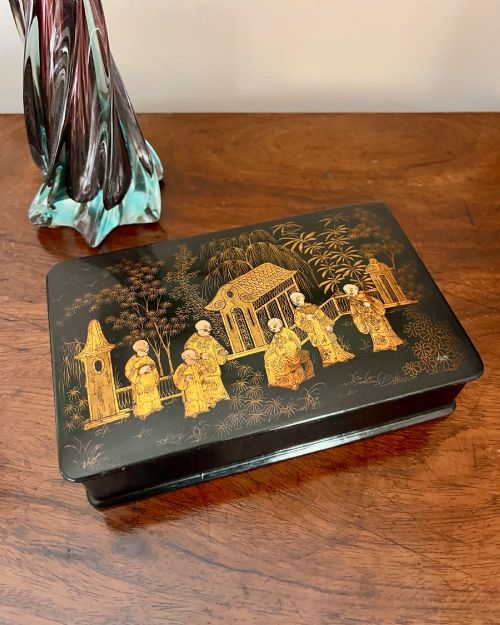
A victorian lacquered box offers a glimpse into nineteenth-century craftsmanship, combining dark surfaces with intricate gilding to store precious trinkets.
Victorian Lacquered Box
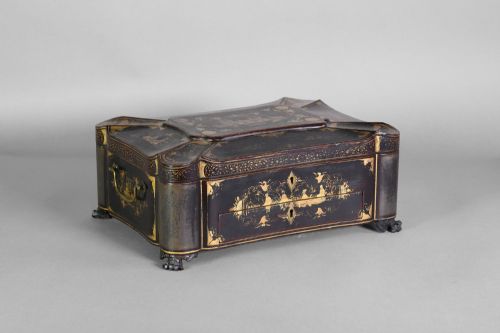
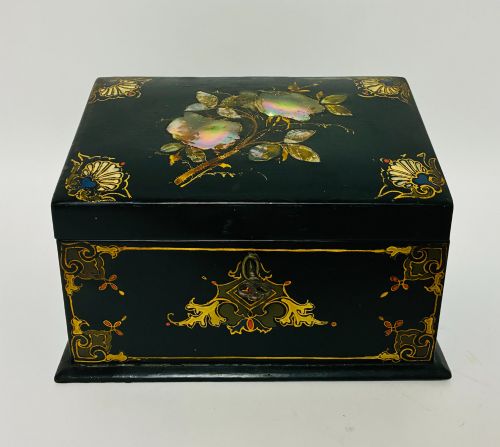
A victorian lacquered box encompasses a range of small storage pieces designed for the nineteenth-century home. These items serve specific domestic purposes, appearing as tea caddies, writing cabinets, stationery boxes, and jewellery caskets.
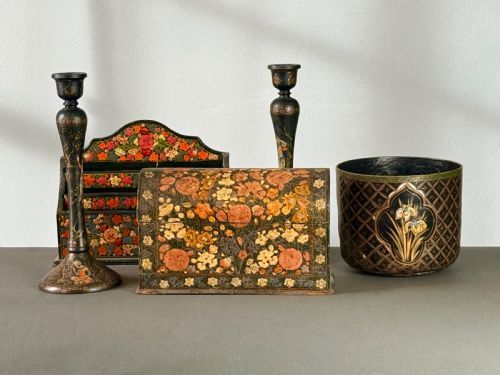
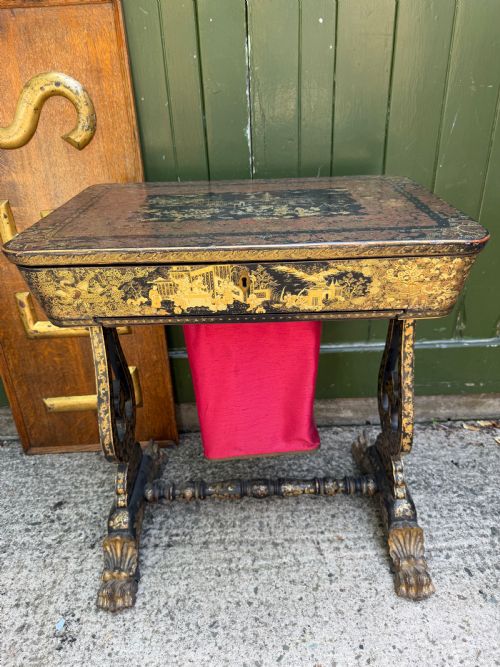
Forms vary from compact table snuff boxes to larger sewing tables and jewellery cabinets. These containers reflect the varied decorative tastes of the nineteenth century, drawing on Italian, French, and oriental influences.
How They Were Made
Many boxes rely on papier-mâché as a core material, built up from layered paper pulp and size, then pressed in moulds and dried to create a sturdy, lightweight carcass. Wood forms the structural base for larger chests, sewing tables, and certain imported trunks.
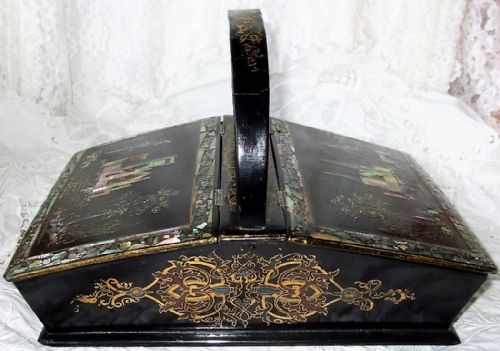
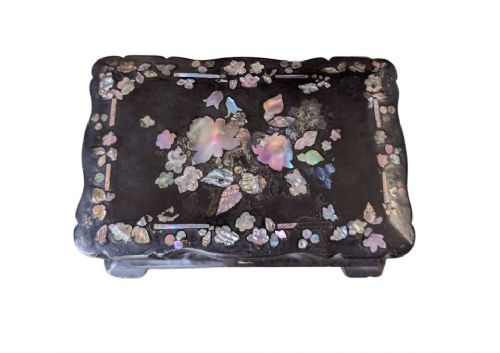
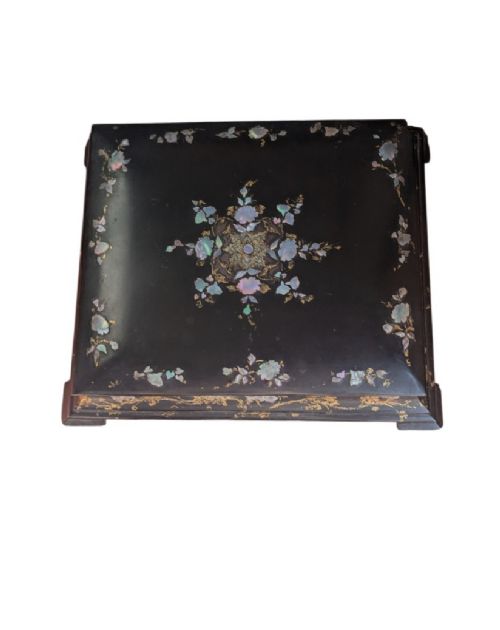
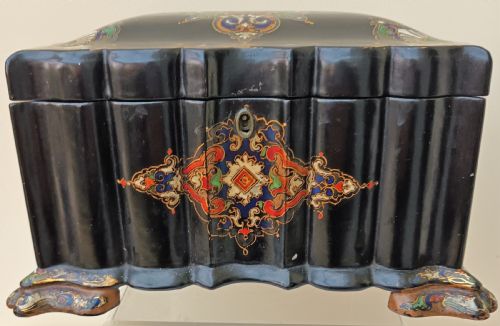
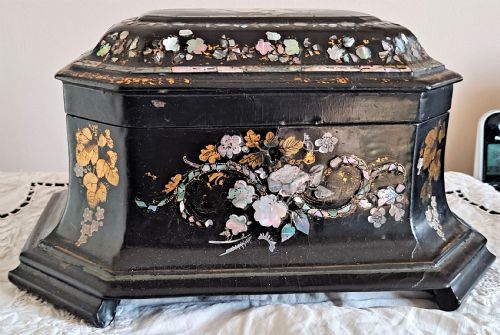
Makers applied layers of dark lacquer to these surfaces, creating a smooth finish suitable for subsequent decoration. Gold leaf, paint, and inlaid mother-of-pearl embellish the exterior, often depicting landscapes, floral patterns, or figurative scenes in the Chinoiserie taste.
Brass fittings, locks, and hinges provide structural security and operational hardware for the opening lids and compartments. Selected pieces integrate bamboo supports or delicate interior trays lined for delicate items.
Certain Victorian ladies kept miniature dogs painted in gold leaf upon their snuff boxes to guard their tobacco.
What Varies in Quality
The standard of a victorian lacquered box depends significantly on the crispness and depth of its surface decoration. Hand-painted details and secure mother-of-pearl inlay demonstrate superior workshop execution compared to simpler, mass-produced stencilling.
Structural integrity of the papier-mâché or wood carcass dictates longevity. Superior pieces retain smooth, stable exterior coatings without extensive cracking or lifting of the lacquer layer.
Internal fittings elevate certain examples, particularly those retaining fitted compartments, original velvet linings, and working brass locks with matching keys.
Jennens & Bettridge
The Victorian Lacquered Box Glossary
- Papier-mâché
- A composite material made from paper pulp or layers of paper mixed with glue, pressed and dried into a rigid form. It provides a smooth base for lacquer and painting.
- Chinoiserie
- European decorative style reflecting Chinese artistic influences, characterised by painted landscapes, figures, and pavilions in gold and colour on black grounds.
- Tea caddy
- A container designed specifically to store loose tea leaves securely, often featuring internal lidded canisters and fine interior divisions.
- Meiji Period
- The era in Japanese history spanning from 1868 to 1912, known for export lacquerware sent to Western markets during the Victorian age.
- Mother-of-pearl
- The iridescent inner layer of certain mollusc shells, cut into thin pieces and inlaid into lacquer surfaces to catch the light.
Victorian Lacquered Box: Frequently Asked Questions
What were victorian lacquered boxes used for?
These containers served specific storage functions in the nineteenth-century household, housing precious items such as jewellery, letters, sewing implements, and loose tea leaves.
Larger variations functioned as portable writing desks or small freestanding tables, keeping personal correspondence and valuables organised within parlours and bedrooms.
How do I care for a lacquered surface?
Keep these pieces away from direct sunlight, excessive heat sources, and high humidity to prevent the lacquer from drying out or cracking.
Dust the surface gently with a soft, dry cloth and avoid applying modern liquid polishes, commercial cleaners, or abrasive materials.
How do I distinguish English papier-mâché from Japanese lacquer?
English pieces from the Victorian era typically utilise a moulded papier-mâché core finished with black lacquer, gold paint, and mother-of-pearl inlay.
Japanese lacquerware from the Meiji period generally employs a wooden base with distinct decorative techniques, regional motifs, and differing surface textures.
Are these boxes waterproof?
Although the lacquer finish provides some resistance to moisture, these historic items are not waterproof.
Spills should be blotted immediately with a dry cloth to prevent liquid from seeping into the papier-mâché or wood substrate.