




Gilded Papier Mache Box
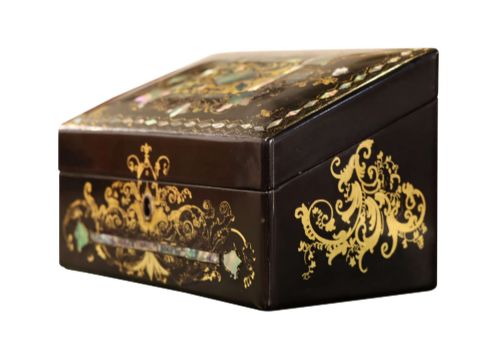
A gilded papier mache box brings Victorian richness to a desk or dressing table with its lustrous surface and intricate metallic embellishments.
Gilded Papier Mache Box
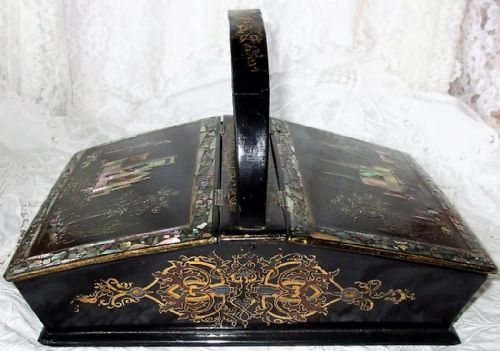
When you search for a gilded papier mache box, you encounter functional Victorian containers made for personal treasures and correspondence. These items include jewellery caskets, writing boxes, stationery cabinets, needlework boxes, and letter wall pockets.
The pieces appearing here date from the nineteenth century, specifically spanning the decades around eighteen-fifty to eighteen-seventy. English workshops produced these utilitarian yet decorative objects for middle and upper-class homes.
You are most likely to meet rectangular jewellery boxes and fitted writing caskets finished with rich surface decoration. Their forms reflect the domestic habits and organizational needs of the Victorian era.
How they were made
Craftsmen built the core structure using layers of paper pulp mixed with glue and resin, pressed into heavy iron moulds before drying. This papier-mache base provided a stable, lightweight foundation that could be sanded smooth and sealed.
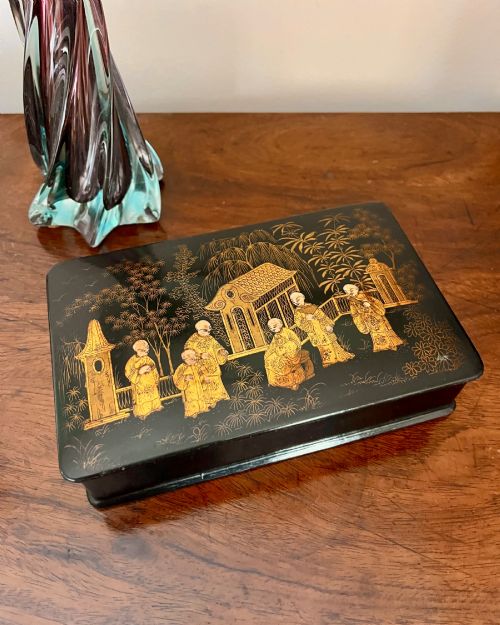
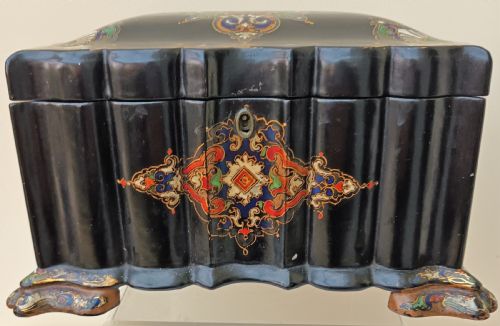
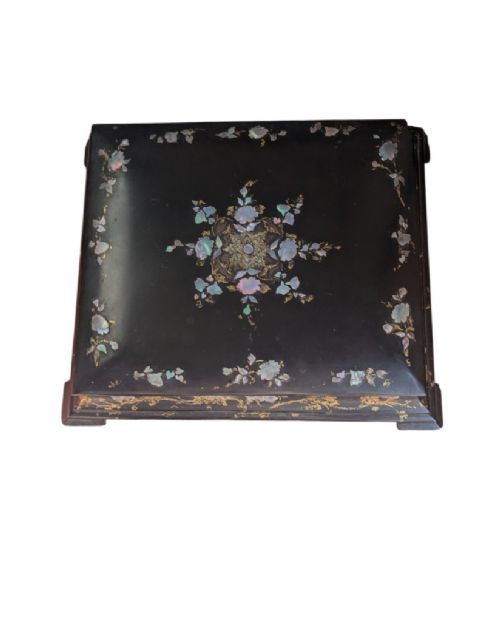
Makers applied layers of dark lacquer over the hardened pulp, then embellished the surfaces with oil paint, gilt paint, and genuine gold leaf. Many examples incorporate inlaid mother-of-pearl and brass details to catch the candlelight.
Gilded Papier Mache Box Retail Price Guide 2026
Typical asking prices for gilded papier mache box among the pieces listed under this phrase on Sellingantiques today, from the lower quarter to the upper quarter. They describe what is for sale here now, not the wider market.
The site's listings for this phrase span the nineteenth century, featuring materials such as papier-mache, mother-of-pearl, brass, and oil paint.
What varies in quality
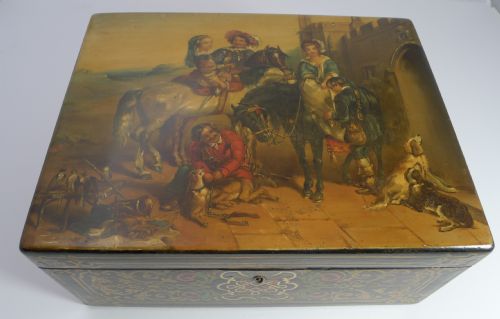
The distinction between standard pieces and exceptional ones lies in the depth of hand-painted detail and the complexity of inlaid materials. Finer examples feature meticulous brushwork, such as figurative animal scenes, rather than repetitive stencilled motifs.
Interior preservation and the survival of original silk linings, velvet pads, or fitted compartments determine desirability. Superior boxes retain their structural integrity without extensive cracking in the lacquer finish.
Jennens and Bettridge
The Gilded Papier Mache Box Glossary
- Papier-mache
- A composite material made from paper pulp or layers of paper reinforced with glue, chalk, and resin. It dries into a rigid substance that accepts smooth lacquering.
- Gilt
- A thin layer of gold leaf or gold paint applied to the surface to create decorative highlights. It provides a bright metallic contrast against dark lacquer.
- Mother-of-pearl
- The iridescent inner layer of mollusc shells, cut into thin pieces and inlaid into the surface. Craftsmen used it to add shimmering accents to floral and geometric designs.
- Casket
- A small decorative box or chest designed for holding valuables, letters, or sewing implements. Victorian versions often featured hinged lids and fitted interior compartments.
- Lacquer
- A durable resinous finish applied in multiple coats and polished to a deep gloss. It protected the papier-mache substrate while providing a dark background for gilding.
Gilded Papier Mache Box: Frequently Asked Questions
What were these boxes used for?
Victorian households utilised these containers to store precious jewellery, writing implements, stationery, and sewing accessories.
They sat on dressing tables, writing desks, and parlour sideboards as both decorative ornaments and practical storage.
How do I date a papier mache box?
Dating relies on stylistic clues, construction methods, and materials typical of the nineteenth century.
Mid-Victorian examples often feature registration marks, specific brass hardware types, and characteristic floral or animal hand-painting.
Are the interiors usually original?
Many surviving boxes retain their original silk, velvet, or paper linings, though some have experienced professional restoration.
Original fitted trays and compartments add significant interest for collectors seeking authentic period condition.
How should I clean the surface?
Dusting gently with a dry, soft microfibre cloth is the safest way to maintain the delicate lacquer and gilt.
Avoid moisture, alcohol, and commercial cleaning sprays, as these substances can permanently damage the historic painted finish.